On this page
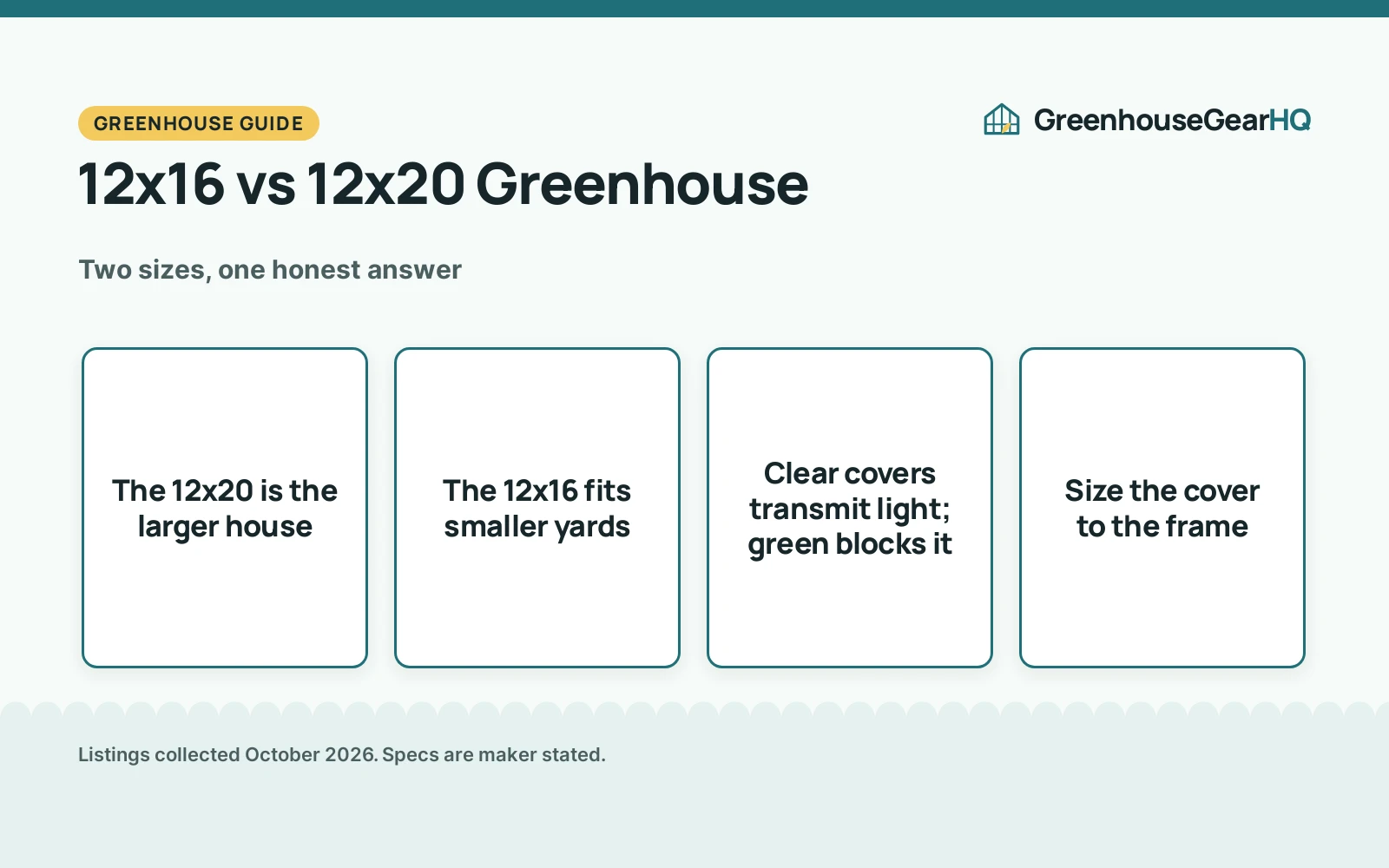
Buy the 12×20 if you have the room and want to grow more; buy the 12×16 if your yard, budget or heating bill is the limiting factor. That is the whole answer to 12×16 vs 12×20 greenhouse: the two share the same 12-foot width, and the 20-foot house simply gives you more length for benches, paths and plants. Everything below helps you size the site, cover the frame and kit it out, with the four products in this guide ranked by how well they fit the job.
GreenhouseGearHQ earns a commission when you buy through links on this page, at no extra cost to you. As an Amazon Associate I earn from qualifying purchases. Affiliate disclosure.
Size it to your yard
Start with a tape measure, not a catalog. A 12-foot-wide house needs clear ground around it for the door swing, gutter drip and your own access with a wheelbarrow. The 12×16 fits where a 12×20 will not: side yards, small suburban lots and anywhere the fence line is close. The 12×20 wants a longer, flatter run of ground and rewards you with a house that feels like a room, not a corridor.
Sun matters more than shape. Both sizes want the long side facing the best light you have, with no tree shade across the middle of the day. If your only sunny strip is short, the 12×16 in full sun will outgrow a shaded 12×20 every time. Check local rules too: some towns cap accessory structures by footprint, and the bigger house is the one that trips the limit.
What the extra length buys you
The 12×20 is the larger house, and length is the most useful dimension in a greenhouse. It buys a second run of benches, a proper central path you can walk without turning sideways, and room for tall plants at the far end while seedlings stay near the door. If you plan to overwinter tender plants, start seeds and grow tomatoes to full size in one house, the longer footprint keeps those jobs from fighting each other.
The price of length is everything scaled up: more cover material, more heat on cold nights, more air to move on hot days. A 12×16 heats faster and vents faster, which suits a beginner or a mild climate. The 12×20 suits a grower who will fill it: the cost per plant drops as the benches fill, but only if they fill.
Covering a 12×16 frame
Three of the four products in this guide are 12×16 ft covers, which tells you how common that frame size is. Two are clear 16 mil tarps and one is a green 20 mil tarp, and the choice between them is really a choice about light. Clear covers transmit daylight for growing; green blocks it. A green tarp will keep rain off a frame, but plants under it grow leggy and pale, so reserve green for covering equipment, firewood or a frame in storage.
All three list UV resistance or protection, which is the feature that decides cover life: sun breaks down cheap plastic in a season or two. Grommets matter too, since a 12×16 sheet catches wind like a sail; tie it down at every grommet and check the lines after storms. Thickness helps against tears and hail, with 20 mil outlasting 16 mil, but no tarp lasts forever, so budget for replacement every few years.
The gear for a 12×16 vs 12×20 greenhouse, ranked
1. Ansgery 16 mil clear greenhouse cover, 12×16 ft
The best fit for the job: a clear 12×16 cover in 16 mil woven and double-coated polyethylene, three layers, with stated UV resistance and full light transmission for even temperature distribution. If you are covering a 12×16 frame to grow under, this is the one.
2. 12×16 ft heavy duty clear greenhouse tarp with grommets, 16 mil
A close second: another clear 12×16 cover in three-layer 16 mil polyethylene, waterproof and UV resistant, with grommets for tying down. It lists greenhouses, winter gardens, chicken coops and nurseries among its uses, which makes it the flexible pick if the cover may move between jobs.
3. 10×12 ft greenhouse with hygrometer
The only complete greenhouse kit here: a 10×12 ft house with 4mm, 580g double-wall polycarbonate panels, stated as clear, impact-resistant and UV-blocking, plus a hygrometer and windproofing. The catch is size: 10×12 is smaller than both sizes in the keyword, so it answers a different question, but it is the only way here to buy the whole house at once.
4. 20 mil green tarp, 12×16 ft
The toughest sheet of the four at 20 mil, waterproof with brass grommets and UV protection, in heavy-duty polyethylene. It ranks last for greenhouse growing because green blocks the light plants need. Buy it to cover the frame, the equipment or the woodpile, not the crop.
Heating and ventilating
A bigger house holds more air, and air is what you heat and move. The 12×20 needs a larger heater and more ventilation than the 12×16 to hold the same temperature on a cold night or dump heat on a hot afternoon. Plan at least one vent or fan per house, more for the longer one, and put the heater where its warmth reaches the far end. Thermal mass, like water barrels along the north wall, steadies both sizes overnight.
Watch humidity too. A longer house with full benches traps more moisture, and still, damp air invites mold on seedlings. Vent in the morning, water early in the day, and let the house dry before evening. The hygrometer in the kit above earns its place here: guess less, measure more.
FAQ for growers
Which is better, 12×16 or 12×20?
Neither is better outright. The 12×20 is the larger house and holds more plants; the 12×16 fits smaller yards and costs less to cover, heat and ventilate.
Can I cover a 12×16 frame with these tarps?
Two clear tarps and one green tarp in this guide are listed at 12×16 ft, sized for that frame.
Do the tarps block UV?
All three list UV resistance or protection. The polycarbonate kit blocks UV while transmitting light.
Is there a complete greenhouse kit here?
The 10×12 ft greenhouse with hygrometer is the only full kit. It is smaller than both sizes in the keyword.
Will a green tarp work as a greenhouse cover?
It keeps rain off, but green blocks the light plants need. Choose a clear cover for growing.
Keep reading
See every greenhouses guide. Also see our best greenhouse for backyard garden and polycarbonate vs plastic greenhouse.
More picks: mini greenhouses, walk-in greenhouses and small greenhouses for herbs.