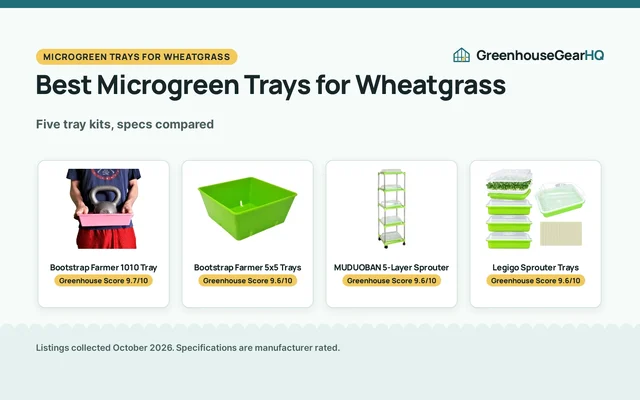
Best Microgreen Trays for Wheatgrass (2026): 5 Trays Compared
Five microgreen tray kits for wheatgrass compared by pack size, tray dimensions, drain holes, materials and stated warranty terms.

Seed starting trays and kits compared by cell count, tray material, humidity domes and bottom trays, so seedlings start strong before they go outside.
Five microgreen tray kits for wheatgrass compared by pack size, tray dimensions, drain holes, materials and stated warranty terms.
How to use seed starter trays in 5 steps: pick a tray that fits your space, fill the cells, sow and label, cover with…
Seed tray sizes: the 1020 flat, cell counts and tray depth, with stated dimensions from the listings to help you match trays to your…
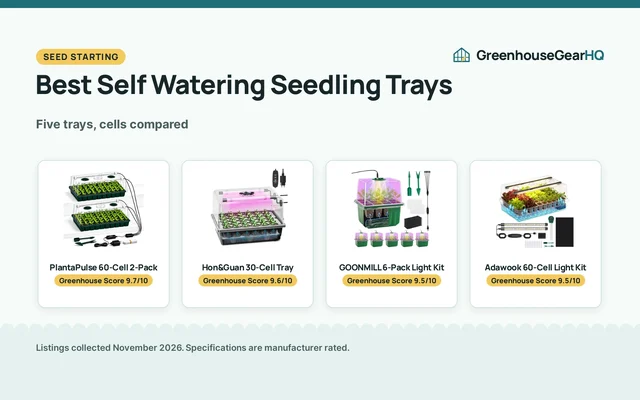
Five self-watering seedling trays compared by stated cells, domes, lights and timers, from a 30-cell kit with IP67 lights to a 120-cell 2-pack.
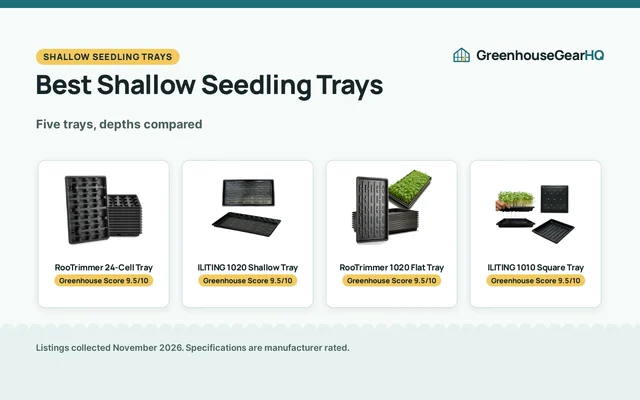
Five shallow seedling trays compared by size, depth, pack size and drainage, from 1020 flats that hold plug trays to square trays for small…
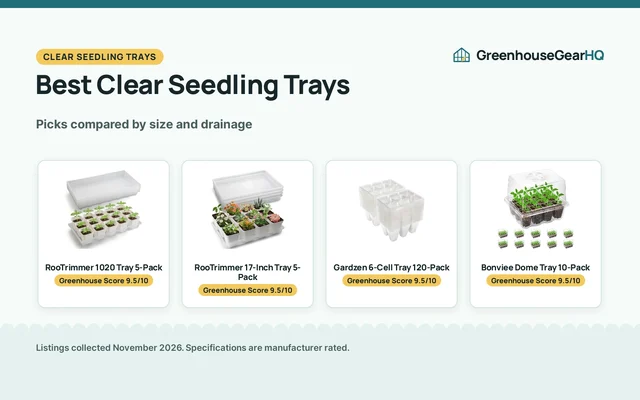
Clear seedling trays compared on pack size, cell count, drainage holes, size and material, from 6-cell starters to 1020 flats.
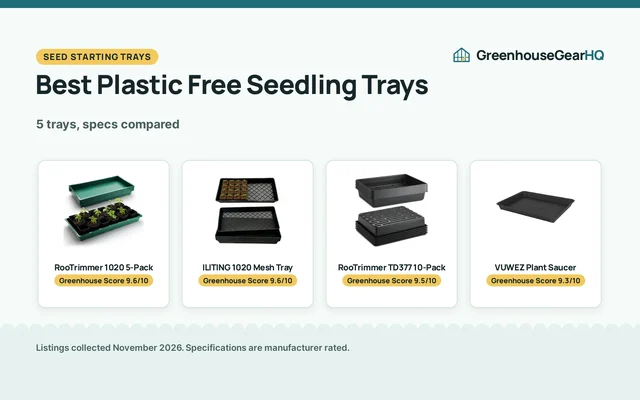
5 seedling trays compared by pack size, size, drainage and material, with the plastic each listing names stated plainly.
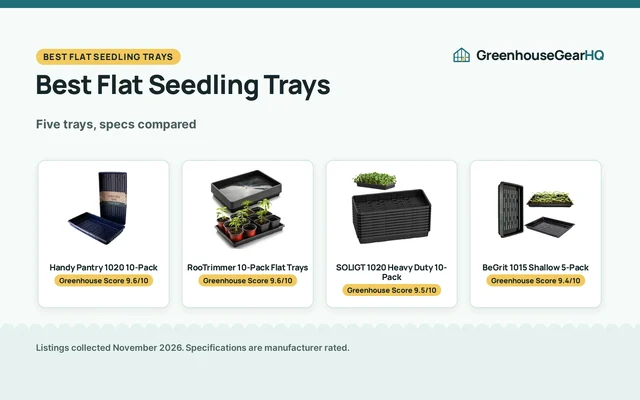
Five flat seedling trays compared by pack size, dimensions, drain holes and material, from 1020 flats to a 72-cell plug tray.
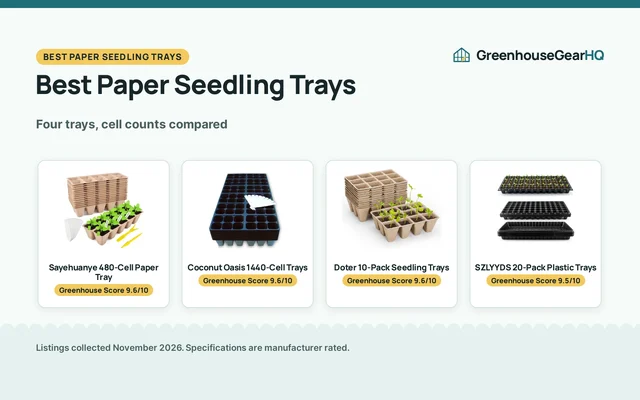
Paper pulp seedling trays with drain holes and transplanting tools compared against a reusable plastic set, by cell count, pack size and material.
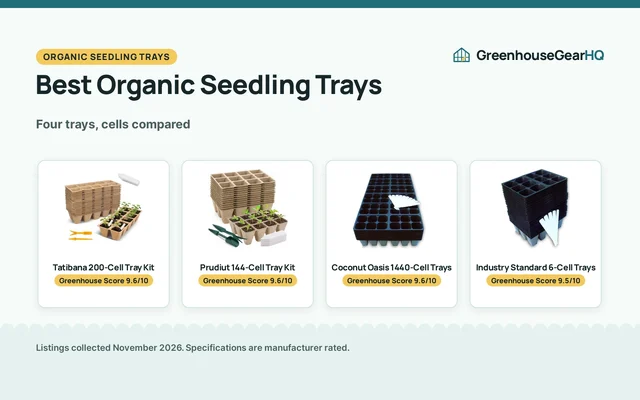
Four biodegradable pulp seedling trays compared by cell count, cell size, pack size and included labels, from 200-cell kits to bulk 1440-cell trays.
The tray decides how many seedlings fit and how easily you can move them. Look at the cell layout and the plastic. A tray is a small purchase, but you will handle it dozens of times each spring, so fit and durability are worth a look.