Best Soil for Basil in Pots (2026): 5 Picks Compared
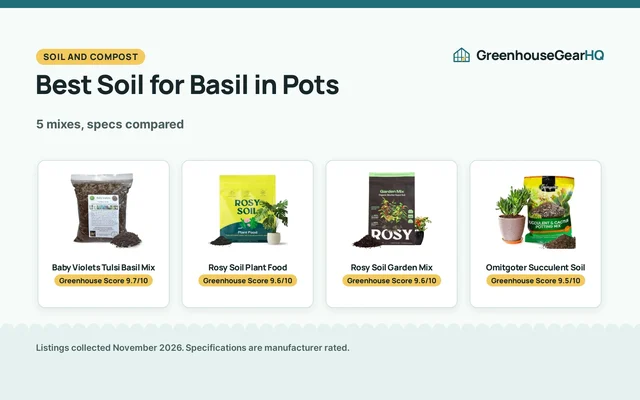
5 potting soils and a plant food for basil in pots, compared by blend, size, drainage and feeding, from a basil mix to a cactus mix,…

Soil blockers compared by block size, number of cells, steel or plastic build and ejector action, for starting seeds without plastic cells or pots at all.
5 potting soils and a plant food for basil in pots, compared by blend, size, drainage and feeding, from a basil mix to a cactus mix,…
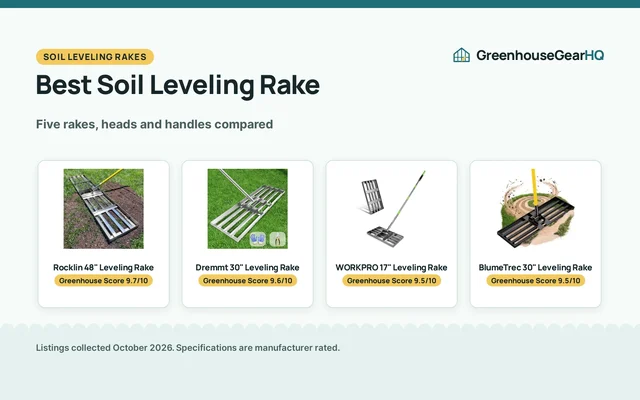
Five soil leveling rakes compared by head size, handle length, material and warranty, from compact 17-inch plates to a wide 48-inch head for large…
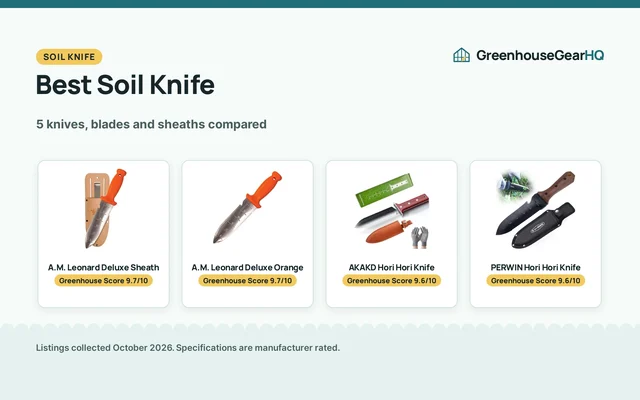
5 soil knives compared by stated blade length, sheath, warranty and weight, from a lifetime warranty model to a 7 inch full-tang knife.
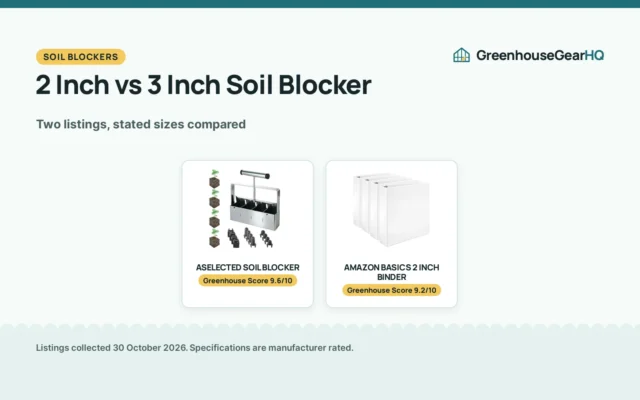
Two listings compared for the 2 inch vs 3 inch soil blocker question: a handheld soil blocker and a document binder, with stated sizes…
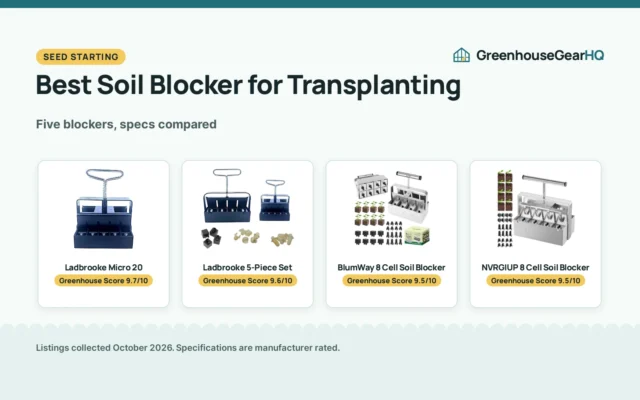
Five blockers compared by block size, cell count, seed pins and material, for pressing soil blocks that move straight into the bed.
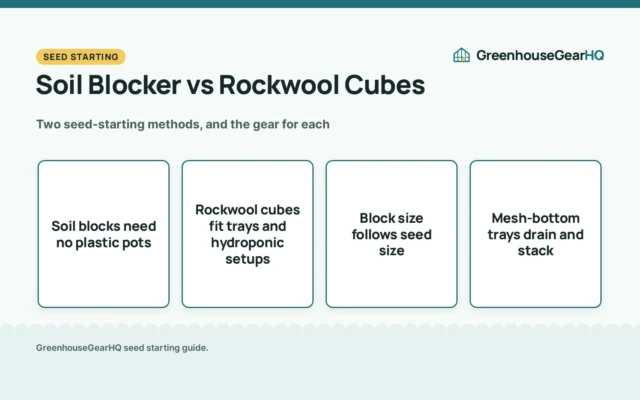
Soil blocks air-prune roots without plastic pots, while rockwool cubes fit tray and hydroponic setups; this guide compares the two methods and the gear…
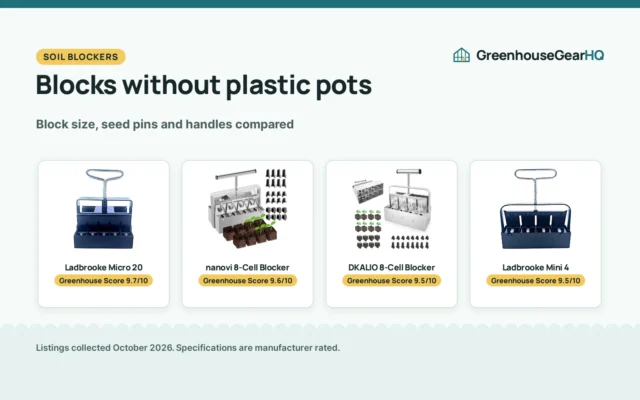
Two 8-cell soil blockers and two Ladbrooke blockers compared by block size, seed pins and handle comfort for community garden seed starting.
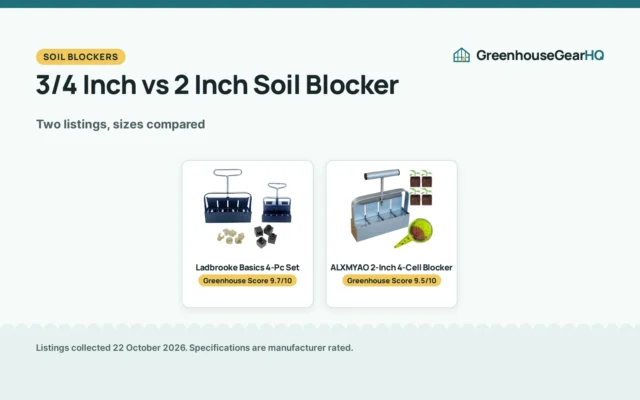
3/4 inch vs 2 inch soil blocker: the listings show the two sizes working as a nesting sequence, with one listing's size tag contradicting…
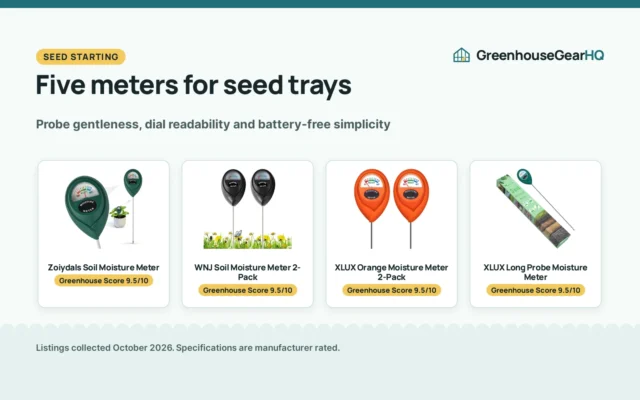
Five soil moisture meters compared for seed starting: probe gentleness, dial readability and battery-free simplicity, with wireless and multi-function options in more picks.
Soil blockers press mix into pot-free blocks while peat pots plant straight into the ground; we compare the methods and rank four pieces of…
A soil blocker presses potting mix into free-standing cubes, which skips plastic cells. A few details decide how well it works. Blockers save plastic and reduce transplant shock for many crops, but they take a little practice to master.