On this page
Top picks at a glance
As an Amazon Associate I earn from qualifying purchases.
- 1
 Ladbrooke Micro 20 Soil Blocker9.7/10View on Amazon
- 2
 Authentic Ladbrooke Mini 4 Soil BlockerView on Amazon
- 3
 CrazyTerra Rockwool Cubes 1 InchView on Amazon
- 4
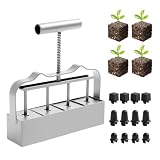 KHAMAL Soil Blocker for Seed Starting 4 CellView on Amazon
- 5
 Authentic Ladbrooke 6-Pc Master Grower Soil Blocker SetView on Amazon
- 6
 Rockwool CubesView on Amazon
- 7
 CrazyTerra Rockwool Cubes 1.5 InchView on Amazon
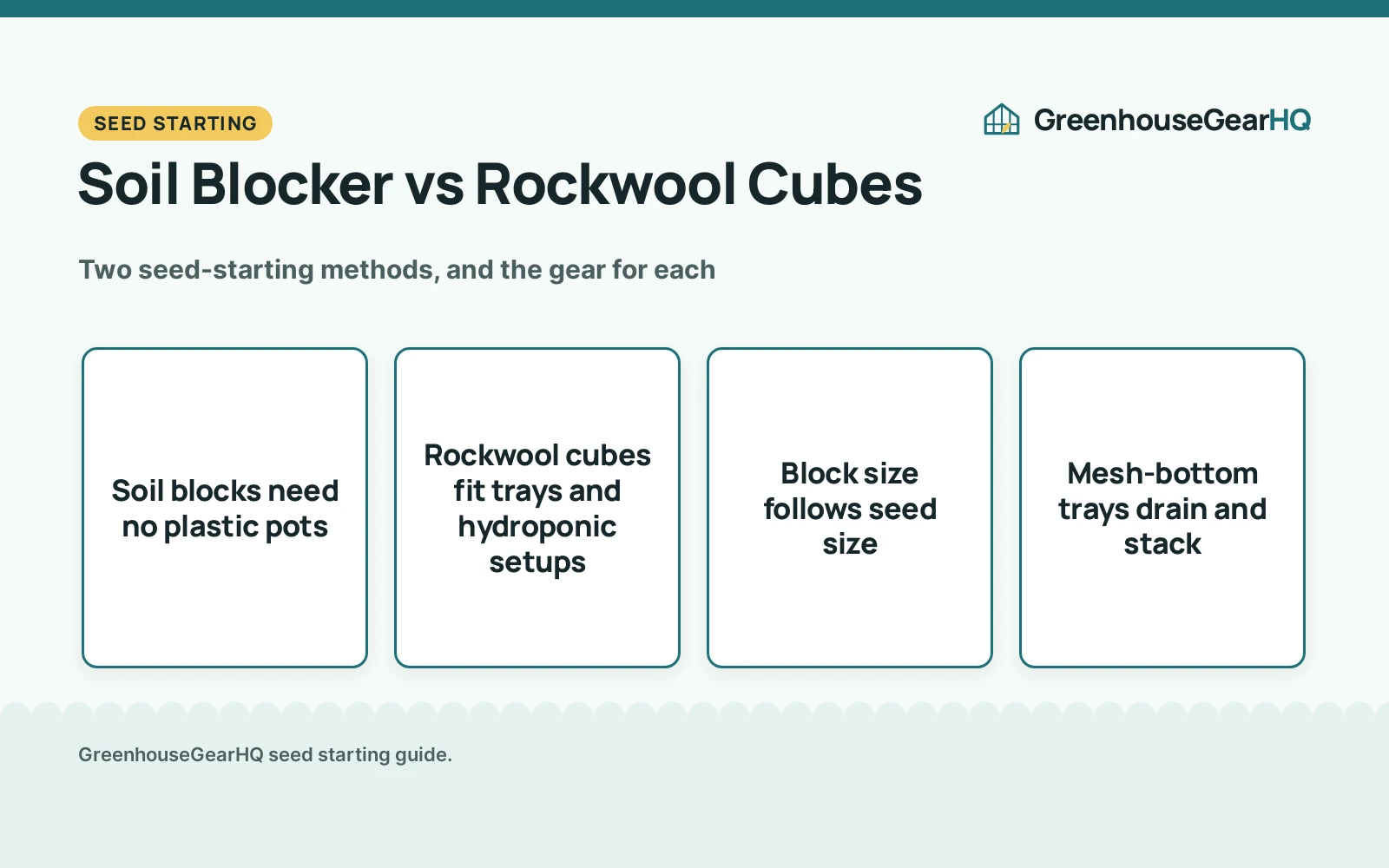
When the first seed trays of the season come out, the choice is rarely about seeds at all. It is about what each seedling sits in until transplant day. This guide answers soil blocker vs rockwool cubes directly: soil blocks suit growers who want seedlings without plastic pots, with roots that air-prune at the block edges, while rockwool cubes suit growers who start seeds in trays for hydroponic setups. The gear below covers the soil-blocking side in full, with a mix and trays that work for blocks, and notes where cubes fit the same trays.
Other options worth a look
 Authentic Ladbrooke Mini 4 Soil BlockerCheck price on Amazon
 CrazyTerra Rockwool Cubes 1 InchCheck price on Amazon
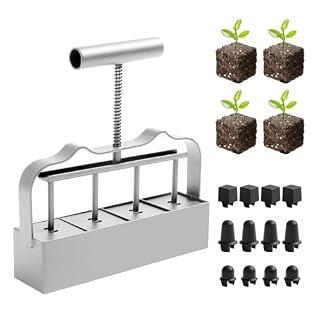 KHAMAL Soil Blocker for Seed Starting 4 CellCheck price on Amazon
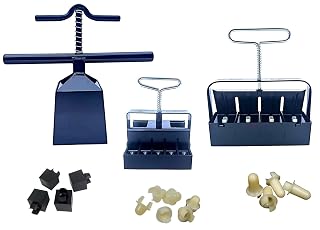 Authentic Ladbrooke 6-Pc Master Grower Soil Blocker SetCheck price on Amazon
 Rockwool CubesCheck price on Amazon
 CrazyTerra Rockwool Cubes 1.5 InchCheck price on Amazon
GreenhouseGearHQ earns a commission when you buy through links on this page, at no extra cost to you. As an Amazon Associate I earn from qualifying purchases. Affiliate disclosure.
Soil blocker vs rockwool cubes: the short answer
Soil blocking presses moistened mix into a firm block with a seed dimple, and the seedling grows in that block until it moves to a larger block or to the garden. Roots air-prune naturally at the block edges, so they do not circle or crowd, and a small block can nest into a larger one with no repotting and no root disturbance. Rockwool cubes are blocks of a different kind: they sit in trays just as soil blocks do, and the mesh tray listing below states its trays suit soil blocks or rockwool blocks and are also ideal for hydroponic trays. Trays are the shared ground between the two methods. The real difference is what you buy and handle: soil blocking needs a blocker tool and a mix, while cubes need the cube and a tray to hold it.
The gear, ranked
The four listings below are ranked from the most complete soil-blocking tool to the supporting gear. Each one earns its place on what its own listing states, and the ranking follows how directly it serves a grower starting seeds in blocks.
Fiskars Soil Block Maker. This is the standalone blocker: it makes one 3 in. block for larger seeds and plants, or four 1-in. blocks for smaller plants, and it places a hole in each soil block for easy seed placement. The listing states natural air pruning for stronger root systems, and an environmental benefit in reducing the need for disposable seed starter trays and pods. It also lists a lifetime warranty, which no other listing here states in full. For a grower buying a first blocker, this is the most complete tool of the four.
Ladbrooke Micro 20 with Cubic Inserts. This set adds fine-seed capability to an existing Mini 4: the Micro 20 makes twenty 3/4 inch starter blocks per press, and the four cubic inserts snap into the Mini 4 so those starter blocks nest directly inside, with no repotting and no root disturbance. Seeds start in 3/4 inch blocks and move up to 2 inch blocks in one continuous system from germination to transplant. The tools are EP-coated steel, made in England since the 1960s, and each block has a built-in seed dimple. It ranks second because it is an addition to a system, not a standalone start: a grower without a Mini 4 needs that tool first.
Back to the Roots Organic Coir. Blocks need mix, and this listing is the mix: a 10 lb block of compressed coconut coir that expands to 51 qt of potting soil, over 2 cubic feet. The listing states a balanced pH, peat free production, and OMRI Listed organic production, handling, and processing, and it can be used alone or as an amendment for vegetables, flowers, herbs, and starting seeds. It ranks third because it supports blocking rather than doing it: it is the material pressed into the mold.
BeGrit 1020 Mesh Bottom Trays, 10-Pack. Trays hold whatever blocks you make or buy: this 10-pack of 10 x 21 inch mesh-bottom trays states drainage and aeration from the mesh design, so roots are less prone to rot, and BPA-free plastic construction. The trays stack to save space, suit soil blocks or rockwool blocks, and are also ideal for hydroponic trays. The maker states the trays last at least 2-3 years. Trays rank last only because they hold the system rather than make it, but no block setup is complete without them.
How to choose between soil blocks and rockwool cubes
Match block size to seed size
Start from the seed. The Fiskars maker gives one 3 in. block for larger seeds and plants, and four 1-in. blocks for smaller plants, while the Ladbrooke set starts fine seeds in 3/4 inch blocks and moves them up to 2 inch blocks. A fine seed in a large block wastes mix and bench space, and a large seed in a tiny block runs out of room before transplant day. Pick the blocker that offers the block size your seeds need, and check that the next size up exists in the same system.
Count the whole system, not just the tool
A blocker alone does not start seeds. Soil blocking needs mix to press, as the coir listing shows, and a tray to hold the finished blocks, as the BeGrit listing shows. The Ladbrooke set is explicit about this: it adds capability to an existing Mini 4, so its value depends on already owning that tool. Rockwool cubes sit on the other side of the same question: they need trays, and the mesh trays here suit them, but no cube listing is part of this guide, so compare cube sizes against tray size before ordering. See our rockwool cubes for lettuce picks for cube sizes in a tray context.
Plan trays, drainage and storage
Blocks sit wet for weeks, so drainage decides how they perform. Mesh-bottom trays drain and aerate, and they stack when empty to save indoor and outdoor space. BPA-free plastic keeps the tray choice simple for food crops started indoors. For a shared bench, one tray type that holds soil blocks or rockwool blocks keeps the setup flexible across crops. See our soil blocker for community garden picks for blockers sized for shared growing spaces.
FAQ for growers
Can soil blocks replace plastic pots?
Yes, that is the point of the method. The Ladbrooke listing states no plastic trays and no plastic pots, just soil, seeds, and tools, and the Fiskars listing states a reduced need for disposable seed starter trays and pods.
What size soil block should I start with?
Match the block to the seed. The Fiskars maker gives one 3 in. block for larger seeds and plants and four 1-in. blocks for smaller plants, while the Ladbrooke set starts fine seeds in 3/4 inch blocks and moves them up to 2 inch blocks.
Can the same trays hold soil blocks and rockwool cubes?
Yes. The BeGrit listing states its mesh trays are suitable for soil blocks or rockwool blocks, and also ideal for hydroponic trays, with mesh bottoms for drainage and aeration.
What mix goes into a soil blocker?
Press moistened soil blocking mix into the mold and eject directly into a tray, as the Ladbrooke listing directs. The coir listing offers one mix option: a 10 lb block that expands to 51 qt, peat free and OMRI Listed, for use alone or as an amendment.
Keep reading
See every soil blockers guide and all seed starting guides. Also see our soil blocker for community garden picks and our rockwool cubes for lettuce picks.
More picks: seed starting trays for hydroponics, seed starting mix vs coco coir, 3/4 inch vs 2 inch soil blocker and rockwool cubes vs net pots.