On this page
Top picks at a glance
As an Amazon Associate I earn from qualifying purchases.
- 1
 Ladbrooke Micro 20 Soil Blocker9.7/10View on Amazon
- 2
 Authentic Ladbrooke 6-Pc Master Grower Soil Blocker SetView on Amazon
- 3
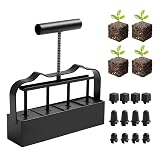 KHAMAL Soil Blocker for Seed Starting 4 CellView on Amazon
- 4
 Authentic Ladbrooke Mini 4 Soil BlockerView on Amazon
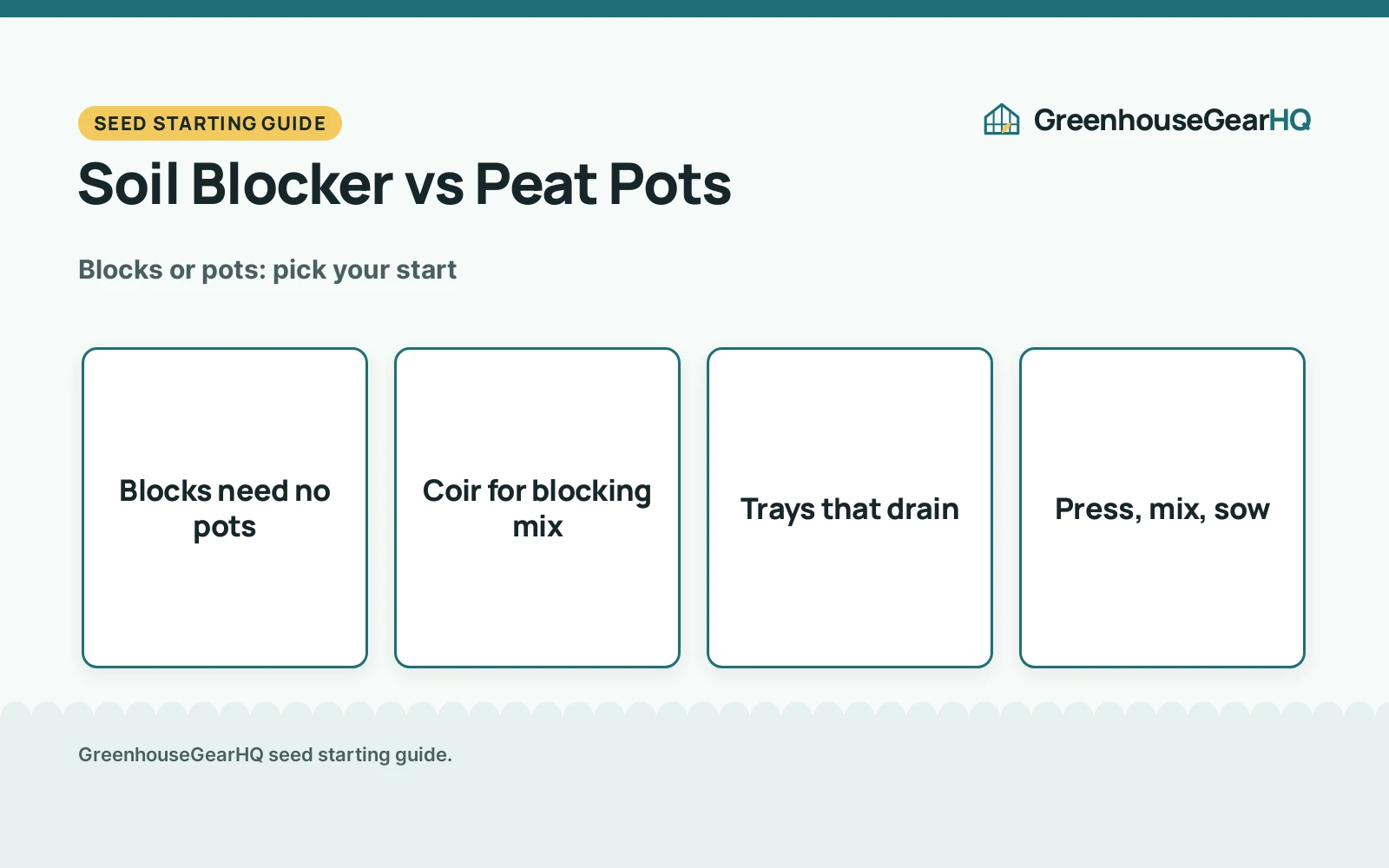
The first seed trays of late winter are on the bench, and soil blocker vs peat pots is the choice that decides how your seedlings start: a soil blocker presses damp mix into free-standing blocks with no pot at all, while peat pots are plantable pots that go into the ground with the seedling. Blockers cut out disposable containers and let roots air prune at the block edges; peat pots skip the pressing step and plant directly. Below: how the two methods differ, what soil blocking needs, and four pieces of gear ranked for the job.
Other options worth a look
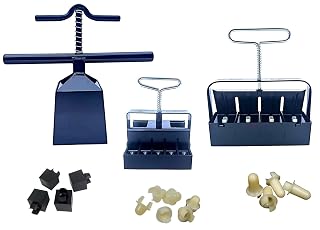 Authentic Ladbrooke 6-Pc Master Grower Soil Blocker SetCheck price on Amazon
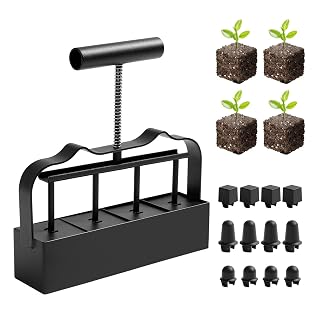 KHAMAL Soil Blocker for Seed Starting 4 CellCheck price on Amazon
 Authentic Ladbrooke Mini 4 Soil BlockerCheck price on Amazon
GreenhouseGearHQ earns a commission when you buy through links on this page, at no extra cost to you. As an Amazon Associate I earn from qualifying purchases. Affiliate disclosure.
Soil blocker vs peat pots: how they differ
A soil blocker is a press: you fill it with damp mix, squeeze, and pop out blocks that hold their shape on a tray. The Fiskars maker in our gear list forms one 3 in. block for larger seeds and plants, or four 1-in. blocks for smaller plants, and places a hole in each block for the seed. Peat pots work the other way: you fill each pot with mix, sow, and plant pot and all, so there is no transplant step and no plastic tray to wash.
| Soil blocker | Peat pots | |
|---|---|---|
| Container | None; the block is all mix | One pot per seedling |
| Transplanting | Block goes straight into soil | Pot goes straight into soil |
| Roots | Air pruning at the block edges, per the Fiskars listing | Roots grow through the pot wall |
| Repeat buying | Press once, use for seasons | New pots each season |
| Upfront gear | Blocker press, mix and trays | Pots and mix |
Choose the blocker if you start a lot of seeds and want to stop buying containers. Choose peat pots if you start a modest number and want the simplest path from sowing to planting. Either way the mix matters more than the vessel: it must hold together damp and feed the seedling.
What soil blocking needs
Three things: a mix that binds, the press, and trays that drain. For mix, the Back to the Roots block is a 10 lb block of compressed coconut coir that expands to 51 quarts, over 2 cubic feet, OMRI listed and peat free with a balanced pH. The Anothera 6-pack gives six 1.4 lb coir bricks that expand to 12.6 gallons total, triple-washed for low salt, pH balanced and heat-treated to remove weed seeds. Either gives you the fluffy, moisture-holding base that blocks are pressed from; the listing notes coir is naturally low in nutrients, so feed as seedlings grow.
For the press, the Fiskars Soil Block Maker forms one 3-inch block for larger seeds or four 1-inch blocks for smaller plants, with a seed hole placed in each block, and the listing states a full lifetime warranty. For trays, the RooTrimmer 10-pack gives 1020 mesh trays at 21 by 10.6 by 2.36 inches, designed for soil blocks with mesh bottoms for drainage and air circulation. Set blocks on mesh, water from below, and let air move around the blocks so the edges prune the roots.
Seed starting gear for soil blocking, ranked
The four listings below are ordered by our Greenhouse Score. Each one earns its place in a blocking setup, from the press itself to the mix and the trays. For trays beyond mesh, see our best seed starting trays picks.
1. Fiskars Soil Block Maker. The press itself: one 3 in. block for larger seeds and plants, or four 1-in. blocks for smaller plants, with natural air pruning and a hole in each block for seed placement. The listing states a full lifetime warranty, the only warranty term among the four. For growers ready to drop disposable trays and pods.
2. Back to the Roots Organic Coir, 51 Quart. A 10 lb compressed block that expands to 51 quarts, over 2 cubic feet, of OMRI-listed, peat-free coir with a balanced pH, listed for seeds and potting. For mixing blocking medium in volume or potting up after transplant. Note: the satisfaction guarantee states no time term, so we score no warranty.
3. Anothera 6 Pack Coco Coir Bricks. Six 1.4 lb bricks expanding to 12.6 gallons of triple-washed, low-salt, pH-balanced coir, heat-treated to remove weed seeds and debris. For seed starting where salt sensitivity matters, from seedlings to houseplants. No warranty term is stated.
4. RooTrimmer 10 Pack 1020 Mesh Trays. Ten 21 by 10.6 by 2.36 inch trays with full mesh bottoms, designed for soil blocks with the drainage and air circulation blocks need. For holding blocks on the shelf through germination. No warranty term is stated.
FAQ for growers
Can I use coco coir for soil blocks?
Yes, both coir listings state seed-starting use. The Back to the Roots block expands to 51 quarts and the Anothera bricks expand to 12.6 gallons; both are listed for starting seeds.
What size blocks does the Fiskars maker press?
One 3 in. block for larger seeds and plants, or four 1-in. blocks for smaller plants, per the listing. Each block gets a hole for seed placement.
Do soil blocks need special trays?
They need drainage and air. The RooTrimmer 10-pack is designed for soil blocks, with mesh bottoms for drainage and air circulation, at 21 by 10.6 by 2.36 inches per tray.
Which coir gives more mix?
The Back to the Roots 10 lb block expands to 51 quarts, over 2 cubic feet. The Anothera 6-pack of 1.4 lb bricks expands to 12.6 gallons.
Keep reading
See every soil blockers guide and all seed starting guides.
More picks: seed starting trays, seedling heat mats, peat pots vs coir pots and seed starting mix vs peat pellets.