On this page
Top picks at a glance
As an Amazon Associate I earn from qualifying purchases.
- 1
 Doubleggs 70-Pack Peat Pots9.7/10View on Amazon
- 2
 homenote 60 Pcs 4 Inch Peat PotsView on Amazon
- 3
 Dalzom® 60Pcs 4” Peat Pots with 60Pcs Plant LabelsView on Amazon
- 4
 30 Pack Peat PotsView on Amazon
- 5
 Peat PotsView on Amazon
- 6
 JNYONG 120 Packs 4 Inch Peat Pots,Garden Germination NurseryView on Amazon
- 7
 JNYONG 60 Packs 4 Inch Peat PotsView on Amazon
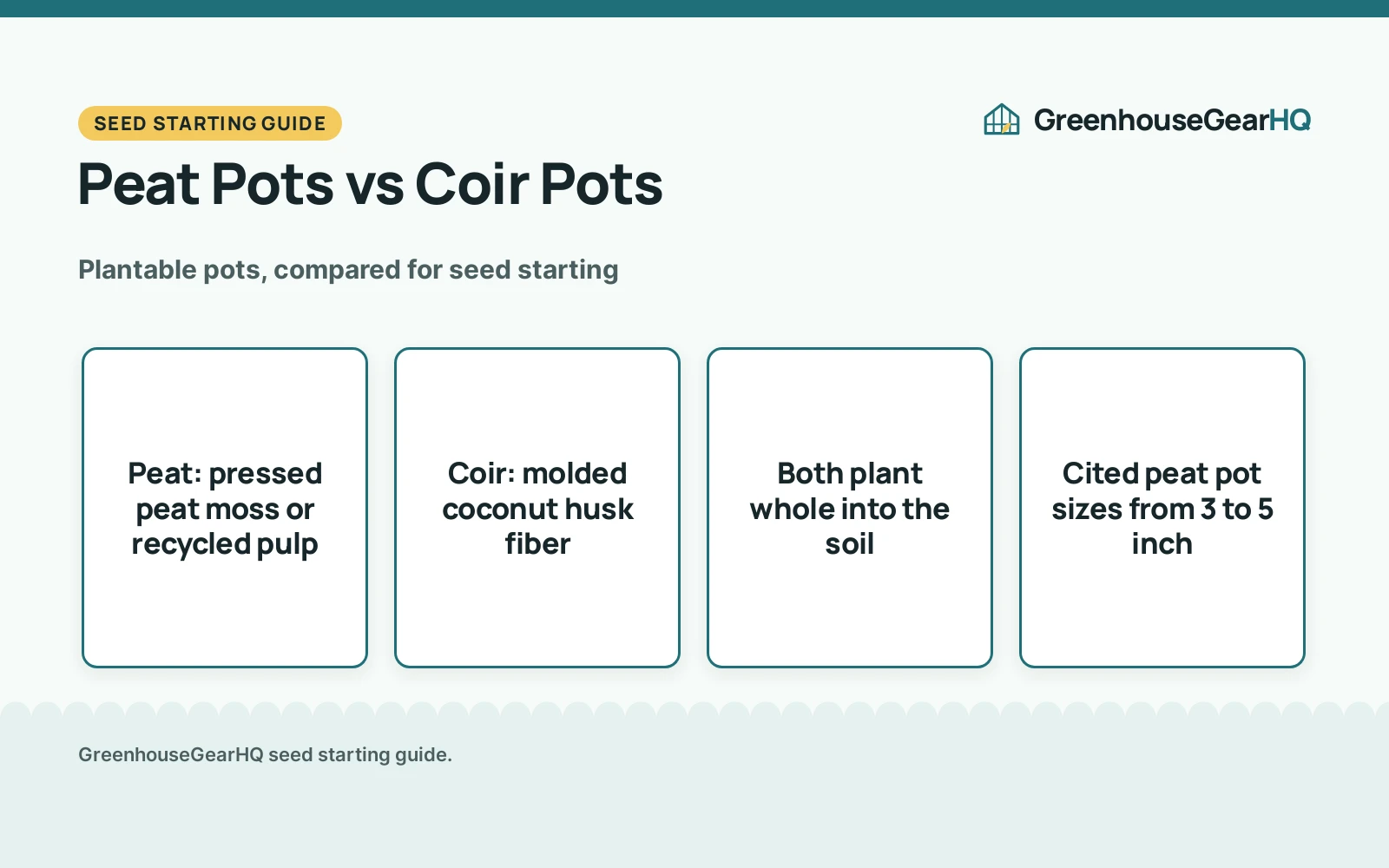
When the seed packets come out in late winter and every windowsill fills with trays, the peat pots vs coir pots question is really about what the pot is made from and how it behaves in the ground. Both are plantable pots: you set the whole pot into the soil so roots are never disturbed at transplant. Peat pots are pressed from peat moss or recycled pulp, while coir pots are molded from coconut husk fiber. This guide explains both step by step, using cited figures from pot listings wherever a number appears.
Other options worth a look
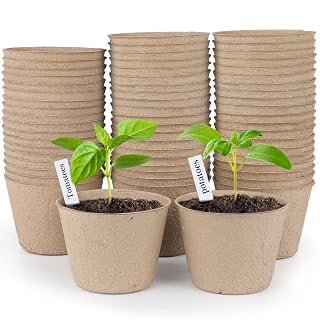 homenote 60 Pcs 4 Inch Peat PotsCheck price on Amazon
 Dalzom® 60Pcs 4” Peat Pots with 60Pcs Plant LabelsCheck price on Amazon
 30 Pack Peat PotsCheck price on Amazon
 Peat PotsCheck price on Amazon
 JNYONG 120 Packs 4 Inch Peat Pots,Garden Germination NurseryCheck price on Amazon
 JNYONG 60 Packs 4 Inch Peat PotsCheck price on Amazon
GreenhouseGearHQ earns a commission when you buy through links on this page, at no extra cost to you. As an Amazon Associate I earn from qualifying purchases. Affiliate disclosure.
How peat pots work
Peat pots are pressed from peat moss or recycled pulp into small round pots that break down in the soil after transplant. The Jiffy 3 inch 22-pack listing says its biodegradable pots transplant directly into the ground to protect roots, and the Jiffy 4 inch round 12-pack listing says the pots go straight from indoors to the ground without disturbing young roots. The Ferry-Morse 10-pack lists 3-inch pots made with Canadian sphagnum peat moss.
Drainage is a stated feature on several listings: the homenote 60-pack, the Dalzom 60-pack and the WinJiaYao 130-pack all cite drainage holes, while the Jiffy 4 inch round listing cites bottom slits for drainage. Cited sizes run from 3 inch (Jiffy 22-pack, Ferry-Morse 10-pack) through 3.15 inch (WinJiaYao 130-pack) and 4 inch (homenote, Dalzom and Jiffy 12-pack) to 5 inch (Jiffy 24-pack and 100-pack). The Dalzom 4 inch pot lists a 4 inch top diameter, a 2.7 inch bottom diameter and a 3 inch height.
How coir pots work
Coir pots are molded from coconut husk fiber, a byproduct of coconut processing, into plantable pots in the same idea as peat pots. Like peat pots they plant whole into the ground and break down in the soil, so roots are never pulled from the pot at transplant. Coir fiber tends to hold together better when wet than pressed pulp, which suits growers who water heavily or keep trays in a damp greenhouse. Like any plantable pot, they work best when the whole pot sits below the soil surface at transplant.
Peat pots vs coir pots: which one fits your seed starting
For most seed starting the two behave alike, so pick by what you water with and what you grow. Heavy waterers and damp greenhouses lean toward coir, which keeps its shape when wet. Growers who want the widest choice of sizes and pack counts lean toward peat, which our references cover from 10-packs to 130-packs. If you are still choosing trays to set them in, see our seed starting mix vs peat pellets guide and our humidifier for seed starting picks for the bench around them.
| Peat pots | Coir pots | |
|---|---|---|
| Material | Pressed peat moss or recycled pulp | Molded coconut husk fiber |
| Transplanting | Plants whole into the soil; roots are not disturbed | Plants whole into the soil; roots are not disturbed |
| Breakdown | Breaks down in soil; Jiffy and Dalzom listings cite biodegradable | Breaks down in soil |
| Wet strength | Pulp softens when kept wet | Fiber holds together better when wet |
| Drainage | homenote, Dalzom and WinJiaYao listings cite drainage holes; Jiffy 4 inch cites bottom slits | Drainage depends on the pot design |
| Cited sizes | 3, 3.15, 4 and 5 inch in listings | Varies by maker; compare before buying |
What to watch at transplant
Set the whole pot into the soil with no rim above the surface, since an exposed rim can wick moisture away from the roots. If roots are already circling inside the pot, tear the bottom gently before planting so they can push through. Water the pot and the surrounding soil after transplant so the pot starts breaking down, and keep new transplants watered until they are established.
FAQ for growers
What sizes do peat pots come in?
Listings cite 3 inch (Jiffy 22-pack, Ferry-Morse 10-pack), 3.15 inch (WinJiaYao 130-pack), 4 inch (homenote, Dalzom and Jiffy 12-pack) and 5 inch (Jiffy 24-pack and 100-pack).
Can you plant peat pots straight into the ground?
Yes. The Jiffy 4 inch listing says the pots go straight from indoors to the ground without disturbing young roots, and the Dalzom listing says its 100% biodegradable pots plant directly into the ground.
Do peat pots have drainage holes?
The homenote, Dalzom and WinJiaYao listings cite drainage holes, and the Jiffy 4 inch round listing cites bottom slits for drainage.
What are coir pots made of?
Coconut husk fiber, molded into plantable pots that break down in the soil like peat pots. They hold together well when wet, which suits heavy waterers.
Keep reading
See every seed starting guide and all seed starting tray guides.
More picks: seed starting mix for indoors, watering can for seed starting and seed starting mix for winter sowing.