On this page
Top picks at a glance
As an Amazon Associate I earn from qualifying purchases.
- 1
 Gardzen 5-Set Seed Starter Tray Kits9.7/10View on Amazon
- 2
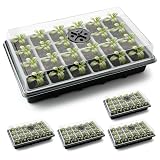 RooTrimmer 5-Pack Seed Starter Trays with Humidity Dome9.6/10View on Amazon
- 3
 Mr. Pen Seed Starter Tray Kits9.6/10View on Amazon
- 4
 Bootstrap Farmer 50 Cell Seed Starting Trays Extra StrengthView on Amazon
- 5
 10-Pack Heavy-Duty 1020 Seed Trays No HolesView on Amazon
- 6
 72-Cell Seed Trays with Drainage Trays-10 Sets 20 Packs-1020View on Amazon
- 7
 Burpee SuperSeed 36-Cell Reusable Seed Starting Tray forView on Amazon
- 8
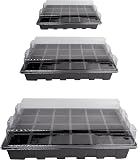 LOVEDAY 10 Pack -240 Cells -24 Grow Trays with Humidity DomeView on Amazon
- 9
 Handy Pantry Black Plastic Garden Tray InsertsView on Amazon
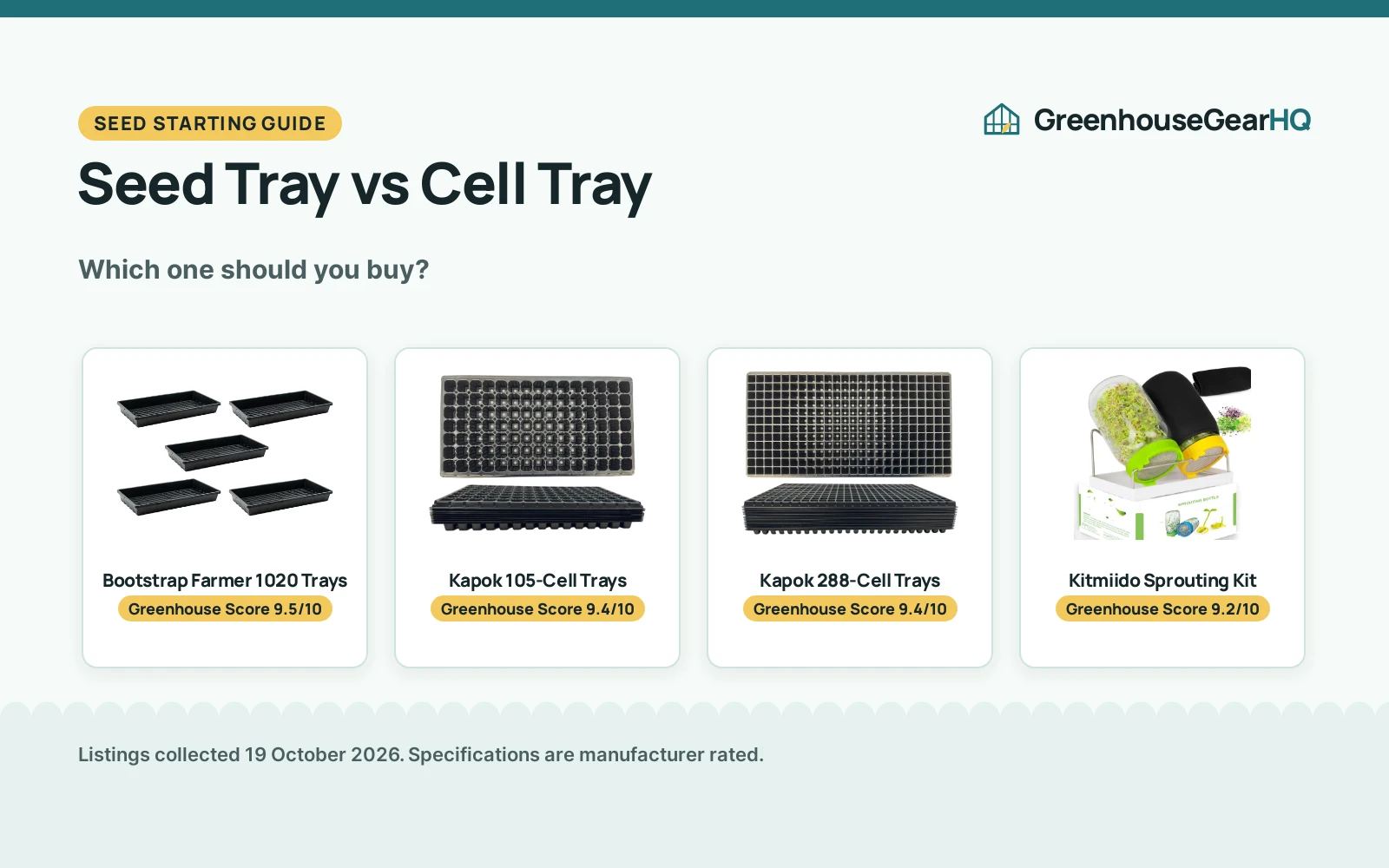
The seed tray vs cell tray verdict is short: pick a seed tray, the solid 1020 flat, for bottom watering, microgreens and holding pots; pick a cell tray for starting many seedlings with separate root balls that transplant cleanly. The Bootstrap Farmer 1020 trays are 2.525 in deep with no drain holes; the Kapok cell trays pack 105 or 288 cells per tray, each cell with its own drainage hole. Where a number appears below, it describes that listing only.
Other options worth a look
 Bootstrap Farmer 50 Cell Seed Starting Trays Extra StrengthCheck price on Amazon
 10-Pack Heavy-Duty 1020 Seed Trays No HolesCheck price on Amazon
 72-Cell Seed Trays with Drainage Trays-10 Sets 20 Packs-1020Check price on Amazon
 Burpee SuperSeed 36-Cell Reusable Seed Starting Tray forCheck price on Amazon
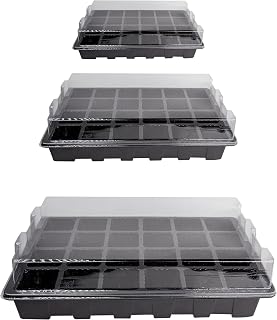 LOVEDAY 10 Pack -240 Cells -24 Grow Trays with Humidity DomeCheck price on Amazon
 Handy Pantry Black Plastic Garden Tray InsertsCheck price on Amazon
GreenhouseGearHQ earns a commission when you buy through links on this page, at no extra cost to you. As an Amazon Associate I earn from qualifying purchases. Affiliate disclosure.
Seed tray vs cell tray: the verdict
A seed tray is an open flat; a cell tray is a grid of small pots joined together. The seed tray side here is led by the Bootstrap Farmer 1020 flat: 5 trays, 21 by 11 in outside, 2.525 in deep, solid bottom with no drain holes, food safe and BPA free PP 5 plastic. The cell tray side is the two Kapok listings: a 105-cell tray and a 288-cell tray, both in 10-packs, 1.0mm thick, each cell drained. The Kitmiido sprouting kit is the odd one on the seed tray side: jars for sprouts, not soil, useful for the kitchen counter rather than the greenhouse bench.
Seed tray vs cell tray: side by side
| Pick | Side | Pack | Cells | Drainage |
|---|---|---|---|---|
| Bootstrap Farmer 1020 Trays | Seed tray | 5 trays | Open flat | None (solid bottom) |
| Kapok 105-Cell Trays | Cell tray | 10 trays | 1050 | Hole per cell |
| Kapok 288-Cell Trays | Cell tray | 10 trays | 2880 | Hole per cell |
| Kitmiido Sprouting Kit | Seed tray | 2 jars | Sprouts | Screen lids |
Size and build specs are the manufacturer’s ratings as published on each listing, gathered 19 October 2026.
What a seed tray does best
The solid 1020 flat is the workhorse of bottom watering: fill it, set pots or a cell tray inside, and let the soil drink from below. The Bootstrap Farmer example fits 18 standard 3.3 in pots, or nests any 1020 cell tray for bottom watering setups. No drain holes means no leaks on the shelf, and the opaque black plastic blocks light during germination. It is also the microgreen tray: sow dense, cut, done.
What a cell tray does best
Cell trays give every seedling its own compartment, so roots do not tangle and transplants pop out intact. The 105-cell Kapok gives each cell 1.69 in of depth, a 1.26 in opening and 28cc of soil, room for stocky starts. The 288-cell Kapok gives 1.34 in deep cells with a 0.71 in opening and 5cc of soil, built for volume: 2880 cells across the 10-pack. Every cell has a drainage hole to prevent overwatering and encourage air pruning. Both fit standard 10 by 20 in trays, which is exactly what the Bootstrap Farmer flat is.
Using them together
The listings point at the combo themselves: nest a cell tray inside a solid 1020 flat and you get drainage plus bottom watering in one stack. Start seeds in the cells, water from the flat, transplant with the root ball intact. That pairing is the standard greenhouse setup, and these four listings cover it.
In the Greenhouse
- Pick solid flats for bottom watering and microgreens.
- Pick cell trays for clean transplants; 105 cells for stocky starts, 288 for volume.
- Nest cell trays inside 1020 flats to combine drainage and bottom watering.
- Keep the sprouting kit on the counter; it is for sprouts, not soil starts.
FAQ for growers
Do seed trays have drain holes?
The Bootstrap Farmer 1020 trays have none: solid bottoms for bottom watering. The Kapok cell trays have a drainage hole in every cell.
How many cells per tray?
105 in the Kapok 105-cell tray, 288 in the 288-cell tray; both sold in 10-packs.
Can I bottom-water a cell tray?
Yes: the Bootstrap Farmer listing notes its 1020 flats nest any 1020 cell tray for bottom watering setups.
Keep reading
Also see our peat pot trays for seedlings. Also see our shop light vs grow light for seedlings. Also see our best watering can for seedlings.
More picks: tabletop greenhouse with humidity dome, seed starting mix for indoors and using heat mats for seed germination.