On this page
Top picks at a glance
As an Amazon Associate I earn from qualifying purchases.
- 1
 Ladbrooke 6-Pc Master Grower Soil Blocker Set: Maxi9.7/10View on Amazon
- 2
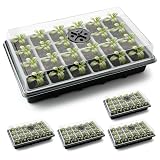 RooTrimmer 5-Pack Seed Starter Trays with Humidity Dome9.6/10View on Amazon
- 3
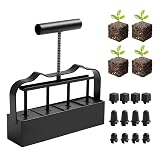 KHAMAL Soil Blocker for Seed Starting 4 CellView on Amazon
- 4
 Authentic Ladbrooke Mini 4 Soil BlockerView on Amazon
- 5
 Authentic Ladbrooke Micro 20 Soil BlockerView on Amazon
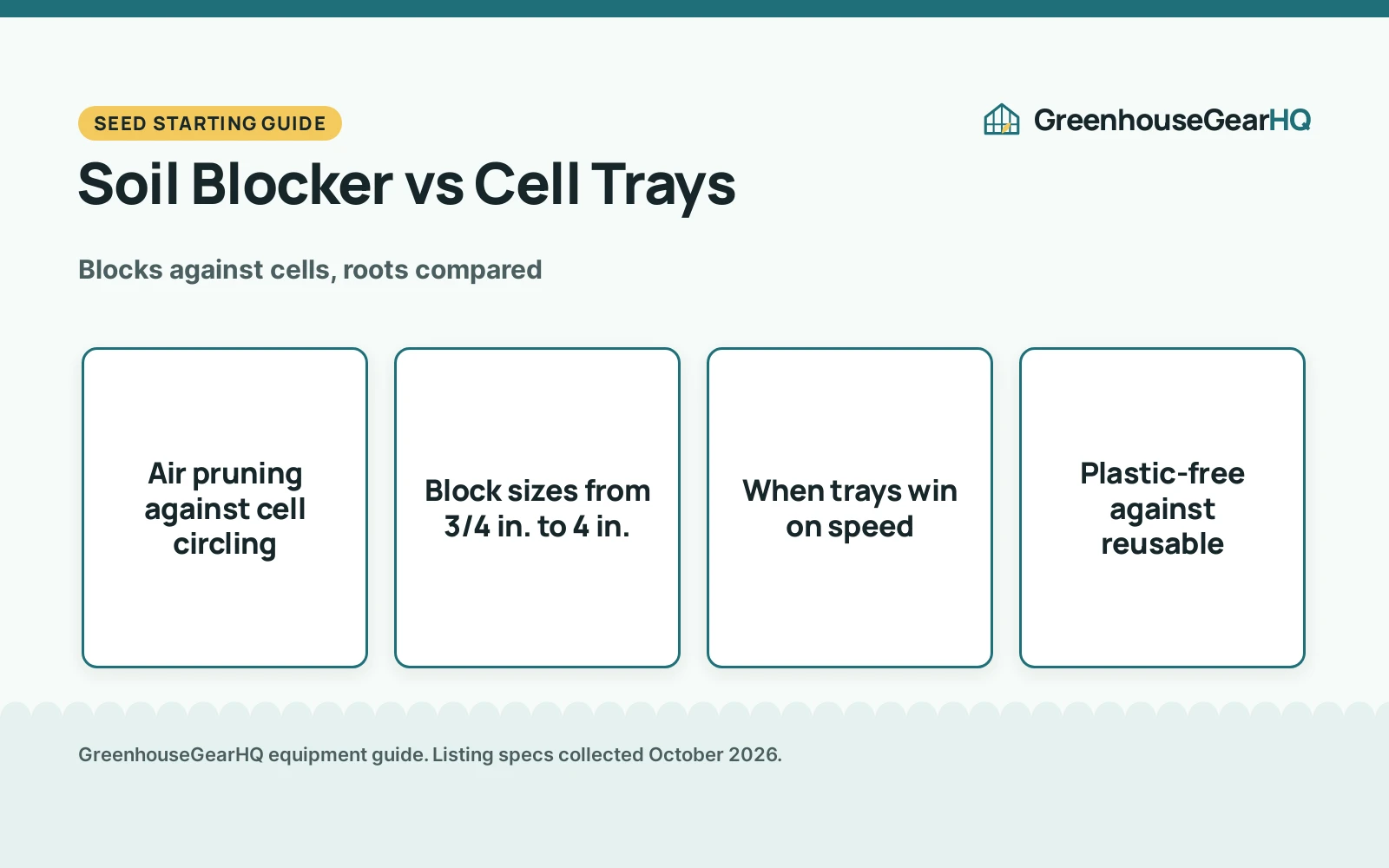
Soil blocker vs cell trays comes down to one trade: soil blockers make free-standing cubes of compressed mix that air-prune roots at the edges, while cell trays hold soil in reusable plastic cells that are faster to fill at scale. Pick the blocker if you want zero plastic and stronger root systems; pick cell trays if you start hundreds of seedlings and value speed.
Other options worth a look
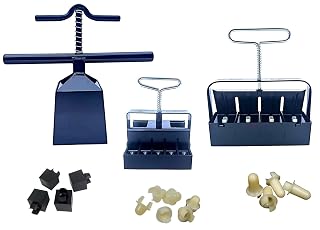 Authentic Ladbrooke 6-Pc Master Grower Soil Blocker SetCheck price on Amazon
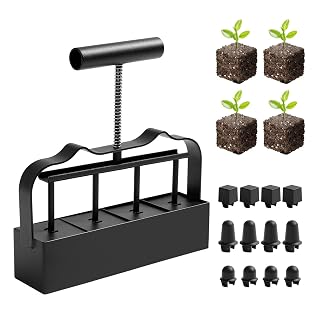 KHAMAL Soil Blocker for Seed Starting 4 CellCheck price on Amazon
 Authentic Ladbrooke Mini 4 Soil BlockerCheck price on Amazon
 Authentic Ladbrooke Micro 20 Soil BlockerCheck price on Amazon
GreenhouseGearHQ earns a commission when you buy through links on this page, at no extra cost to you. As an Amazon Associate I earn from qualifying purchases. Affiliate disclosure.
Soil blocker vs cell trays: the short answer
A soil blocker presses moistened mix into cubes that stand on their own: the Fiskars Soil Block Maker makes one 3 in. block or four 1-in. blocks per press, and the Ladbrooke system ranges from twenty 3/4 in. Micro 20 blocks up to a single 4 in. Maxi block. Cell trays are rigid plastic flats divided into cells, like the RooTrimmer 1020 mesh trays at 21 x 10.6 x 2.36 in, which the listing says are specifically designed to support soil blocks too. Blockers eliminate plastic pots entirely; trays keep the plastic but streamline big batches.
How soil blockers work
You press moistened blocking mix into the mold and eject the cube straight into a tray, with each block carrying a built-in seed dimple. Roots grow to the cube’s edge and stop there, a process the listings call air pruning: no circling, no crowding, and almost no transplant shock. The Ladbrooke listings describe a nesting system where 3/4 in. Micro 20 starter blocks drop directly into 2 in. Mini 4 blocks, which in turn fit the 4 in. Maxi block’s indentation, so seedlings move up with no repotting and no root disturbance. The Fiskars blocker carries a lifetime warranty, and the Ladbrooke tools have been made in England since the 1960s.
How cell trays work
Cell trays are plastic flats with individual cells that you fill with mix, sow and water as a unit. Standard 1020 trays fit shelving and heat mats, and mesh-bottom versions like the RooTrimmer add drainage and airflow under the cells. Trays shine at scale: filling and sowing a flat of cells is faster than pressing blocks one mold at a time. The trade-off is the plastic itself, which must be bought, cleaned, stored and eventually replaced, and roots can circle inside smooth cells.
Soil blocker vs cell trays for root health
Root health is the blocker’s strongest argument. Air pruning at the block’s exposed edges stops roots from circling, and the Ladbrooke listings claim virtually no transplant shock when blocks go straight into soil. Cell trays keep roots contained in plastic, which protects them during handling but can let them circle if seedlings stay too long. If you transplant on time, healthy seedlings come from either method; if you tend to leave seedlings sitting, blocks are more forgiving.
Soil, cost and plastic use
Blockers need a mix that holds together when pressed, and they use no plastic at all: the Ladbrooke listings put it plainly, no pots to buy, clean, store or throw away. A 10 lb Back to the Roots coir block expands to 51 qt of mix, and their seed starting block expands to 12 qt, so the growing medium itself is cheap either way. Cell trays reuse their plastic for many seasons, which spreads the cost, but cracked trays become waste. For an eco-first setup, blockers win; for a budget setup that already owns trays, trays win.
Which should you buy?
Choose a soil blocker if you start modest batches, hate plastic waste and want the strongest root systems: a Fiskars or Ladbrooke blocker plus a mesh tray like the 21 x 10.6 x 2.36 in RooTrimmer covers the whole workflow. Choose cell trays if you start large batches, value speed over root perfection, or already own flats and domes. Many growers use both: blocks for tomatoes and peppers that stay long, trays for quick greens. See our best seed starting trays with dome picks for tray setups.
FAQ for growers
Do soil blocks fall apart when watered?
A well-pressed block holds together through watering; the listings describe pressing moistened mix firmly into the mold. Mesh-bottom trays like the 21 x 10.6 x 2.36 in RooTrimmer give drainage so blocks are not sitting in water.
What size soil block should I start with?
The listings suggest a sequence: start fine seeds in 3/4 in. Micro 20 blocks, move up to 2 in. Mini 4 blocks, and finish large transplants like tomatoes in 4 in. Maxi blocks. The Fiskars maker offers a 3 in. or four 1-in. blocks per press.
Can I use regular potting mix in a blocker?
The listings call for a soil blocking mix pressed while moistened; ordinary loose mix may crumble. Back to the Roots sells seed starting mix that expands to 12 qt from a compressed block.
Are cell trays really faster?
For large batches, yes: filling a flat of cells and sowing it takes less time than pressing blocks mold by mold. For a few dozen seedlings, the difference is small.
Keep reading
See every seed starting guide and all seed starting trays guides. Also see our soil blocks vs seed trays comparison.
More picks: trays for microgreens, trays with domes and trays for peppers.