On this page
Top picks at a glance
As an Amazon Associate I earn from qualifying purchases.
- 1
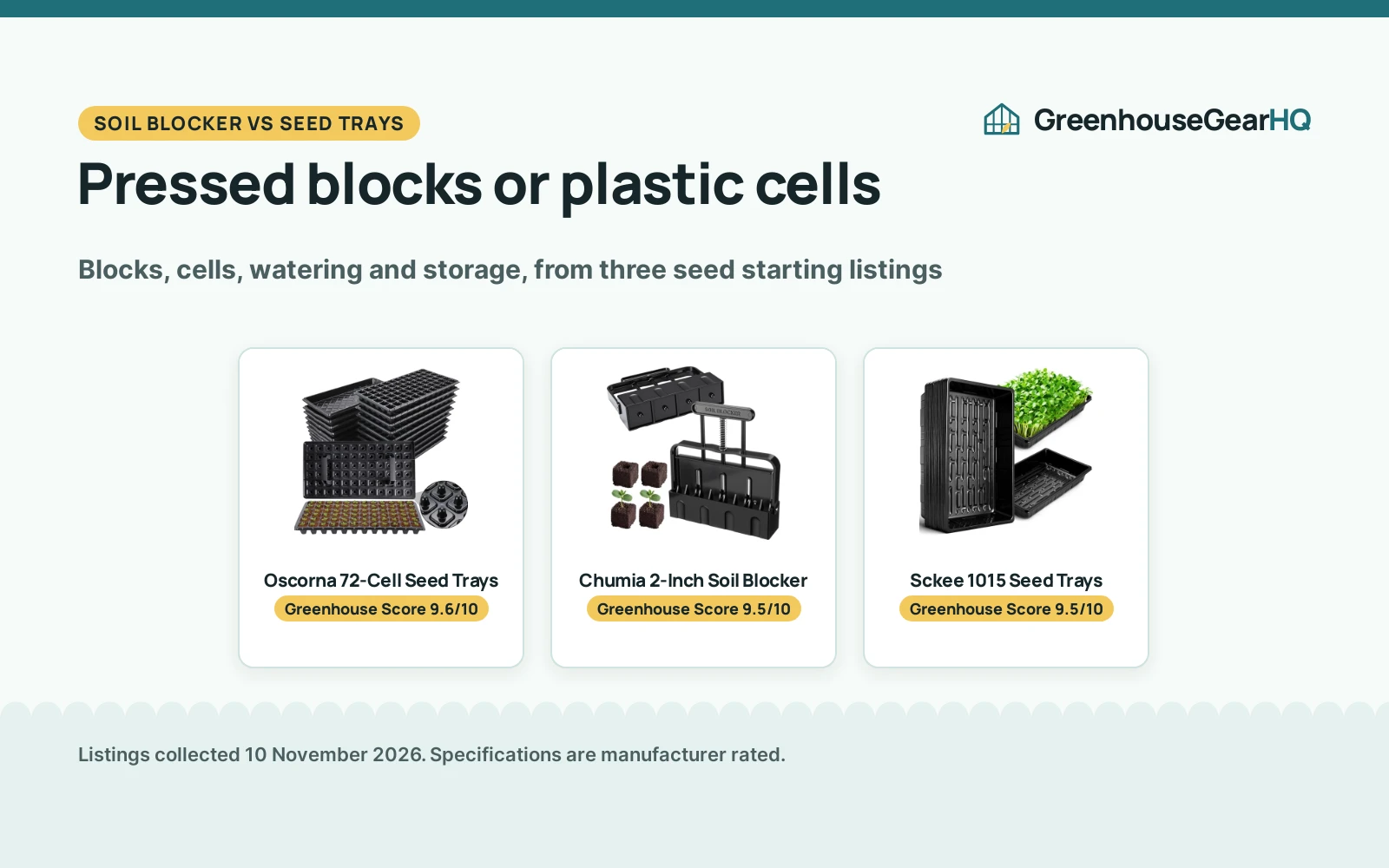
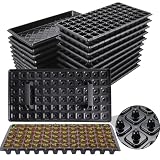 Oscorna 72-Cell Seed Trays9.6/10View on Amazon
- 2
 Chumia 2-Inch Soil Blocker9.5/10View on Amazon
- 3
 Sckee 1015 Seed Trays9.5/10View on Amazon
On a cold late-winter morning, the seed starting bench fills up again, and the soil blocker vs seed trays choice decides how the season starts. Press damp mix into freestanding blocks, or sow into divided plastic cells. This comparison looks at a Chumia soil block maker and Oscorna and Sckee seed tray kits to show where each method fits, what each listing states, and who should pick which side.
GreenhouseGearHQ earns a commission when you buy through links on this page, at no extra cost to you. As an Amazon Associate I earn from qualifying purchases. Affiliate disclosure.
Quick verdict: choose the soil blocker if you want to start seeds without plastic cells and press uniform blocks in batches with a single hand tool. Choose seed trays if you want divided cells, drainage holes and bottom watering, or flat trays for microgreens. The Oscorna kit leads this comparison on the strength of its dibber, base trays and drainage, while the Chumia blocker suits growers who prefer blocks and the Sckee trays suit flat-tray growing with no leakage.
Three examples
| # | Product | Greenhouse Score | Buy |
|---|---|---|---|
| 1 | Oscorna 72-Cell Seed Trays | 9.6/10 | Buy on Amazon |
| 2 | Chumia 2-Inch Soil Blocker | 9.5/10 | Buy on Amazon |
| 3 | Sckee 1015 Seed Trays | 9.5/10 | Buy on Amazon |

Oscorna 72-Cell Seed Trays
A 72-cell seed tray kit with 10 trays, 10 base trays, a 72-hole dibber and 20 plant labels, built for bottom watering and even sowing depth.
Pros
- 72 cells per tray with a hole at the bottom of each cell for drainage
- Base trays allow bottom watering so soil stays damp without overwatering
- 72-hole dibber board sets every seed at the same depth
- 10 trays in the kit plant 720 seeds at once
Cons
- No warranty term is stated
- Cells are 1.6 inches square, so larger seedlings outgrow them fast
- The kit needs shelf space for 10 trays plus 10 base trays

Chumia 2-Inch Soil Blocker
A 2-piece set of hand held 4-cell soil block makers with a 2 inch mold, an extended anti-slip grip and a compact size for shelf storage.
Pros
- One press makes 4 uniform square soil blocks
- Extended anti-slip grip with a spiral structure eases pressing
- High strength plastic is corrosion-resistant and rinses clean
- Uniform blocks support air permeability and water retention
Cons
- No warranty term is stated
- No drainage or watering detail is stated for the pressed blocks

Sckee 1015 Seed Trays
A 20 pack of reusable 1015 seed starting trays with no drain holes, sized for microgreens and indoor growing on a heat mat or under a dome.
Pros
- 20 pack of sturdy reusable trays that stack for storage
- No holes means no leakage onto shelves or sills
- Fits microgreens, heat mats, domes and soil sowing
- Trays measure 14.5 by 9.1 inches, a compact indoor size
Cons
- No drain holes, so water can pool if overwatered
- No cell count or cell size is stated, so spacing is up to the grower
- No warranty term is stated
As an Amazon Associate I earn from qualifying purchases.
Other options worth a look
 Authentic Ladbrooke Micro 20 Soil BlockerCheck price on Amazon
 BeGrit 1020 Mesh Bottom Trays with Holes for Seed StartingCheck price on Amazon
 RooTrimmer 10 Pack 1020 Mesh TraysCheck price on Amazon
 RooTrimmer 10 Pack 1020 Trays and 10 Pack 1020 Mesh BootomCheck price on Amazon
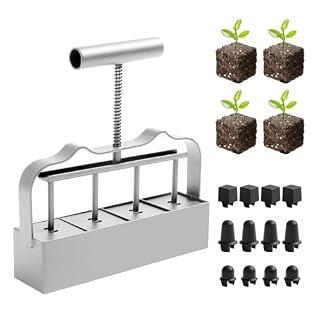 KHAMAL Soil Blocker for Seed Starting 4 CellCheck price on Amazon
 MODUODUO Seed Sprouter Tray 2PCS Soil-Free Wheatgrass GrowerCheck price on Amazon
Soil blocker vs seed trays: side by side
| Seed Starter | Greenhouse Score | Method | Cells or blocks | Watering | Pack | Warranty | Amazon |
|---|---|---|---|---|---|---|---|
| Oscorna 72-Cell Seed Trays | 9.6/10 | Seed trays | 72 cells per tray | Base tray bottom watering | 10 trays, 10 base trays | Not stated | View on Amazon |
| Chumia 2-Inch Soil Blocker | 9.5/10 | Soil blocker | 4 blocks per press | Not stated | 2 pack | Not stated | View on Amazon |
| Sckee 1015 Seed Trays | 9.5/10 | Seed trays | Flat trays, no cells stated | No holes, no leakage | 20 pack | Not stated | View on Amazon |
Size and build specs are the manufacturer’s ratings as published on each listing, gathered 10 November 2026.
How the soil blocker works
The Chumia tool presses damp mix into blocks instead of holding seedlings in cells. One press makes 4 standard square soil blocks from a 2 inch mold, and the maker says the tool is 4 times more efficient than a single-hole mold. The blocks come out uniform in size, and the maker links that uniformity to better air permeability and water retention, a higher germination rate and healthier root development. The 2-piece set is high strength plastic with an extended anti-slip grip, and the maker says it rinses clean and stands upright on a shelf. No base tray, drainage detail or watering guidance is stated for the pressed blocks.
Cells, drainage and watering
The Oscorna kit is the most complete watering setup of the three listings. Each tray holds 72 cells, each cell measures 1.6 inches square by 1.7 inches deep, and each cell has a hole at the bottom for drainage, which the maker says prevents waterlogging. The base tray fits the seedling tray and allows bottom watering, so seeds absorb moisture from below while the soil stays damp without overwatering. The 72-hole dibber board has a handle and punches holes at the same depth across the tray, which the maker says helps seedlings grow more evenly.
The Sckee trays take the opposite approach: no holes and no leakage. That suits microgreens and flat sowing, and the trays also work as a base under other pots, but water has nowhere to drain if the tray is overwatered. The Chumia listing states no drainage or watering detail at all, so the blocks depend on whatever tray or surface the grower places them on.
Pack sizes and storage
Oscorna ships 10 seedling trays, 10 base trays, 1 dibber and 20 plant labels, and the maker says 10 trays plant 720 seeds at once. That is the kit for sowing in volume, and it needs shelf space for the full set. Sckee ships a 20 pack of flat trays that stack for storage and take up small space, a practical shape for indoor growers who sow microgreens in rotation. Chumia ships a 2-piece set of block makers, and the compact tool stands upright on a shelf or windowsill when not in use. A blocker takes far less storage than a stack of trays, but it produces blocks one press at a time, 4 blocks per press, so large sowings take more passes than filling 72-cell trays.
Listing gaps to check
The Chumia listing disagrees with itself on weight, with the bullets stating 409 grams and the spec table listing 1.72 pounds, and on size, with the bullets giving 24 x 21.5 x 5.5 cm, the spec table giving 9.65 x 8.86 x 4.92 inches and the size field giving 9.5 x 8.5 x 2.2 inches. Treat the weight and the depth as unclear until the seller confirms them. The Sckee listing disagrees on depth, with the bullets stating 2.3 inches and the spec table listing 2.5 inches, and it states no cell count or cell size. The Oscorna tray length reads 20.9 inches in the bullets and 21.0 inches in the spec table, a small difference. No listing in this comparison states a warranty term, so none of the three earns warranty points in the score.
Which should you choose?
Choose a soil blocker if you want to start seeds without plastic cells, press uniform blocks in batches, and store one compact tool on a shelf. Compare more options in the best soil blocker for transplanting picks.
Choose seed trays if you want divided cells with drainage, bottom watering through base trays, or flat trays for microgreens. The best 72 cell seed starting trays roundup and the best seed starting trays for transplanting picks compare more tray kits.
If you are still deciding between blockers and other cell-free methods, the soil blocker vs paper pots comparison covers another side of the same choice.
In the Greenhouse
- Press Chumia blocks on a flat surface, then set the blocks in a tray that catches water, since the listing states no base tray.
- Use the Oscorna dibber to set seed depth evenly across the 72 cells, then water from the base tray.
- Stack Sckee trays when empty, and use them as flat trays for microgreens or as a base under other pots.
- Check the Chumia weight and size with the seller before ordering, since the bullets and the spec table disagree.
Scoring notes
| Product | Greenhouse Score | Perf. /35 | Build /25 | Value /25 | Safety /10 | Warranty /5 |
|---|---|---|---|---|---|---|
| Oscorna 72-Cell Seed Trays | 9.6 | 30 | 21 | 21 | n/a | 0 |
| Chumia 2-Inch Soil Blocker | 9.5 | 29 | 19 | 20 | n/a | 0 |
| Sckee 1015 Seed Trays | 9.5 | 27 | 20 | 19 | n/a | 0 |
Greenhouse Scores use 9.2 as the lowest value and 9.8 as the highest, with weighted points placed between them in proportion. More points always earns more score. An unpowered frame or shelf with no listed safety features is scored without safety, across the other 90 points.
The Greenhouse Score weighs performance, build, value, safety and warranty, as explained on the How we pick page. For seed starting gear, safety reflects stated safety-relevant features or certifications; none of these listings states one, so none earns safety points. No listing states a warranty term, so none earns warranty points either. The Oscorna kit leads on performance for its complete kit and drainage, the Chumia blocker loses build points for its weight and size contradictions, and the Sckee trays lose performance points for having no cells or drainage holes.
FAQ for growers
Is a soil blocker better than seed trays?
It depends on method. The Chumia blocker presses 4 uniform blocks per press with no plastic cells, while the Oscorna kit offers 72 cells per tray with drainage holes and base trays for bottom watering.
How many seeds can the Oscorna trays start at once?
The maker says 10 trays plant 720 seeds at once, with 72 cells in each tray.
Do seed trays need drainage holes?
The Oscorna trays have a hole at the bottom of each cell for drainage, while the Sckee trays have no holes and are listed as no leakage, so the choice depends on whether the grower wants water to drain or stay in the tray.
Can soil blocks be stored or reused like trays?
The Chumia listing describes the tool, not the blocks, as reusable; the maker says the plastic tool rinses clean and the compact tool stands upright on a shelf. The Oscorna and Sckee trays are listed as reusable and stackable.
Keep reading
See every seed starting trays guide and all seed starting guides.
More picks: soil blockers for transplanting, 72-cell seed starting trays, seed starting tips and soil blocker vs paper pots.