On this page
Top picks at a glance
As an Amazon Associate I earn from qualifying purchases.
- 1
 MELONFARM 56x28x72 Grow Tent9.5/10View on Amazon
- 2
 MELONFARM 2x2 Grow Tent9.5/10View on Amazon
- 3
 MARS HYDRO 2.3x2.3 Grow Tent9.6/10View on Amazon
- 4
 VIVOSUN S558 5x5 Grow Tent 60"x60"x80" High Reflective MylarView on Amazon
- 5
 4x2 Grow Tent Plant Tent 600D Mylar Hydroponic 48"x24"x60"View on Amazon
- 628"x28"x72'' Grow TentView on Amazon
- 7
 2x2 Green Hut Grow Tent 24"x24"x48" 600D Mylar HydroponicView on Amazon
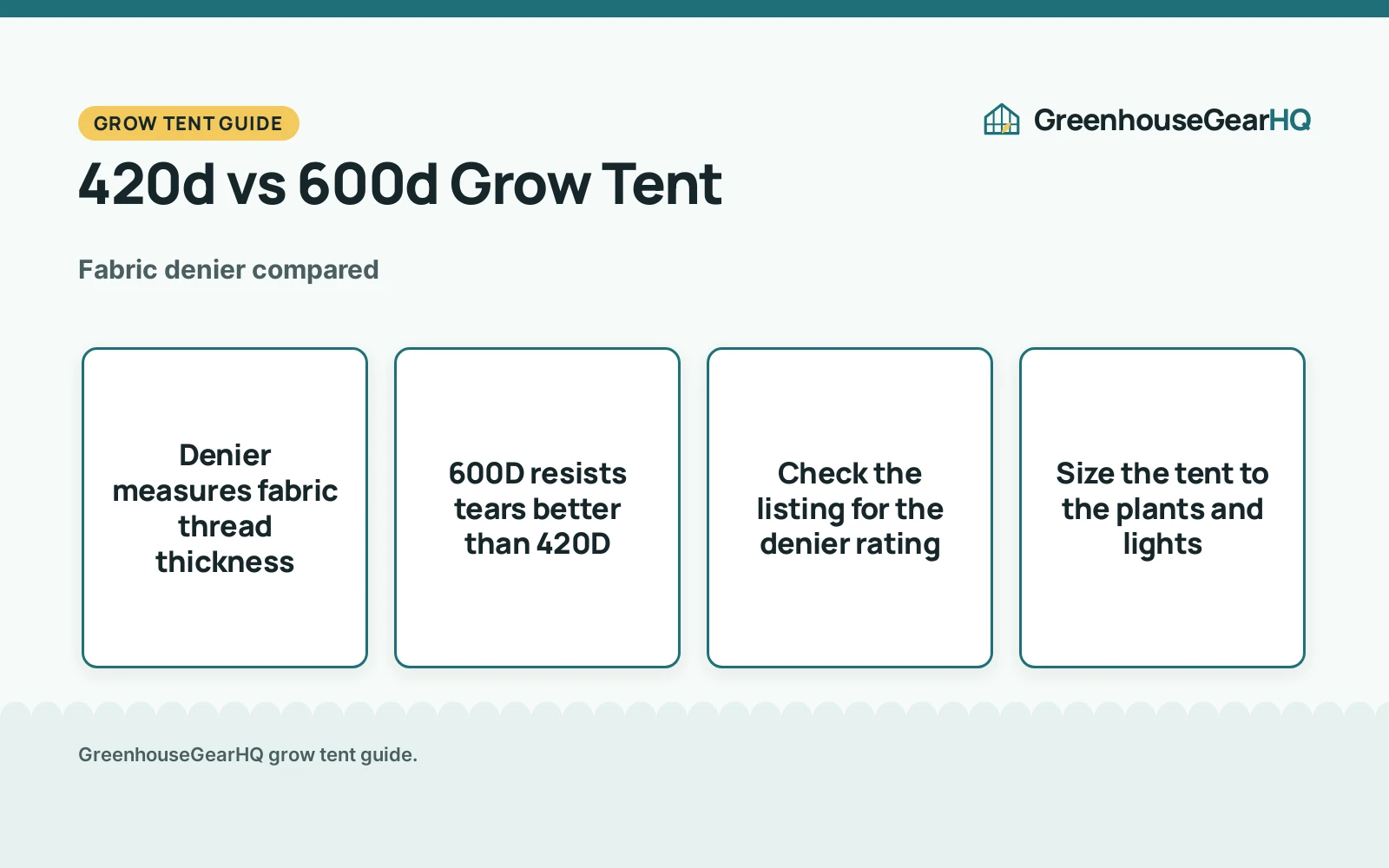
When the tent walls feel thin and pinholes of light show at the seams, the 420d vs 600d grow tent question is really about how long the fabric lasts. The short answer: 600D canvas is thicker, more tear-resistant and better at blocking light than 420D, so it suits a tent that will run for years. A 420D tent costs less and works fine as a starter, but it wears faster under daily use. This guide explains what denier means, how the two compare on durability and light blocking, and looks at four listings, two of them in 600D.
Other options worth a look
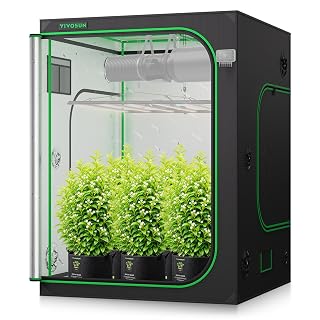 VIVOSUN S558 5x5 Grow Tent 60"x60"x80" High Reflective MylarCheck price on Amazon
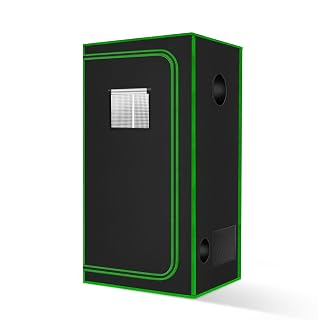 2x2 Grow TentCheck price on Amazon
 4x2 Grow Tent Plant Tent 600D Mylar Hydroponic 48"x24"x60"Check price on Amazon
 56"x28"x72'' Grow TentCheck price on Amazon
- 28"x28"x72'' Grow TentCheck price on Amazon
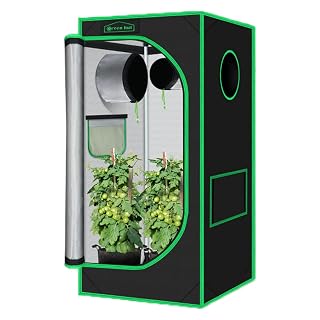 2x2 Green Hut Grow Tent 24"x24"x48" 600D Mylar HydroponicCheck price on Amazon
GreenhouseGearHQ earns a commission when you buy through links on this page, at no extra cost to you. As an Amazon Associate I earn from qualifying purchases. Affiliate disclosure.
What denier means for a grow tent: 420d vs 600d grow tent
Denier, written as D, measures the thickness of the fibers woven into the tent fabric. A higher number means thicker threads and a heavier weave. For grow tents, the two common ratings are 420D and 600D. The number does not tell the whole story: the reflective mylar lining, the stitching and the zipper quality all matter too. But all else equal, a higher denier resists punctures, abrasion and stretching better than a lower one.
Check the listing before you buy, because not every tent states its denier. Two of the four listings below name 600D in the title; the other two do not state a denier rating at all. When the listing is silent, look at the weight and the described materials for clues, and assume the lighter tent uses the thinner fabric.
Weight is the quickest proxy when denier is missing. The MELONFARM 2×2 at 5.5 kg and the zazzy 4×2 both carry 600D canvas, while the much larger Spider Farmer 8×4 weighs 21 kg for its steel frame and size. A tent that feels light for its dimensions is usually the thinner fabric, so compare the stated weight against the footprint before you decide.
600D: thicker, tougher, longer-lasting
The 600D tents in these listings pair the thicker canvas with double stitching and heavy-duty zippers. The MELONFARM 2×2 lists 600D double-stitched canvas, a reflective waterproof polyester film and a 24 by 24 by 63 inch size at 5.5 kg. The zazzy 4×2 lists tear-proof 600D canvas, double stitching, a 98-percent reflective mylar interior and a 48 by 24 by 60 inch size. Both describe the fabric as tear-resistant and light-proof, which is exactly what the higher denier buys.
A 420D tent is lighter and usually cheaper, and it still blocks light when new. Where it falls behind is longevity: thinner fabric stretches more on the frame, zippers strain the material sooner, and a stray branch or tool edge punctures it more easily. For a tent that gets zipped open daily and moved between seasons, the 600D upgrade pays for itself. For a first tent in a closet that rarely moves, 420D is a reasonable saving.
The gear: four listings compared
The two 600D listings lead on fabric. The MELONFARM 2×2 is the compact pick: 24 by 24 by 63 inches, 5.5 kg, metal frame, 600D double-stitched canvas with a reflective polyester film, plus an observation window and floor tray. The zazzy 4×2 is the larger 600D pick: 48 by 24 by 60 inches, metal frame, tear-proof 600D canvas with double stitching, a 98-percent reflective mylar interior, an easy-view window and a removable floor tray.
The other two do not state a denier. The Spider Farmer 8×4 is the big tent: 96 by 48 by 80 inches, 21 kg, a metal and steel frame rated to 240 pounds. The VIVOSUN 5×10 is the largest: 120 by 60 by 80 inches with an alloy steel frame. Both suit growers who need floor space more than fabric thickness, but without a stated denier, buy them for the size and frame, not the canvas.
FAQ for growers
Is 600D always better than 420D?
For durability and tear resistance, yes. But a well-made 420D tent with good zippers can outlast a cheap 600D one, so read the whole listing, not just the denier number.
Do all grow tents list their denier?
No. Two of the four listings here state 600D in the title; the Spider Farmer and VIVOSUN do not state a denier. When it is missing, compare weight, materials and zipper descriptions.
What size tent do I need?
Match the tent to the plants and the lights. These four range from 24 by 24 inches to 120 by 60 inches, so measure the space first and leave room to work around the plants.
Keep reading
See every grow tents guide and all indoor growing guides. Also see our 3×5 vs 5×5 grow tent comparison and our grow tent for herbs picks.
More picks: see grow tent for herbs, 3×5 vs 4×4 tents and ducting under $30.