On this page
Top picks at a glance
As an Amazon Associate I earn from qualifying purchases.
- 1
 EAGLE PEAK 8x8 Walk In Pop Up GreenhouseView on Amazon
- 2
 8x8 FT Walk in Greenhouse with HygrometerView on Amazon
- 3
 VIVOSUN S848 4x8 Grow Tent 96"x48"x80" High Reflective MylarView on Amazon
- 4
 VIVOSUN Larger 4X8 Grow Tent 108"x48"x80" Mylar Clone ChamberView on Amazon
- 5
 4x8 Grow TentView on Amazon
- 6
 96x48x78 Reflective Indoor Grow Tent 4x8View on Amazon
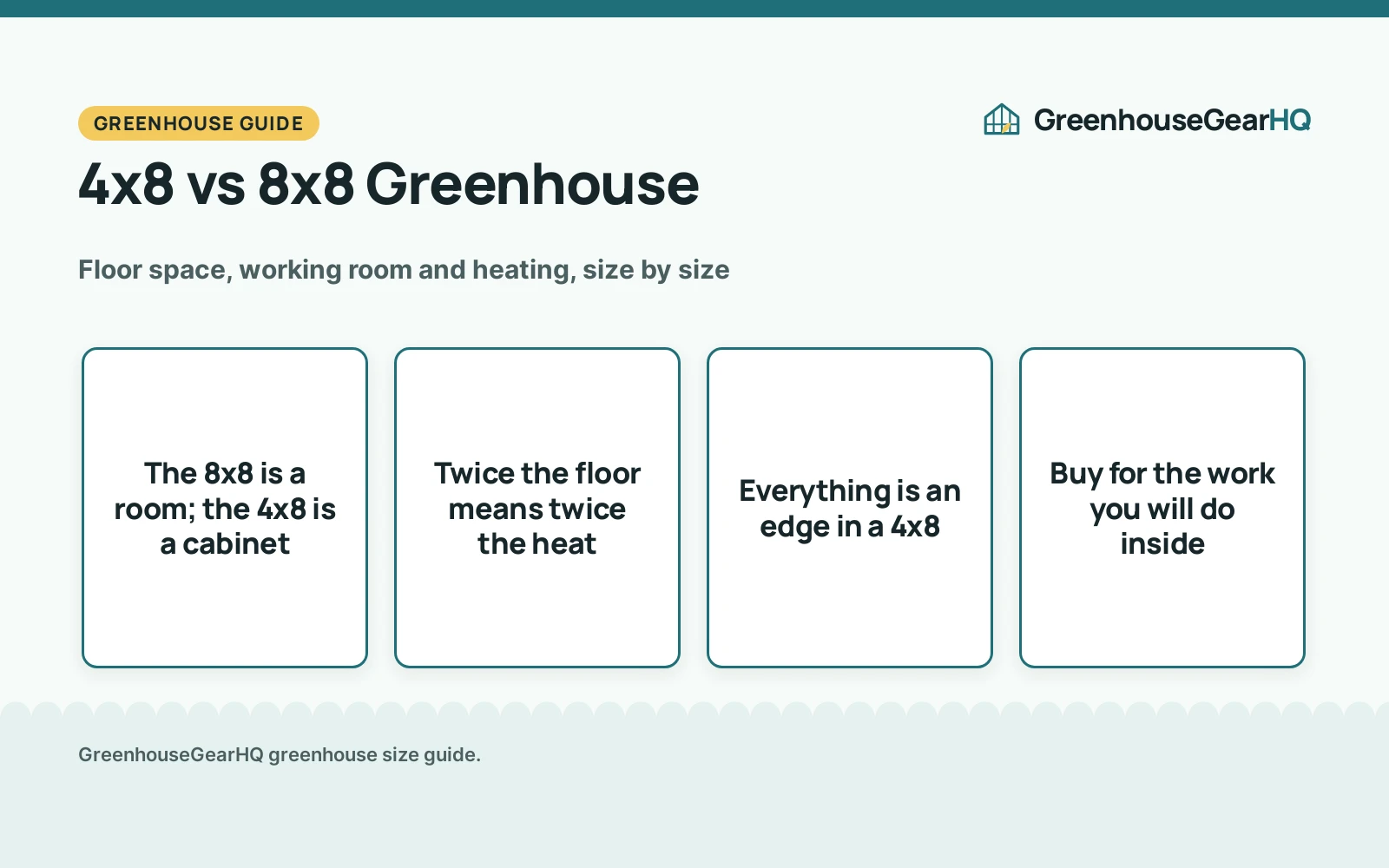
Choose the 8×8 if you will work inside the greenhouse: it has twice the floor area of the 4×8, room for beds on both sides and a path between them, and space to turn with a watering can in hand. Choose the 4×8 if it will stand against a wall or fence as a lean-to style house, hold one row of staging, and serve a smaller collection. The 4×8 vs 8×8 greenhouse choice is really a choice between a cabinet you reach into and a room you step into, and everything else, heating, shelving and cost, follows from that.
Other options worth a look
 EAGLE PEAK 8x8 Walk In Pop Up GreenhouseCheck price on Amazon
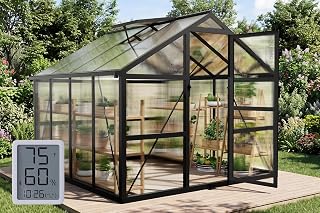 8x8 FT Walk in Greenhouse with HygrometerCheck price on Amazon
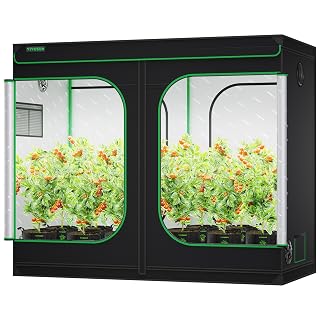 VIVOSUN S848 4x8 Grow Tent 96"x48"x80" High Reflective MylarCheck price on Amazon
 VIVOSUN Larger 4X8 Grow Tent 108"x48"x80" Mylar Clone ChamberCheck price on Amazon
 4x8 Grow TentCheck price on Amazon
 96x48x78 Reflective Indoor Grow Tent 4x8Check price on Amazon
GreenhouseGearHQ earns a commission when you buy through links on this page, at no extra cost to you. As an Amazon Associate I earn from qualifying purchases. Affiliate disclosure.
Floor space: what the extra width buys
A 4×8 is one staging deep. Set staging along the long side and the house is full: one row of trays or pots, worked from the door or from a path you leave along the front. An 8×8 takes staging on both long sides with a working path down the middle, which doubles what stands under cover and lets you walk between the rows instead of reaching over the front row to the back.
That difference decides crops. Tall plants, a citrus tree in a pot, a bench for potting on: each needs floor that a 4×8 spends entirely on its single row. Seed starting, orchids, overwintering tender plants and herbs fit the 4×8’s single row well, because trays stack on staging tiers rather than spreading on the floor.
Working room and access
In a 4×8 you work from the doorway and the front, leaning in. That is fine for watering and harvesting, and awkward for repotting, cleaning and carrying anything bulky. In an 8×8 you stand inside, close the door behind you against cold or insects, and work at a bench. If the greenhouse is somewhere you will spend an hour at a time, the 8×8 is the size that respects that hour.
Access shapes the smaller size too. A 4×8 against a wall loses nothing, since you never needed its back side. An 8×8 needs clearance around it for panel replacement, cleaning and snow clearing, so its real footprint in the garden is larger than its frame.
Heat, light and running costs scale with size
Twice the floor means roughly twice the air to heat and twice the glazing to lose heat through, so an 8×8 costs more to keep frost-free through winter nights. It also buffers better: a larger air volume warms and cools more slowly through a spring day, which young plants prefer. Venting matters more in the bigger house for the same reason; a roof vent, like the one on the AirWire house below, earns its place sooner.
Light is the same sun for both, but the 8×8’s centre path receives less of it than its edges, so light-hungry plants belong on the edges and shade-tolerant work, potting and storage, in the middle. In a 4×8 everything is an edge, which is its quiet advantage.
Gear for a 4×8 vs 8×8 greenhouse
The houses and panels near these sizes show how the market splits. Full walk-in houses cluster just under the 4×8 footprint or at full room size, and panels let you build or re-cover to either.
- AirWire 4×6 FT Walk-in Polycarbonate Greenhouse: a complete house just under the smaller footprint, with 720g polycarbonate panels, a reinforced aluminum frame, a roof vent and a quick slide-in panel setup. This is the ready-made answer when a 4×8 is the space you have.
- EAGLE PEAK 9×4 Pop Up Lean-To Walk-In Greenhouse: a lean-to format with a steel frame, made to stand against a wall, which is how most 4-foot-deep houses are actually used.
- EAGLE PEAK 6×4 Pop Up Greenhouse: a smaller pop up house with a roll-up door and mesh windows, for seasonal cover rather than a permanent room.
- EVERECO Greenhouse Panels, 8′ x 4′: polycarbonate sheets in a 6 pack, with over 90% light transmittance and a UV-resistant coating, for building or re-covering a frame at either size. See our best greenhouse plastic for walk in greenhouse comparison for film against panels.
What this guide does not cover
This guide compares the two footprints, not brands: it does not rank complete 4×8 or 8×8 kits against each other. It also says nothing about foundations, anchoring or planning rules, which depend on your site and your local rules. For complete houses, see our best greenhouse for citrus trees roundup.
FAQ for growers
Is an 8×8 greenhouse twice the work of a 4×8?
It is twice the floor to fill, heat and clean, and most growers fill it. The work per plant is the same; there are simply more plants. If your time is the limit, the 4×8 keeps the hobby sized to it.
Can I grow the same plants in a 4×8?
Almost all of them, fewer at a time. The exceptions are plants that need floor room of their own, a potted tree or a melon bed, and work that needs a bench inside, which the 4×8 has no floor left for.
Which size is cheaper to heat?
The 4×8, by size alone: less air and less glazing. The 8×8 holds a steadier temperature through the day, which is a different kind of saving, in plants not stressed by swings.
Should I buy bigger than I need?
Only if the garden can give the 8×8 its clearance and your growing is expanding. A half-empty 8×8 costs more to heat than a full 4×8 and grows nothing extra.
Keep reading
More greenhouse reading: best greenhouse for citrus trees and best circulation fan for pop up greenhouse.
More picks: walk-in greenhouses, polycarbonate greenhouses, mini greenhouses and greenhouses.