On this page
Top picks at a glance
As an Amazon Associate I earn from qualifying purchases.
- 1
 Coolaroo 50% UV Block Garden Shade Cloth9.8/10View on Amazon
- 2
 Amgo 30% Shade Cloth 8' x 16' Mesh Tarp with Grommets9.7/10View on Amazon
- 3
 ColourTree 30% Black Shade Cloth9.7/10View on Amazon
- 4
 BeGrit Shade Cloth for Garden 50% 6x6.5ft Sun Shade withView on Amazon
- 5
 10x20FT Shade ClothView on Amazon
- 6
 Cool Area Sun Shade Cloth with Grommets for GardenView on Amazon
- 7
 vensovo 50% Black Shade ClothView on Amazon
- 8
 vensovo 30% Black Shade ClothView on Amazon
- 9
 vensovo 40% Black Shade ClothView on Amazon
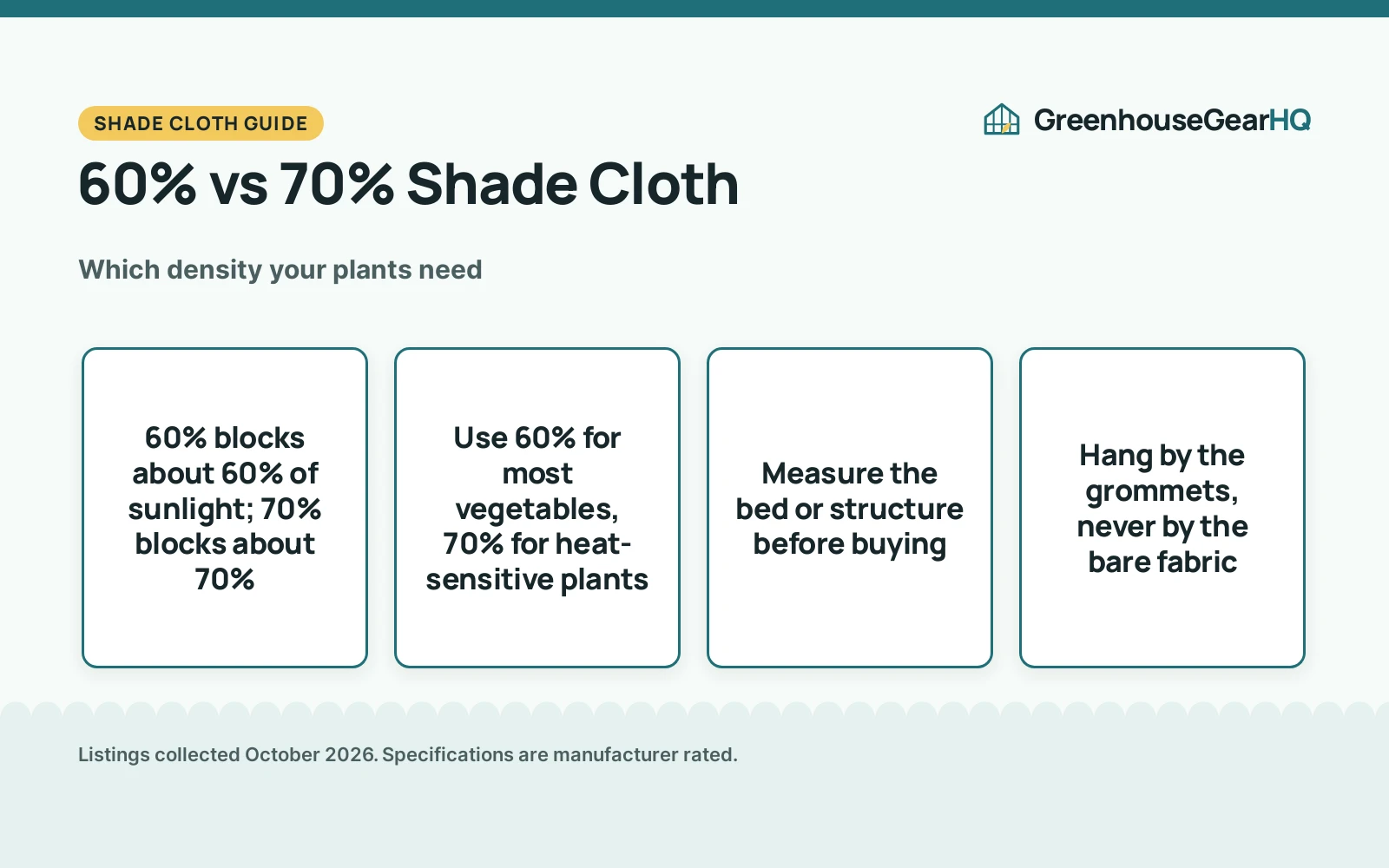
60% vs 70% shade cloth comes down to how much sun your plants need: a 60% cloth blocks about 60% of sunlight, and a 70% cloth blocks about 70%. Pick 60% for most vegetables and general greenhouse shading, and 70% for heat-sensitive plants, nurseries or the hottest part of summer. This guide explains what the percentages mean and compares four shade cloth listings by stated size, material and features.
Other options worth a look
 BeGrit Shade Cloth for Garden 50% 6x6.5ft Sun Shade withCheck price on Amazon
 10x20FT Shade ClothCheck price on Amazon
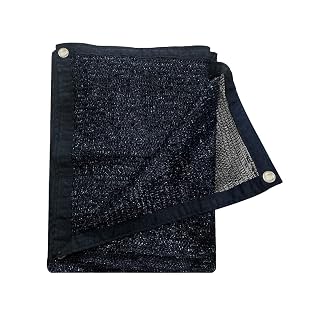 Cool Area Sun Shade Cloth with Grommets for GardenCheck price on Amazon
 vensovo 50% Black Shade ClothCheck price on Amazon
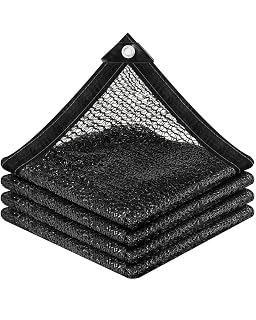 vensovo 30% Black Shade ClothCheck price on Amazon
 vensovo 40% Black Shade ClothCheck price on Amazon
GreenhouseGearHQ earns a commission when you buy through links on this page, at no extra cost to you. As an Amazon Associate I earn from qualifying purchases. Affiliate disclosure.
60% vs 70% shade cloth: what the percentages mean
Shade cloth density is the share of sunlight the fabric blocks. The HOLAA listing describes its cloth as 60% sun block that blocks 60% of harsh UV rays while letting enough light through for plants to thrive. A 70% cloth blocks more, which keeps the area cooler but gives plants less light for photosynthesis. The BeGrit listing notes that its 50% cloth does not affect photosynthesis, which shows the tradeoff: lower densities protect less but feed plants more light.
Use 60% for tomatoes, peppers and most greenhouse crops in a normal summer. Move to 70% for seedlings, shade-loving ornamentals, or regions where afternoon heat regularly stresses plants. The HOLAA listing states its 60% knit keeps the area up to 15 degrees F cooler than direct sunlight, which gives a sense of what one step of density does.
Gear: four shade cloths compared
The HOLAA 60% cloth is the closest match to this guide’s question: an 8 by 10 foot, 60% sun block cloth in tear-resistant HDPE with reinforced corners and metal grommets around the perimeter. The listing states the breathable knit lets hot air escape and rainwater pass through, and that the area stays up to 15 degrees F cooler than direct sun.
The e.share listing gives a 20 by 48 foot cloth rated 40% to 50% shade, in UV-stabilized high-density polyethylene with grommets every 2 feet. It suits growers who want lighter shading over a large area, such as a long vegetable row or a patio.
The WindscreenSupplyCo cloth is a 60% tan HDPE roll, 5 foot 10 inches by 100 feet, with eyelets for hanging. The listing states it can be cut to size without fraying, which suits odd-shaped structures and long fence runs.
The BeGrit cloth is a 50%, 6 by 6.5 foot black mesh with grommets, in tear-resistant polyethylene the listing calls UV resistant. It suits a single raised bed or a small patio corner.
| Shade cloth listing | Stated density | Stated size | Material |
|---|---|---|---|
| HOLAA 60% Shade Cloth | 60% | 8 x 10 ft | HDPE, tear resistant |
| e.share Shade Cloth | 40%-50% | 20 x 48 ft | HDPE, UV stabilized |
| WindscreenSupplyCo Shade Cloth | 60% | 5 ft 10 in x 100 ft | HDPE |
| BeGrit Shade Cloth | 50% | 6 x 6.5 ft | Polyethylene |
How to choose between 60% and 70%
Match density to the plants
Fruiting vegetables generally do well under 60%, which the HOLAA listing shows still lets enough light through for plants to thrive. Leafy greens and nursery stock in hot climates are the usual candidates for 70%. If you are shading people or pets rather than plants, denser is simply cooler.
Measure first, then buy
Shade cloth must cover the area with room to anchor. A 20 by 48 foot cloth like the e.share covers a long row, while an 8 by 10 foot cloth like the HOLAA suits one bed. The WindscreenSupplyCo roll can be cut to size, so measure the structure and add overlap for the grommets. For a deeper comparison of covers, see shade cloth versus row cover.
Check the edges and grommets
Wind is what kills a shade cloth installation. The e.share listing states grommets every 2 feet, and the HOLAA lists reinforced corners with metal grommets around the perimeter. Hang with rope or hooks through the grommets, never by the bare fabric. Our shade cloth for greenhouse roundup compares more reinforced options.
FAQ for growers
Is 70% shade cloth too dark for vegetables?
It can be for sun-loving crops. The listings show 50% to 60% as the common range for vegetables, with 70% better suited to heat-sensitive plants and nurseries.
Can shade cloth stay up in winter?
The e.share listing states its cloth protects against wind, rain and frost in winter as well as summer heat. Check the listing for your cloth before leaving it up year-round.
Does shade cloth block rain?
The knit cloths here are breathable: the HOLAA listing states rainwater passes through freely, and the e.share listing states air, water and nutrients reach the plants.
Keep reading
See every shade cloth guide and all seed starting guides.
More picks: browse shade cloth for greenhouses and shade cloth versus row cover.