On this page
Top picks at a glance
As an Amazon Associate I earn from qualifying purchases.
- 1
 VIVOSUN Digital pH Meter and TDS EC Meter with Auto9.5/10View on Amazon
- 2
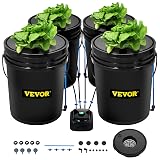 VEVOR DWC Hydroponic System9.4/10View on Amazon
- 3
 36 Site Aeroponic Cloning Machine. Expect 100% Success Rates!View on Amazon
- 4
 25 Site Aeroponic Cloning Machine Expect 100% Success RatesView on Amazon
- 5
 Aeroponic Cloner Machine 24 Site for Cuttings Rooting Using 2View on Amazon
- 6
 DWC Cloner Rooting Recirculating System 24 Site Cutting CloneView on Amazon
- 7
 90 PCS Micro Sprayer Fan Jet Hydroponic Aeroponic MistersView on Amazon
- 8
 Clone Machine 96 SiteView on Amazon
When the seed trays go out in late winter and the greenhouse still needs its heater on frost nights, many growers start planning a soilless setup for the warm months: something that keeps producing after the last transplant goes outside. That is when the aeroponics vs dwc question comes up. Aeroponics hangs bare roots in air and mists them with nutrient solution; DWC (deep water culture) suspends the roots in a bucket of aerated nutrient water. Pick aeroponics if you want a mist chamber built around pumps and spray heads, like the 36-site and 25-site cloning machines in our listings, and pick DWC if you want the simpler bucket-and-air-pump approach, like the 2-bucket 5-gallon VIVOSUN system.
Other options worth a look
 36 Site Aeroponic Cloning Machine. Expect 100% Success Rates!Check price on Amazon
 25 Site Aeroponic Cloning Machine Expect 100% Success RatesCheck price on Amazon
 Aeroponic Cloner Machine 24 Site for Cuttings Rooting Using 2Check price on Amazon
 DWC Cloner Rooting Recirculating System 24 Site Cutting CloneCheck price on Amazon
 90 PCS Micro Sprayer Fan Jet Hydroponic Aeroponic MistersCheck price on Amazon
 Clone Machine 96 SiteCheck price on Amazon
GreenhouseGearHQ earns a commission when you buy through links on this page, at no extra cost to you. As an Amazon Associate I earn from qualifying purchases. Affiliate disclosure.
How aeroponics works
In an aeroponic rig the roots hang in a dark chamber while a pump pushes nutrient solution through a spray manifold, and misters coat the roots on a cycle. The listings we compared show what that hardware looks like: the CLONE KING 36-site and 25-site cloning machines each list a 317 GPH submersible pump feeding 13 spray heads, and the HORTIPOTS 35-site and 24-site cloners list 1.625 inch and 2 inch neoprene inserts that hold cuttings over the mist. Replacement misters are commodity parts too: the SUCOHANS 100-pack lists a 360 degree fan jet pattern with a 31.4 GPH flow rate at 20 PSI. Because the roots meet water and air at the same time, aeroponic cloners are built for propagation, and HORTIPOTS lists rooting in 4 to 10 days for cuttings in both its 35-site and 24-site machines.
What goes in the reservoir matters as much as the hardware. Aeroponic growers mix a nutrient solution to feed the mist: the Farmer’s Secret hydroponic booster lists a 4-11-8 formula with a dilution of 1 teaspoon per gallon, and states it works with any hydroponic or aeroponic system. Starting media cross over into aeroponics as well: the General Hydroponics Rapid Rooter listing gives 50 plugs per bag measuring 10-1/2 by 12 by 3-1/2 inches, and the Legigo rockwool cubes list 200 one-inch plugs for hydroponic, aeroponic or soil use. See our aeroponics vs hydroponics guide for how misting compares with other soilless methods.
How DWC works
DWC is the simpler of the two. Each plant sits in a net basket over a bucket of nutrient solution, and an air pump pushes air through stones at the bottom so the roots stay oxygenated while they drink. The VIVOSUN DWC listing shows the full kit: 2 buckets of 5 gallons each, 2 eight-inch baskets, an air pump rated at 4 by 4 L per minute adjustable, running on AC 110 to 120 V at 60 Hz and 8 W, with a 6 m air hose, 4 air stones and 2 packs of clay pebbles, 31 pieces in all. A top drip kit is included to keep the solution circulating.
The routine is straightforward: mix the nutrient solution, keep the air pump running, and watch the water level. There are no misters to clog and no spray manifold to maintain, which is why DWC suits growers who want fewer moving parts. The tradeoff is that the roots live in the reservoir, so a pump failure or a long power cut puts the whole crop at risk at once, and the buckets take more floor space than a compact cloning chamber.
Aeroponics vs dwc: a side-by-side comparison
The table below lines up the two systems on the points that decide a purchase: how the roots are fed, what hardware you buy, and what the daily routine looks like.
| Aeroponics | DWC | |
|---|---|---|
| How roots are fed | Misted with nutrient solution in air | Suspended in aerated nutrient water |
| Core hardware | Pump, spray manifold and misters; our listings show 317 GPH pumps and 13 spray heads | Buckets, net baskets, air pump and air stones; our listing shows 2 five-gallon buckets and a 4 by 4 L per minute pump |
| Typical use | Cloning and cuttings; HORTIPOTS lists rooting in 4 to 10 days | Growing plants to harvest in buckets |
| Daily routine | Mix solution, run the pump, keep misters clear | Mix solution, keep the air pump running, watch water levels |
| Failure point | A clogged mister or a dead pump dries the roots | A dead air pump starves the roots of oxygen |
The table shows the real decision. Aeroponics is the precision tool: finer control over the root zone, more parts to maintain, and listings built around cloning. DWC is the workhorse: buckets, baskets and bubbles, with less to clog and more water to buffer mistakes. Neither system uses soil, and both fit a greenhouse corner or a spare room wherever power and water are close.
Which system fits your space and habits
Start with what you enjoy doing every day. If you like tinkering with hardware and keeping a spray manifold in top shape, aeroponics rewards that habit: a 35-site or 24-site cloner turns a tray of cuttings into rooted plants in 4 to 10 days, and a 100-pack of 360 degree misters keeps spare parts on hand. Growers who already run misting systems for seedling propagation will find the plumbing familiar.
If you would rather grow plants to harvest with fewer parts to watch, DWC fits better. The 2-bucket VIVOSUN kit suits a grow tent or balcony corner, and its 8 W air pump sips power while the stones keep the reservoir oxygenated. For a first soilless rig of any kind, our hydroponic kit for herbs roundup shows what a simpler entry point looks like. Either way, keep the electrics above any possible splash: the HORTIPOTS cloners list UL-listed pumps, which is the kind of stated safety rating to look for on any unit that mixes water and power.
FAQ for growers
Can I run an aeroponic cloner inside my greenhouse?
Check the listing’s stated use first. The HORTIPOTS 24-site cloner lists indoor use, so confirm the rating on any unit before moving it into a damp greenhouse, and keep pumps and cords above splash level.
What does a DWC kit include?
The VIVOSUN DWC listing includes 2 five-gallon buckets, 2 eight-inch baskets, an air pump, a 6 m air hose, 4 air stones, 2 clay pebble packs and a top drip kit, 31 pieces in all. Compare that parts list against any kit you consider.
Which system is simpler for a beginner, aeroponics or DWC?
DWC has fewer moving parts: buckets, baskets, an air pump and stones, with no misters to clog. Aeroponics adds a spray manifold and misters to the routine, so most beginners find the bucket simpler to start with.
What nutrients do these systems use?
A mixed nutrient solution in the reservoir. The Farmer’s Secret booster lists a 4-11-8 formula diluted at 1 teaspoon per gallon and states it works with any hydroponic or aeroponic system, so follow the label on whatever you buy.
Keep reading
See every indoor growing guide on the site. Also see our aeroponics vs hydroponics comparison. Also see our DWC vs NFT hydroponics comparison. Also see our RDWC vs aeroponics comparison. Also see our ebb and flow vs DWC comparison.
More picks: misting systems for seedlings, hydroponic kits for herbs and RDWC vs aeroponics.