On this page
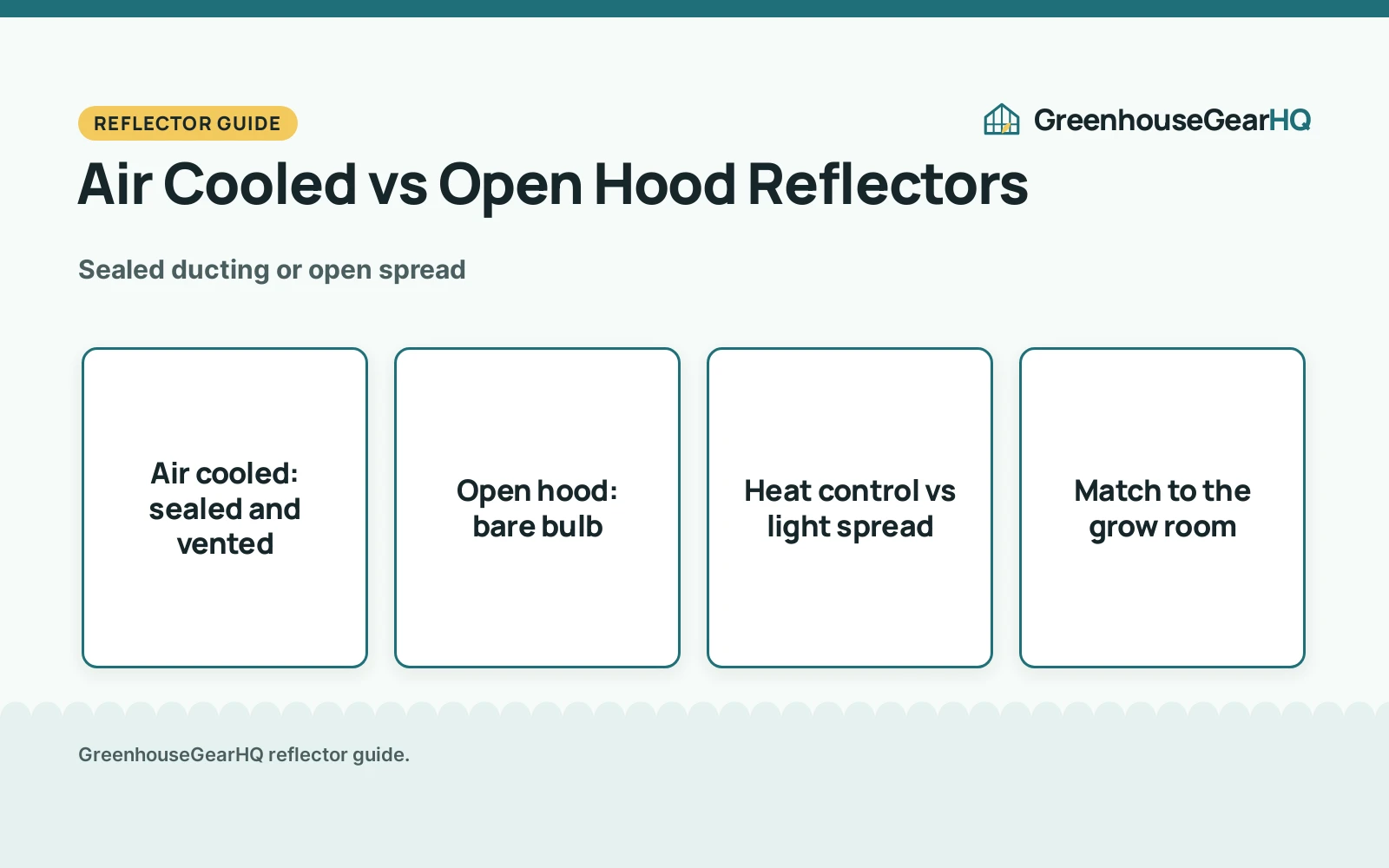
Air cooled vs open hood reflectors: the short answer is that air cooled reflectors seal the bulb behind glass and vent heat through ducting, while open hood reflectors leave the bulb exposed for maximum light spread. One trades a little light for heat control; the other trades heat for intensity. No reflector listings are in the reference data, so both sides are explained without figures.
GreenhouseGearHQ earns a commission when you buy through links on this page, at no extra cost to you. As an Amazon Associate I earn from qualifying purchases. Affiliate disclosure.
Air cooled vs open hood reflectors: how they differ
A reflector does two jobs: bounce the bulb’s light down onto the plants and manage the bulb’s heat. An air cooled reflector splits those jobs with a sealed design: a glass panel closes the bottom of the hood, and duct flanges on the sides connect to ducting. An open hood reflector skips all of that and lets the bulb hang bare inside a reflective shell.
Air cooled: sealed and vented
Air cooled suits the grower fighting heat. An inline fan pulls room air through the sealed hood and carries the bulb’s heat straight out through the ducting, so far less heat ever reaches the grow space. The bulb itself runs cooler, which helps its life. The tradeoffs are the glass and the ducting: the glass panel absorbs a small amount of light and needs cleaning to stay clear, and the setup needs ducting plus a fan to work at all.
Choose air cooled when the grow room runs hot, when the light hangs close to the canopy, or when you want to vent heat without cooling the whole room.
Open hood: bare bulb, full spread
Open hood suits the grower chasing every bit of light. With no glass between the bulb and the plants, nothing absorbs or reflects light back, and the wide shell spreads it across the canopy. The design is simpler, lighter and easier to hang. The tradeoff is heat: everything the bulb produces goes straight into the room, so the space needs its own ventilation to stay in range.
Choose open hood when the room has good ventilation already, when maximum light matters most, or when you want the simplest possible setup.
Buying advice: sizing and installation
Start with the space. Open hoods dump all of the bulb’s heat into the room, so small tents need strong exhaust; air cooled reflectors move heat out through ducting before it reaches the plants. Size the ventilation to the room and measure twice: the Deflecto listing describes a 16-inch adjustable air vent deflector, a reminder that vent hardware comes in fixed sizes and the ducting must match the openings it connects to.
If the room walls waste light, reflective sheeting helps. The BBTO listings describe heat reflective sheets in 48-inch, 60-inch and 71-inch (120 x 180 cm) sizes, aluminized fiberglass with adhesive backing. Lining the walls around an open hood recovers some of the light that would otherwise scatter, which partly closes the efficiency gap with a sealed reflector. The sheets are adhesive-backed, per the listings, so they mount flat without extra hardware.
Match the reflector to the bulb and ballast you already own. An air cooled hood seals around the bulb and needs a fan pulling air through the duct; an open hood needs nothing but a hanger. If the grow room runs hot with no way to exhaust, neither reflector fixes that; fix the ventilation first, then choose the hood.
Which one should you buy?
| Reflector type | Design | Heat handling | Suits |
|---|---|---|---|
| Air cooled | Sealed with glass and duct flanges | Heat vented through ducting | Hot rooms, close hanging |
| Open hood | Bare bulb in reflective shell | Heat goes into the room | Ventilated rooms, max light |
Match the reflector to the room. A warm grow room or a low ceiling leans air cooled for its heat removal. A well-ventilated room leans open hood for its simplicity and full light. Pair either with the right bulb; see our grow lights with timer picks.
FAQ for growers
Does the glass on an air cooled reflector reduce light?
Yes, a little. The glass panel absorbs and reflects a small amount of light, so keep it clean; a dirty panel costs more light than a clean one ever will.
Do I need a fan with an air cooled reflector?
Yes. The sealed hood only works when an inline fan moves air through the ducting and carries the heat away. Without airflow it is just a hot box.
Which runs cooler in the grow room?
Air cooled, because it removes heat at the bulb before it mixes into the room air. An open hood puts all of the bulb’s heat into the space the plants share.
Can I use an open hood in a small tent?
It works, but heat builds fast in a small space, so the tent needs strong exhaust ventilation. Most small-tent growers choose air cooled for exactly this reason.
Keep reading
See every grow lights guide and all light and heat guides.
More picks: grow lights with timer, grow lights for basil, grow lights for microgreens.