On this page
Top picks at a glance
As an Amazon Associate I earn from qualifying purchases.
- 1
 HOWE 14x9.5x9 FT Polycarbonate Greenhouse for Outdoors9.7/10View on Amazon
- 2
 8x12 FT Greenhouse with HygrometerView on Amazon
- 3
 AirWire 6×7.5 FT Walk-in Polycarbonate Greenhouse for OutdoorView on Amazon
- 4
 Aoodor 6 x 10 Ft Walk-in Greenhouse with GutterView on Amazon
- 5
 WKM 10x18 FT Walk-in Polycarbonate Greenhouse for OutdoorsView on Amazon
- 6
 Garvee 8x12 FT GreenhouseView on Amazon
- 7
 Garvee 6x10 FT GreenhouseView on Amazon
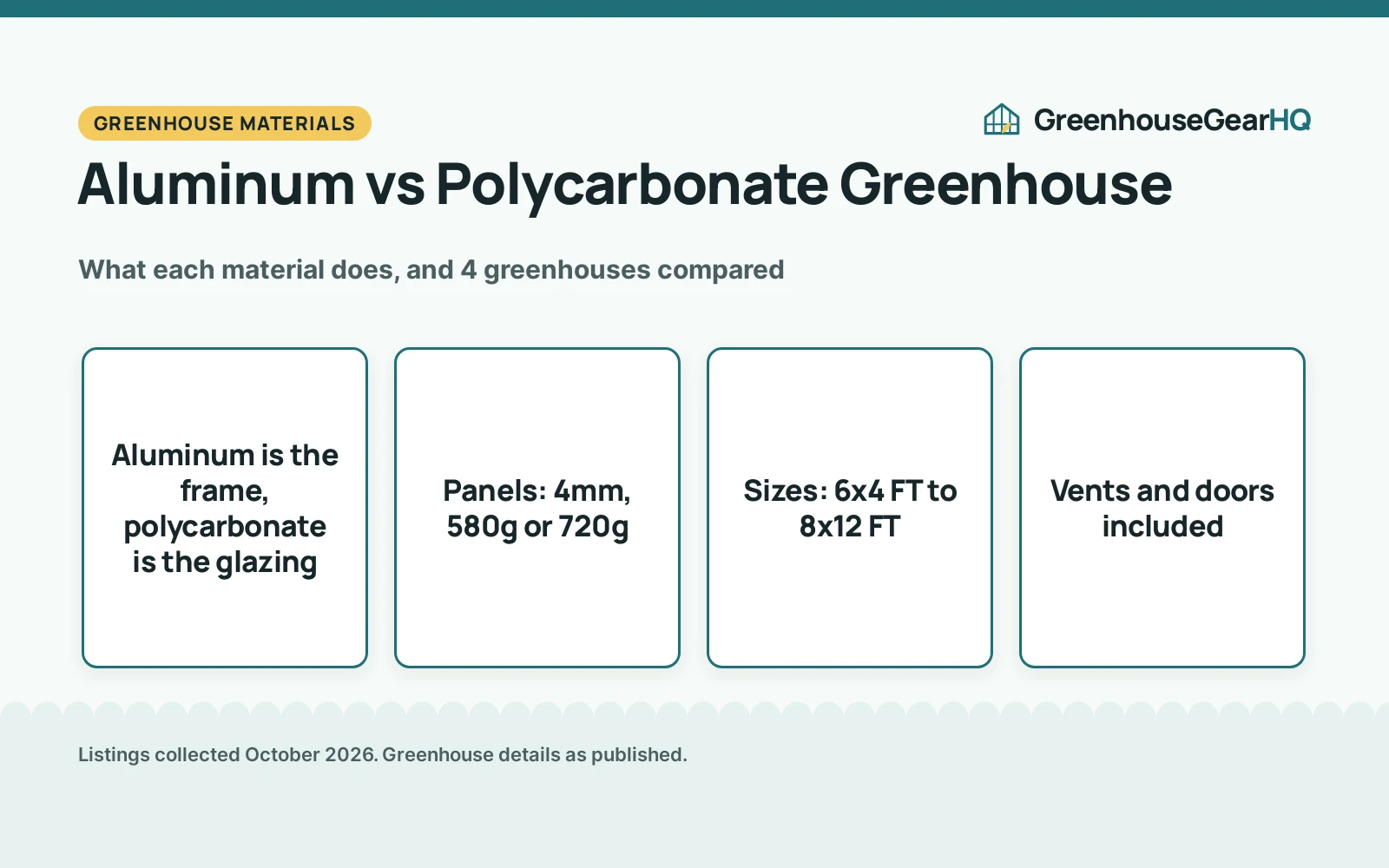
Aluminum vs polycarbonate greenhouse is a trick question: aluminum is the frame and polycarbonate is the glazing, so a real greenhouse combines them. The choice that matters is not between the materials but between panel specs and frame builds. Compare panel thickness and weight, the number of vents, and the size that fits your yard, and the right greenhouse picks itself.
Other options worth a look
 8x12 FT Greenhouse with HygrometerCheck price on Amazon
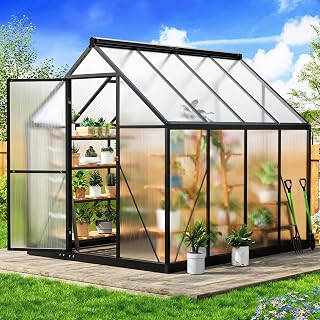 AirWire 6×7.5 FT Walk-in Polycarbonate Greenhouse for OutdoorCheck price on Amazon
 Aoodor 6 x 10 Ft Walk-in Greenhouse with GutterCheck price on Amazon
 WKM 10x18 FT Walk-in Polycarbonate Greenhouse for OutdoorsCheck price on Amazon
 Garvee 8x12 FT GreenhouseCheck price on Amazon
 Garvee 6x10 FT GreenhouseCheck price on Amazon
GreenhouseGearHQ earns a commission when you buy through links on this page, at no extra cost to you. As an Amazon Associate I earn from qualifying purchases. Affiliate disclosure.
Frame vs glazing: what each material does
Every greenhouse in this guide pairs an aluminum frame with polycarbonate panels. The aluminum alloy frame carries the structure: the Sylviera 8×12 FT lists a reinforced aluminum alloy frame with strengthened corners, and the AirWire 6×7.5 FT lists a reinforced aluminum alloy frame rated for strong winds, heavy rain and blizzards. Aluminum does not rust, which is why it shows up on both listings.
Polycarbonate is the glazing that covers that frame. Both full listings state 4mm thick double-wall polycarbonate panels: the Sylviera at 580g and the AirWire at 720g, each with UV resistance. The panels let in light while blocking harmful UV rays, and the double-wall build insulates better. When listings argue materials, they are really arguing panel weight: 720g panels against 580g panels.
What the listings show
The four greenhouses in this guide, ranked by their specs. The Sylviera 8×12 FT leads: the largest footprint at 145 x 97 x 81 inches, 4mm 580g double-wall panels, adjustable roof vents, a lockable door, a drainage channel and a hygrometer in the title. It is the only listing here that lists a drainage channel and a hygrometer.
Next, the AirWire 6×7.5 FT: 4mm 720g double-layer panels with a UV coating, an adjustable roof vent and a sliding door, at 88.2 x 66.5 x 77 inches and 81.8 pounds. Its listing claims a slide-in panel system that installs 20% faster than standard greenhouses and adds 15% stability, plus 24/7 customer service. It is the heaviest panel spec here.
The Outsunny 8×6 FT Walk-In with rain gutters follows: the gutters set it apart from the plain 6×4 FT model, catching roof runoff the others do not mention. Last, the Outsunny 6×4 FT Walk-in: the smallest footprint of the four, for tight yards. Both Outsunny listings state polycarbonate glazing in their titles; no further specs are stated.
Aluminum vs polycarbonate greenhouse: how to choose
Start with size. The listed sizes run 6×4 FT to 8×12 FT: the Sylviera lists 145 x 97 x 81 inches, the AirWire 88.2 x 66.5 x 77 inches. Measure your yard and leave walking room around the walls before you order.
Then compare panels. Both full listings state 4mm double-wall polycarbonate; the difference is weight, 580g on the Sylviera against 720g on the AirWire. Heavier panels suggest a sturdier sheet, and both listings claim UV protection.
Then count vents and doors. The Sylviera lists adjustable roof vents and a lockable door; the AirWire lists an adjustable roof vent and a sliding door. Greenhouses cook in sun, so ventilation decides summer usability more than any frame material does. For more greenhouse picks, see our polycarbonate greenhouse and mini greenhouse guides.
Aluminum vs polycarbonate greenhouse: buying advice
Start with size. The listings here run from a 6 x 4 ft walk-in to an 8 x 12 ft house, so measure your beds before you buy. The 8 x 12 ft listing pairs the larger footprint with a reinforced aluminum alloy frame and strengthened corners, plus a hygrometer, which helps in heavy rain and snow country.
Next, weigh assembly. The 6 x 7.5 ft AirWire lists labeled parts, all tools and a slide-in panel system, which suits a first-time builder. The 8 x 6 ft Outsunny lists rain gutters, a useful extra where storms hit.
Finally, match the frame to the weather. All four listings pair an aluminum or aluminum alloy frame with polycarbonate panels. In wind, look for the strengthened corners and heavy-duty frame the 8 x 12 ft lists. In rain, the rain gutters on the 8 x 6 ft keep water away from the base.
FAQ for growers
Is aluminum or polycarbonate better for a greenhouse?
They do different jobs: aluminum frames hold the structure, and polycarbonate panels glaze it. Compare panel thickness and weight instead; the listings here show 4mm panels at 580g and 720g.
What does 4mm double-wall polycarbonate mean?
The Sylviera and AirWire listings state 4mm thick double-wall panels that are clear, impact-resistant and UV-resistant, helping to hold a stable interior temperature.
Do these greenhouses need assembly?
Yes. Both full listings state clearly labeled parts, detailed instructions and included tools. The AirWire listing claims its slide-in panels install 20% faster than standard greenhouses.
Which size should I pick?
The listed sizes run 6×4 FT to 8×12 FT. The Sylviera 8×12 FT lists 145 x 97 x 81 inches; the AirWire 6×7.5 FT lists 88.2 x 66.5 x 77 inches.
Keep reading
See our polycarbonate greenhouse guide and every greenhouses guide.
More guides: polycarbonate greenhouse, mini greenhouse and greenhouses.