On this page
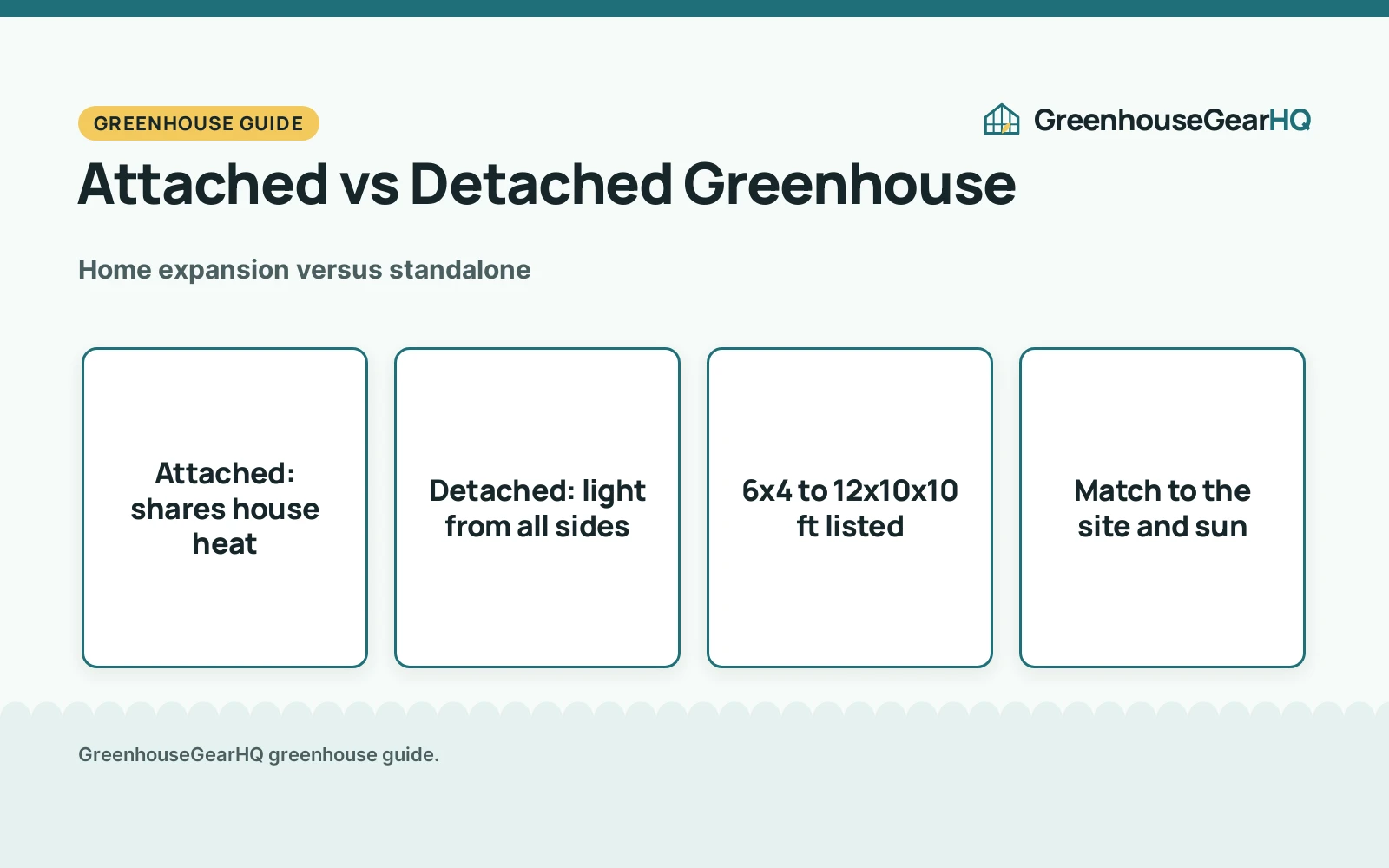
An attached greenhouse leans against a house wall, sharing heat, water and power; a detached greenhouse stands alone with light from all sides. Pick attached for convenience and lower heating cost; pick detached for maximum light and freedom of placement. This guide explains each option, with concrete figures from the listings.
GreenhouseGearHQ earns a commission when you buy through links on this site, at no extra cost to you. As an Amazon Associate I earn from qualifying purchases. Affiliate disclosure.
Attached vs detached greenhouse: how they differ
The difference is the wall. An attached greenhouse, often called a lean-to, uses the house as one side: the building’s heat leaks through, utilities run a short distance, and the structure needs less framing. A detached greenhouse stands free, catching sun from every direction but needing its own heat, water and power. The listings here show detached kits in many sizes: a 6×4-foot house with 4mm PC panels and a roof vent, 6×8-foot houses from HOOYEAH and Aoxun (the Aoxun with 6mm polycarbonate and a wooden frame), 8×10-foot kits, 6×10-foot Garvee houses, a 10×10-foot pop-up walk-in, and a 12x10x10-foot CDCASA house with 4mm twin-wall panels.
Attached: the home extension
Attached greenhouses win on convenience. The shared wall cuts one side of framing and glazing, the house’s warmth raises the minimum temperature, and running water and power means a short trench instead of a long one. A door straight into the house turns winter checks into a pleasure. The trade: the house shades part of the day, roof runoff lands on the glazing, and building codes may treat the addition as part of the dwelling. No attached kits appear in these listings, so sizing figures here come from the detached side.
Detached: the standalone house
Detached greenhouses win on light and placement. Sun from all sides, no shading from the building, and the freedom to put the house where the yard is sunniest. The listings show the range: 6×4 feet for a patio corner, 6×8 feet as the popular hobby size, 8×10 and 6×10 feet for serious growers, 10×10 feet as a walk-in pop-up, and 12x10x10 feet for the CDCASA with 4mm twin-wall panels, 70% light transmission, 99.9% UV block and 2 windows. One 8×10-foot listing claims 40% faster assembly and 35% improved stability; the CDCASA listing claims 50% of assembly time saved.
Buying advice: sizing, glazing and assembly
Size the house to the growing, not the yard. The listings here show the ladder: a 6×4-foot house with 4mm PC panels and a roof vent for a patio corner; 6×8-foot houses from HOOYEAH and Aoxun, the Aoxun with 6MM thick polycarbonate on a wooden frame, as the popular hobby size; 8×10 and 6×10-foot kits for serious growers; a 10×10-foot pop-up walk-in for seasonal use; and the 12x10x10-foot CDCASA with 4mm twin-wall panels for a permanent installation. Measure the sunniest level spot first, then buy the biggest house that fits it; a cramped greenhouse gets outgrown in one season.
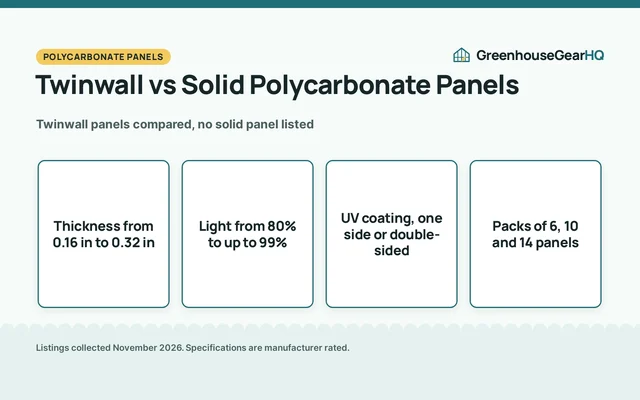
Read the glazing figures before the marketing. The 6×4-foot listing states 4mm PC panels; the CDCASA listing states 4mm twin-wall polycarbonate with 70% light transmission and 99.9% UV block; the Aoxun listing states 6MM thick polycarbonate. Thicker twin-wall insulates better and resists hail, while higher light transmission suits light-hungry crops. Check ventilation too: the 6×4-foot house includes a roof vent and the CDCASA includes 2 windows, because a sealed house cooks plants on the first sunny day.
Weigh the assembly claims. One 8×10-foot listing claims 40% faster assembly and 35% improved stability; a 6×10-foot listing makes the same 40% and 35% claims. Treat percentages as the listing’s own claims and check what they attach to: pre-drilled frames, numbered parts and fewer unique fasteners matter more than a percentage. For an attached build, add flashing, a ledger board and a check of local codes to the budget; the kit price is only part of the cost.
Which should you choose?
Choose attached when the house wall faces the sun and convenience matters: shared heat, short utility runs and a door from the kitchen. Choose detached when the yard has a sunnier spot than the house wall, or when the house would shade the glazing for hours. For renters and small patios, a 6×4 or 6×8-foot detached kit is the simpler buy; for homeowners planning a permanent grow, an attached lean-to pays back in heat savings.
FAQ for growers
Is an attached greenhouse cheaper to heat?
Generally yes: the shared house wall leaks warmth into the greenhouse, cutting the heating load. Detached houses need their own heat source.
What size detached greenhouse do I need?
The listings range from 6×4 feet to 12x10x10 feet; 6×8 feet is the common hobby size.
Do detached kits include ventilation?
The 6×4-foot listing includes a roof vent and the CDCASA includes 2 windows; check each listing for vents.
Can I attach a kit greenhouse to my house?
Kits here are sold as freestanding; an attached build needs flashing, a ledger and code approval. Check local rules first.
Keep reading
See every greenhouses guide and all greenhouse climate guides.
More picks: mini greenhouse review, polycarbonate greenhouse.