On this page
Top picks at a glance
As an Amazon Associate I earn from qualifying purchases.
- 1
 VIVOSUN 6 Inch Carbon Filter with Pre-Filter9.7/10View on Amazon
- 2
 AC Infinity Air Carbon Filter 6" with Premium AustralianView on Amazon
- 3
 PUREBURG 16"x48" Cut-to-Fit Carbon Filter SheetView on Amazon
- 4
 VIVOSUN 4" Pro Carbon Filter & Pre-Filter 264 CFM for InlineView on Amazon
- 5
 Aquaboon 4View on Amazon
- 6
 Bagean Cut to Fit Activated Carbon Filter Sheet 16” x 48”View on Amazon
Mid-summer in the greenhouse, the air hangs heavy with fertilizer and damp soil, and the neighbors have started noticing. Carbon filter vs ozone generator is the question that decides how you handle that smell. The short answer: a carbon filter scrubs odors from the exhaust air as it leaves, while an ozone generator releases ozone into the space to break odors down. This guide explains each method step by step, using concrete figures only where listings state them.
Other options worth a look
 AC Infinity Air Carbon Filter 6" with Premium AustralianCheck price on Amazon
 PUREBURG 16"x48" Cut-to-Fit Carbon Filter SheetCheck price on Amazon
 VIVOSUN 4" Pro Carbon Filter & Pre-Filter 264 CFM for InlineCheck price on Amazon
 Aquaboon 4Check price on Amazon
 Bagean Cut to Fit Activated Carbon Filter Sheet 16” x 48”Check price on Amazon
GreenhouseGearHQ earns a commission when you buy through links on this site, at no extra cost to you. As an Amazon Associate I earn from qualifying purchases. Affiliate disclosure.
Carbon filter vs ozone generator: the difference in plain terms
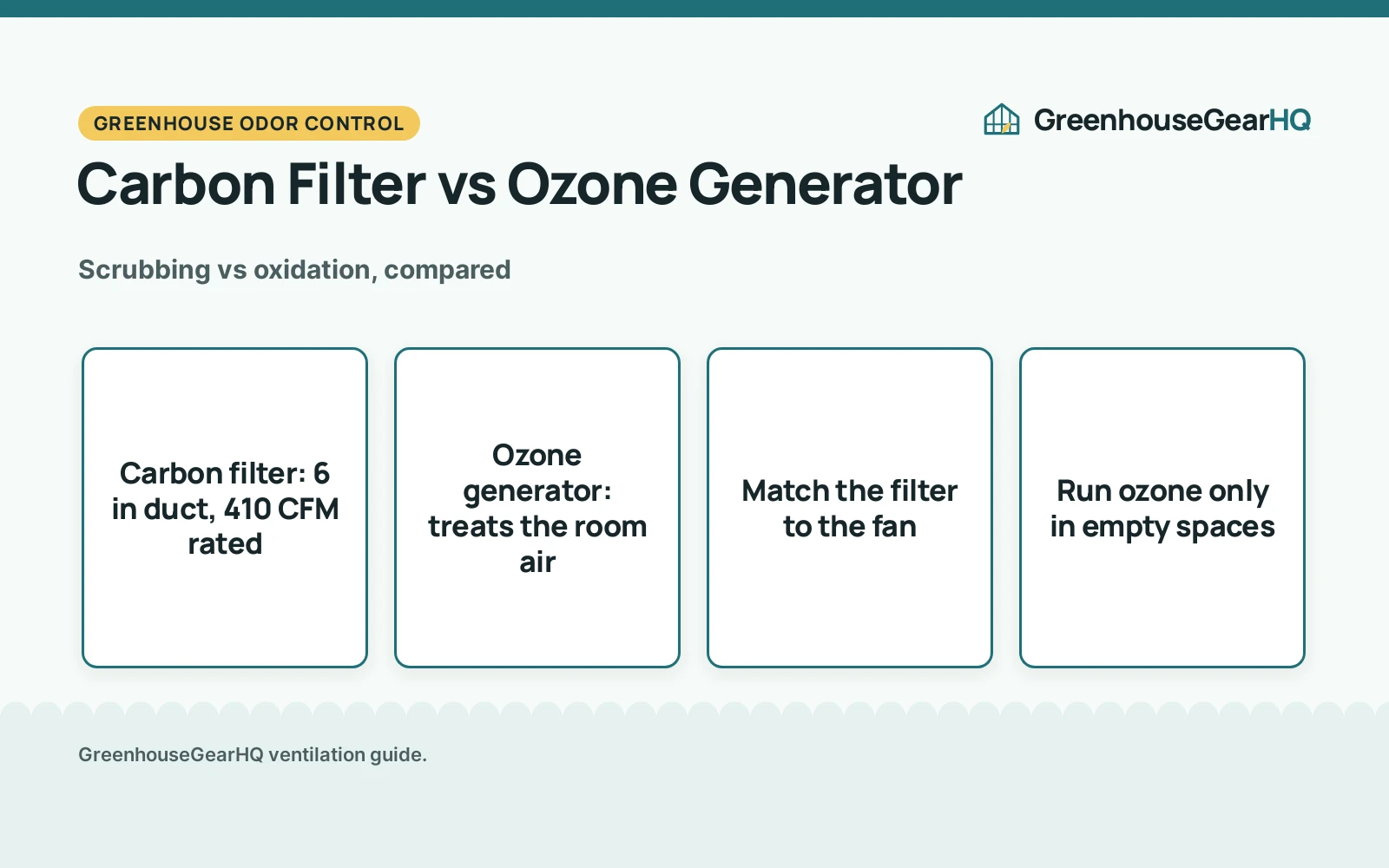
The two methods attack odor in different places. A carbon filter sits in the exhaust path and traps odor molecules as air passes through charcoal. An ozone generator releases ozone into the room or duct, where it reacts with odor molecules and breaks them down. The table sums up the split; the sections below ground each point in what listings actually state.
| Method | How it handles odor | Where it works | What the listing states |
|---|---|---|---|
| Carbon filter | Charcoal traps odor molecules from passing air | In the exhaust duct | Duct size, CFM rating, carbon type |
| Ozone generator | Ozone breaks odor molecules down in the space | Inside the room or duct | No figures in these listings |
How a carbon filter works
A carbon filter sits in the exhaust path, usually paired with an inline duct fan: air passes through a bed of activated charcoal, and odor molecules stick to the carbon’s surface. The AC Infinity listing shows the format: a 6-inch duct opening, 16 inches long, rated at 410 CFM, with Australian RC412 charcoal at 1200+ IAV and a 38mm carbon bed, plus two pre-filters and a rope hanger. Aluminum flanges and galvanized steel mesh form the body. Match the filter’s CFM rating to the fan behind it, and expect the carbon to saturate over time; the pre-filters catch dust before it reaches the charcoal.
The filter only treats air that passes through it, so the duct layout matters: seal the path so exhaust cannot bypass the charcoal. When the odor returns at the same fan speed, the bed is spent.
How an ozone generator works
An ozone generator creates ozone and releases it into the room or duct, where the ozone reacts with odor molecules and breaks them down. No ozone generator appears in these listings, so there are no stated figures to compare: output, coverage and timer behavior all come from the maker’s own listing when you shop. The important difference from a filter is placement: the generator treats the air in the space itself rather than scrubbing the exhaust stream.
Ozone is a strong oxidizer. Run an ozone generator only in an unoccupied space and follow the maker’s instructions for timing and ventilation; never breathe the output directly.
Carbon filter vs ozone generator: how to choose
Choose by where the odor bothers you. If the complaint is the exhaust leaving the greenhouse or grow tent, a carbon filter on the duct is the direct answer: size the duct opening to the fan, check the CFM rating against the fan’s output, and note the carbon spec, like the AC Infinity’s 410 CFM rating and 1200+ IAV charcoal. If the odor sits inside the room itself, an ozone generator treats the space, but it needs an empty room and careful timing. Many growers run the filter continuously and keep ozone as a separate tool. For the fan side of the setup, see the inline fan and carbon filter for grow tents roundup and the best greenhouse fan guide.
FAQ for growers
Can I run both at once?
They serve different spots: the filter scrubs the exhaust stream while the generator treats the room air. Check both makers’ instructions before combining them.
How do I size a carbon filter?
Match the duct opening to the fan, 6 inches on the AC Infinity example, and the CFM rating, 410 CFM there, to the fan’s output. The listing states both figures.
Does a carbon filter need replacing?
The charcoal saturates over time; the AC Infinity listing includes two pre-filters to protect the bed. Follow the maker’s replacement guidance.
Is an ozone generator safe around plants?
Ozone is a strong oxidizer, so run the generator in an unoccupied space per the maker’s instructions and ventilate before entering. No ozone figures appear in these listings.
Keep reading
See every ventilation and watering guide and all greenhouse climate guides.
More picks: inline fan and carbon filter for grow tents, greenhouse fans and greenhouse fans for humidity control.