On this page
Top picks at a glance
As an Amazon Associate I earn from qualifying purchases.
- 1
 Tetutor 12 Pack Plastic Orchid Pots with Holes9.6/10View on Amazon
- 2
 6 inch Round Ceramic Orchid Pot with Holes Orchid PlanterView on Amazon
- 3
 Ceramic Orchid Pots with Drainage Hole 6''View on Amazon
- 4
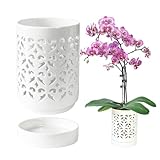 pavtner Orchid Pots with HolesView on Amazon
- 5
 LKSSZS Ceramic Orchid PotView on Amazon
- 6
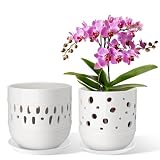 LITUDISO Orchid Pots with HolesView on Amazon
- 7
 NiSevenLiving Orchid Pots with Holes Attached Saucers 4.6View on Amazon
Repotting day usually arrives when roots crowd the pot and the bark has broken down, and the replacement pot matters as much as the fresh mix. For ceramic vs plastic orchid pots, the short answer from the pots compared here is ceramic: every pot in this guide is ceramic, and no plastic orchid pot was in the set to compare, so the choice below rests on the drainage, aeration holes, saucers, sizes and weights the makers state for these ceramic pots. Pick ceramic when the stated holes and saucer suit the plant and the shelf; treat any plastic choice as unjudged by this guide, because these listings publish no plastic pot to score.
Other options worth a look
 6 inch Round Ceramic Orchid Pot with Holes Orchid PlanterCheck price on Amazon
 Ceramic Orchid Pots with Drainage Hole 6''Check price on Amazon
 pavtner Orchid Pots with HolesCheck price on Amazon
 LKSSZS Ceramic Orchid PotCheck price on Amazon
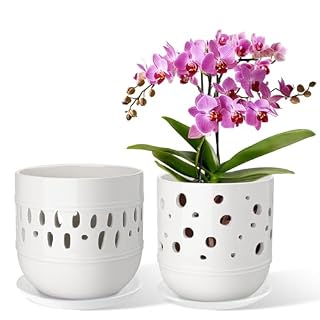 LITUDISO Orchid Pots with HolesCheck price on Amazon
 NiSevenLiving Orchid Pots with Holes Attached Saucers 4.6Check price on Amazon
GreenhouseGearHQ earns a commission when you buy through links on this page, at no extra cost to you. As an Amazon Associate I earn from qualifying purchases. Affiliate disclosure.
Ceramic vs plastic orchid pots: the short answer
Orchid roots are fleshy and store water, and the makers here design around one risk: water sitting in the pot. The ceramic pots in this guide answer that risk with drainage holes at the bottom, aeration holes in the sides, and attached saucers or trays to catch what drains. One maker also states the durability claim plainly: ceramic will not break after sun exposure like plastic pots, or rust in humid air like metal ones. That claim is the only direct word on plastic in these listings, and it is reported here as the maker’s claim.
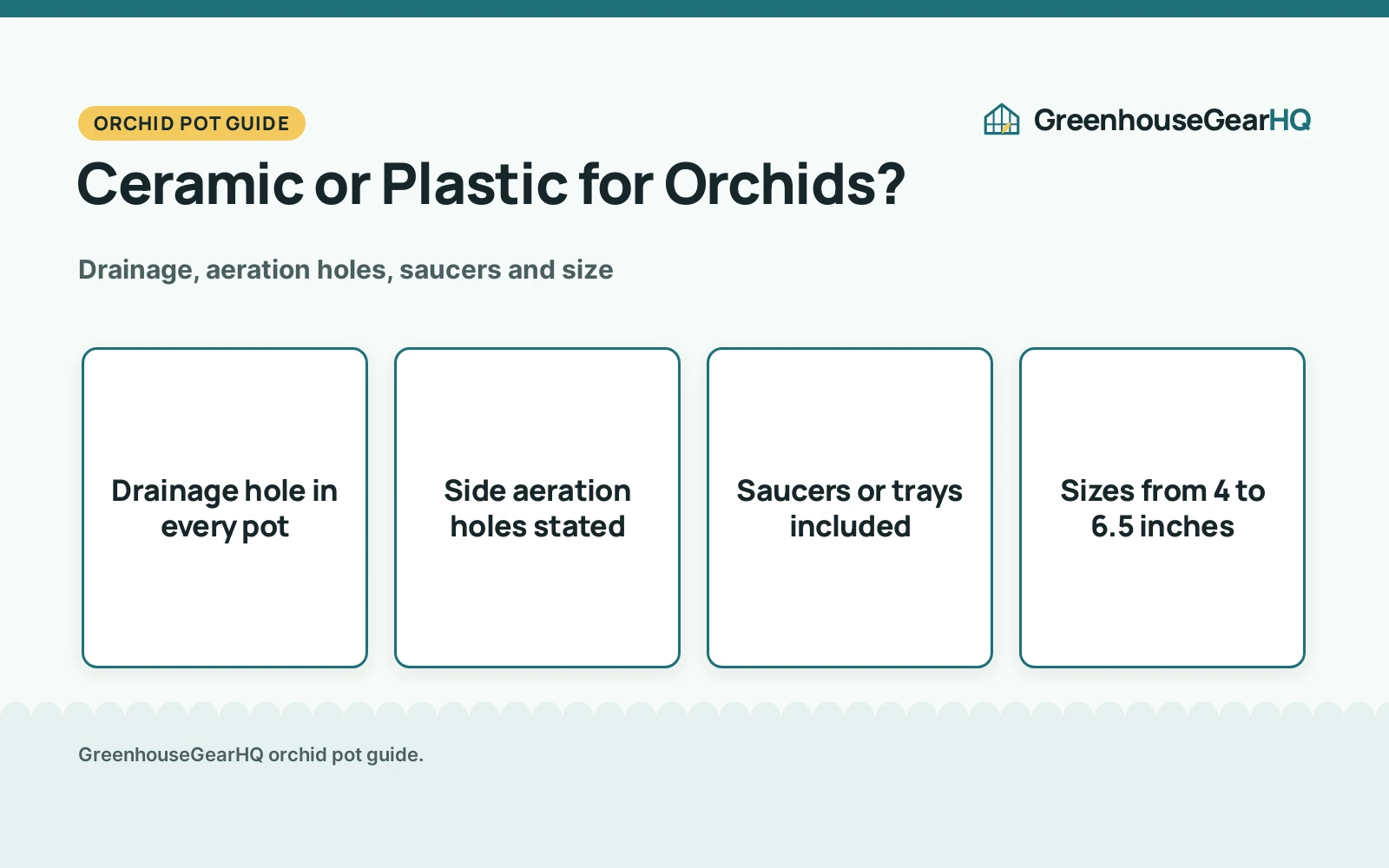
- Drainage: every pot here states a drainage hole at the bottom.
- Airflow: the orchid-specific pots state holes or a perforated pattern in the sides.
- Water on the shelf: attached saucers or drainage trays are stated on all four pots.
- Weight: listed weights run from 1.12 pounds for a single small pot to 6.45 pounds for a set of three.
What an orchid pot needs
Judged by what these makers publish, an orchid pot needs a way for water to leave, a way for air to reach the roots, and a tray or saucer under it for indoor shelves. Size comes next: the pots here are listed from 4 inches across to 6.5 inches across, and inner diameter matters when a root ball must fit. Weight matters last, mostly for hanging or high shelves, where a lighter pot is easier to lift down for watering.
Ceramic orchid pots compared
Grdthzey Ceramic Orchid Pot, 6 inch
This orchid-specific pot states a drainage hole at the bottom, aeration holes all around, and an attached saucer. The maker lists it at 6.29 inches wide and 5.11 inches tall, with a listed weight of 2.3 pounds, and describes it as fully glazed. Of the four, it states the fullest orchid feature set in one pot: bottom drainage, side aeration and a saucer.
LITUDISO Ceramic Orchid Pots, 2 pack
This 2 pack states 5 and 6 inch pots with a perforated pattern for air circulation and drainage trays included. The maker names Dendrobium, Phalaenopsis, Cymbidium and Cattleya as orchids the pots are designed to house, and states the ceramic construction will not break after sun exposure like plastic pots. It suits a grower repotting more than one plant at a time.
pavtner Ceramic Orchid Pot, 4 inch
The smallest pot here states many holes in the side body for air circulation, a drainage hole at the bottom and an attached saucer. The maker lists 5.92 inches of height, a 4.13 inch outer diameter and a 3.85 inch inner diameter, at 1.12 pounds listed. The straight cylinder shape and stated inner diameter make the fit easy to check against a small root ball.
LE TAUCI Ceramic Plant Pots, set of 3
This set of three general ceramic plant pots states drainage holes, saucers and a drainage net, with unglazed interiors the maker says absorb moisture. Sizes are stated as 6.5 inches in diameter and 5.8 inches tall for the large pot, 5 inches by 4.5 inches for the medium, and 4 inches by 3.74 inches for the small, at 6.45 pounds listed for the set. No side aeration holes are stated, so it reads as a general plant pot set that can hold an orchid rather than an orchid-specific design.
Plastic orchid pots: what these listings say
No plastic orchid pot is among the four pots compared here, so this guide cannot rank one. The single statement about plastic comes from the LITUDISO listing, which claims ceramic will not break after sun exposure like plastic pots. A grower who wants a plastic pot judged on the same points, drainage, side holes, saucer, size and weight, should look for those figures stated for the plastic pot itself rather than borrowing them from a ceramic listing.
Which one should you buy?
Buy ceramic from this set when the stated features match the plant: the Grdthzey pot for bottom drainage plus side aeration in a single 6 inch pot, the LITUDISO 2 pack for two sizes with trays, the pavtner pot for a small plant that needs a stated inner diameter, or the LE TAUCI set when three general pots with drainage and saucers are more useful than orchid-specific side holes. On the evidence published here, ceramic is the judged side of ceramic vs plastic orchid pots; plastic remains unjudged until a listing states its figures.
What this guide does not cover
This guide compares pots only. It does not cover potting mix, bark size, watering schedules, fertilizer or light, because the listings compared here publish pot features, not care routines. Match the pot to the root ball first, then follow the mix and watering guidance for the orchid type being repotted.
FAQ for growers
Do orchid pots need holes in the sides?
The orchid-specific pots here state them: Grdthzey states aeration holes all around, pavtner states many holes in the side body, and LITUDISO states a perforated pattern. The LE TAUCI general pots state bottom drainage only, with no side holes stated.
What size ceramic orchid pot should I buy?
Use the stated diameters against the root ball. The pavtner pot states a 3.85 inch inner diameter, the Grdthzey pot is listed at 6.29 inches wide, and the LITUDISO pack states 5 and 6 inch pots. The LE TAUCI set states diameters of 4, 5 and 6.5 inches across its three pots.
Can a general ceramic plant pot work for an orchid?
The LE TAUCI set states drainage holes, saucers and a drainage net, which covers water leaving the pot. It does not state side aeration holes, so a grower who wants those stated should pick one of the orchid-specific pots.
Ceramic or plastic for a sunny windowsill?
The only claim in these listings comes from LITUDISO, which states its ceramic pots will not break after sun exposure like plastic pots. No plastic pot here publishes figures to compare, so the sunny-sill case for plastic is unjudged in this guide.
Keep reading
For pots with liners, see our best orchid pots with liners. For small pots, see the best 4 inch orchid pots for repotting. For clear sets, see the best pots for growing orchids. For another material comparison, see clear vs terracotta orchid pots and clay vs plastic plant pots.
More picks: orchid pots with liners, 4 inch orchid pots and pots for growing orchids.