On this page
Top picks at a glance
As an Amazon Associate I earn from qualifying purchases.
- 1
 Riare 16LB Organic Leca Clay Pebbles9.7/10View on Amazon
- 2
 Hydroton Original Clay PebblesView on Amazon
- 3
 15LB Leca Clay Pebbles for Plants 4mm-16mm Clay Balls forView on Amazon
- 4
 8LB Leca Clay Pebbles for PlantsView on Amazon
- 5
 7LB Leca Clay Pebbles for PlantsView on Amazon
- 6
 Grow!T Expanded Clay PebblesView on Amazon
- 7
 2LB Organic Leca Clay Pebbles for PlantsView on Amazon
Filling a net pot for the first time and choosing between two bags of rock is a small decision that shapes how a hydroponic setup behaves for years. Clay pebbles vs lava rock is the common version of that choice. The short answer: clay pebbles are kiln-fired clay balls that listings describe as pH neutral, reusable and built for drainage and aeration, which makes them the pick when you want a medium you can rinse and reuse. Lava rock is the other medium growers compare against; the listings in this guide cover clay pebbles only, so the four picks below compare clay pebble options on size, volume and reuse.
Other options worth a look
 Hydroton Original Clay PebblesCheck price on Amazon
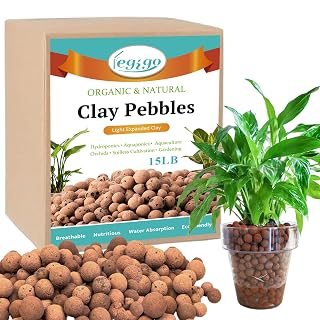 15LB Leca Clay Pebbles for Plants 4mm-16mm Clay Balls forCheck price on Amazon
 8LB Leca Clay Pebbles for PlantsCheck price on Amazon
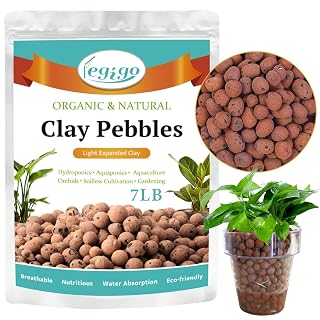 7LB Leca Clay Pebbles for PlantsCheck price on Amazon
 Grow!T Expanded Clay PebblesCheck price on Amazon
 2LB Organic Leca Clay Pebbles for PlantsCheck price on Amazon
GreenhouseGearHQ earns a commission when you buy through links on this page, at no extra cost to you. As an Amazon Associate I earn from qualifying purchases. Affiliate disclosure.
Clay pebbles vs lava rock: the short answer
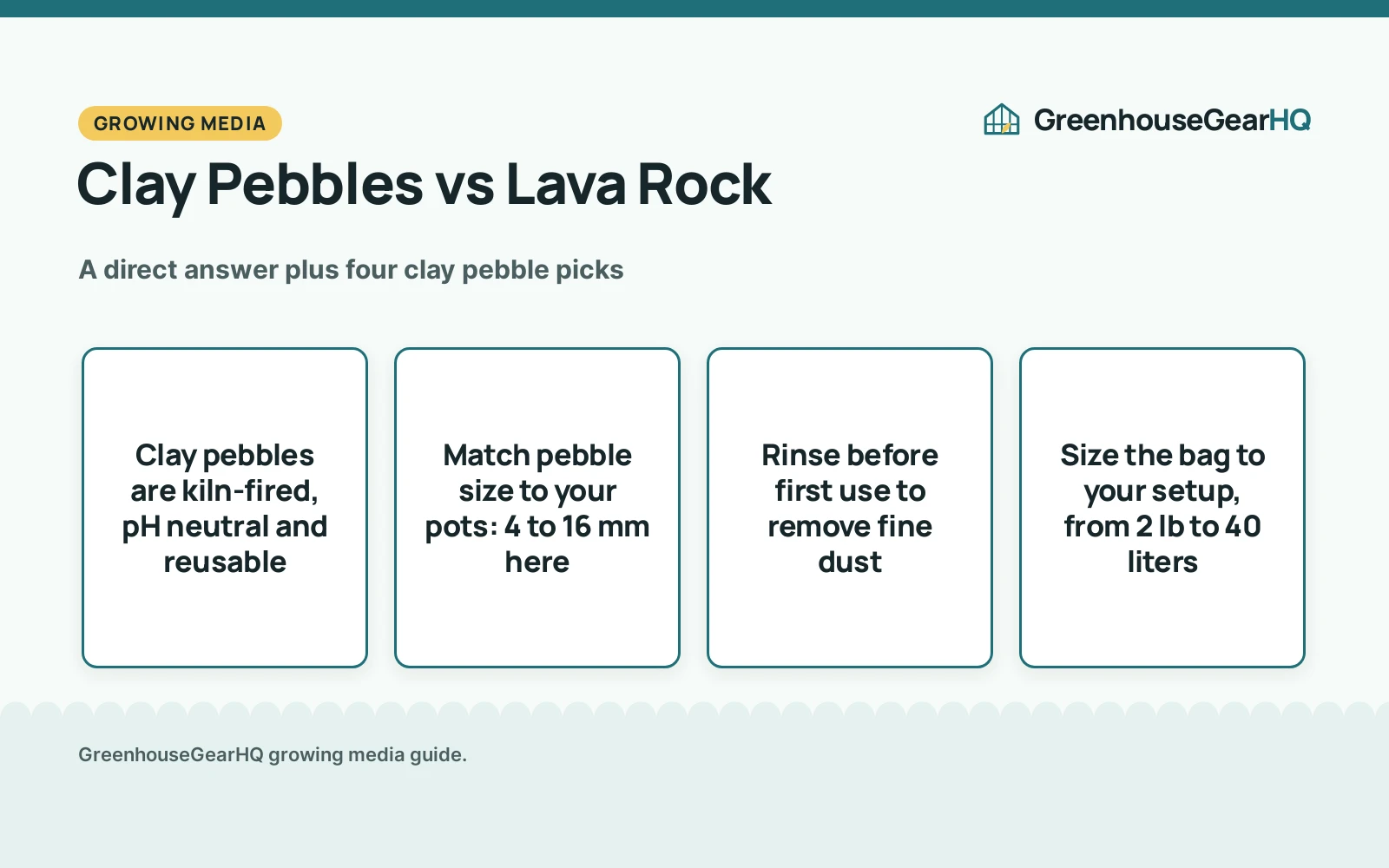
Choose clay pebbles when you want a reusable, pH-neutral medium. The listings in this guide describe them as natural clay baked or kiln fired into round balls, pH neutral, and washable for repeated planting and repotting. They suit hydroponic gardening, aquaponics, orchid substrates, terrariums and propagation. Pick the size to your pots: three listings give 4 to 16 mm, one gives 16 mm round balls. Size the bag to your setup: the listings run from a 2 lb value pack to 40 liters.
What clay pebbles are
Clay pebbles start as natural clay, mined and formed into pellets, then kiln fired at high temperatures until the clay expands into tough, lightweight balls. Their porous structure gives plants drainage and aeration, keeping the root zone from staying saturated while holding some moisture and nutrients that release slowly around the roots. Listings call them out for orchids, succulents, terrariums, aquaponics and hydroponic systems, and two state they are pH neutral.
Gear: four clay pebble picks, ranked
Ranked by drainage and aeration claims, pH neutrality, reuse and volume. First, the Legigo 15 lb clay pebbles: 4 to 16 mm balls, pH neutral, in a resealable foil pouch, suited to hydroponics, orchids and terrariums. Second, the Mother Earth Hydroton original: 25 liters of 16 mm round balls, made in Germany, kiln fired into tough, lightweight balls. Third, the Hydrofarm Grow!T: 40 liters, 4 to 16 mm, pre-washed, stated as stable in both pH and EC. Fourth, the Riare 2 lb organic leca: 4 to 16 mm in a resealable bag, the small-bag pick for propagation and small pots.
How to use clay pebbles
Rinse before first use: one listing says to rinse thoroughly to remove fine dust from packaging and transportation. Fill net pots, orchid containers or propagation jars, or use them alone as a potting soil alternative or mixed with other growing media. Between uses, rinse and dry them for repeated planting and repotting. The round shape also works as a decorative plant topping.
Buying notes: weight, volume and first use
Bags are sold two ways in these listings, by weight and by volume, and the two do not convert directly. The Legigo bag is 15 lb and lists 240 fluid ounces; the Hydrofarm bag is 40 liters at a stated 20 pounds; the Mother Earth bag is 25 liters at a stated 21 pounds. When you size a system, compare liters with liters and treat the pound figure as a guide to carrying, not to coverage.
Two listings package for storage: the Legigo comes in a resealable foil pouch and the Riare in a resealable bag, so leftovers stay clean and dry between plantings. On first use, the Hydrofarm pebbles are pre-washed to aid stability, while another listing still says to rinse thoroughly to remove fine dust, so rinse any bag that does not state pre-washed. The Hydrofarm listing also states its pebbles will not float once fully wet, so soak a new fill until it settles before you judge the level. For durability, the Riare listing states its fired clay is less likely to soften, break down or become chalky in water, which is the wording to look for if the medium will stay wet.
What this guide does not cover
We do not give nutrient schedules, light hours or pH targets, because they depend on the crop, the system and the water. Your nutrient line and system manual give those figures, and your local extension office can advise on timing for your area. We also do not cover pest products; follow the product label.
FAQ for growers
Are clay pebbles reusable?
Yes. Listings say to rinse and dry them between uses for repeated planting and repotting, and one calls them washable and reusable.
What size are the clay pebbles?
Three listings give 4 to 16 mm; the Mother Earth listing gives 16 mm round balls. Match the size to your pots and net pots.
Are clay pebbles pH neutral?
Two listings state pH neutral. One also calls them extremely stable in both pH and EC.
Do I need to rinse clay pebbles before first use?
Yes. One listing says to rinse thoroughly before first use to remove fine dust from packaging and transportation.
Keep reading
See every hydroponic systems guide and all hydroponic system guides.
More picks: hydroponic systems for seniors, NFT vs drip hydroponics, hygrometers for hydroponics.