On this page
Top picks at a glance
As an Amazon Associate I earn from qualifying purchases.
- 1
 Legigo 19LB Leca Clay Pebbles9.7/10View on Amazon
- 2
 Hydroton Original Clay PebblesView on Amazon
- 3
 Legigo 15LB Leca Clay Pebbles for Plants 4mm-16mm Clay BallsView on Amazon
- 4
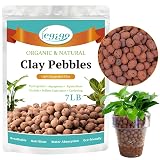 Legigo 7LB Leca Clay Pebbles for PlantsView on Amazon
- 5
 Grow!T Expanded Clay PebblesView on Amazon
- 6
 Riare 8LB Organic Leca Clay Pebbles for PlantsView on Amazon
- 7
 Riare 2LB Organic Leca Clay Pebbles for PlantsView on Amazon
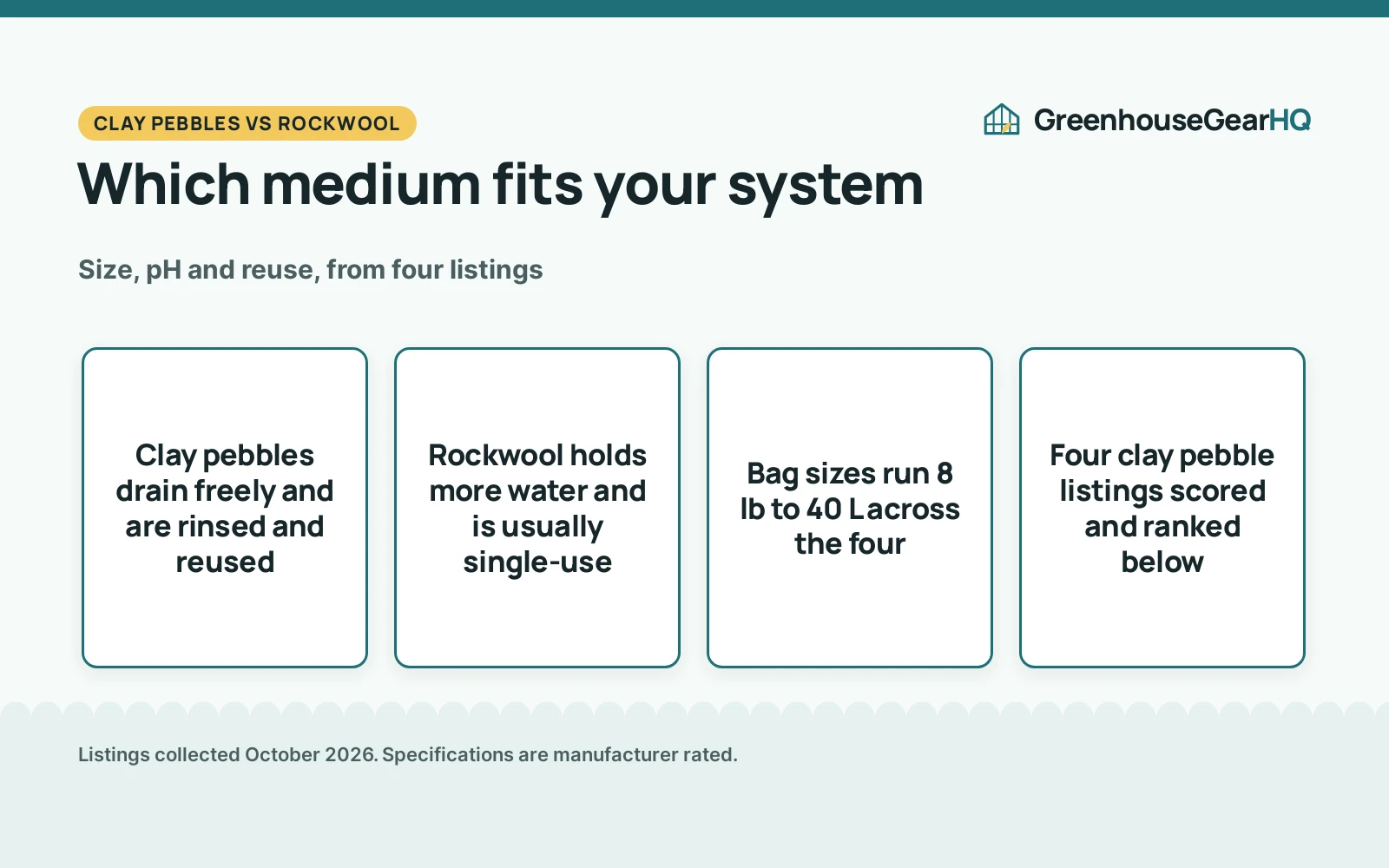
For clay pebbles vs rockwool, clay pebbles win on reuse and rockwool wins on water holding: clay pebbles drain freely and can be rinsed and reused for years, while rockwool holds far more water per volume and is usually replaced each crop. Pick clay pebbles for systems where drainage and reuse matter; pick rockwool for slabs and cubes where steady moisture is the priority. All four listings we compared are clay pebble products, so this guide uses them as the clay pebble examples.
Other options worth a look
 Hydroton Original Clay PebblesCheck price on Amazon
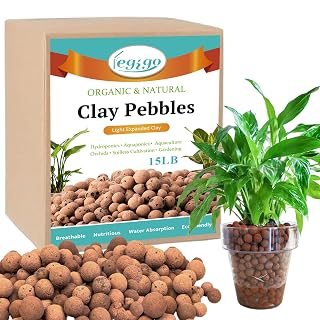 Legigo 15LB Leca Clay Pebbles for Plants 4mm-16mm Clay BallsCheck price on Amazon
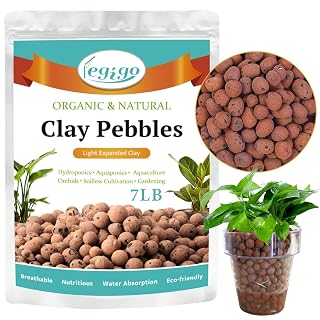 Legigo 7LB Leca Clay Pebbles for PlantsCheck price on Amazon
 Grow!T Expanded Clay PebblesCheck price on Amazon
 Riare 8LB Organic Leca Clay Pebbles for PlantsCheck price on Amazon
 Riare 2LB Organic Leca Clay Pebbles for PlantsCheck price on Amazon
GreenhouseGearHQ earns a commission when you buy through links on this page, at no extra cost to you. As an Amazon Associate I earn from qualifying purchases. Affiliate disclosure.
Clay pebbles vs rockwool: the core tradeoff
Clay pebbles, like the four listings here, are kiln-fired expanded clay balls from 4 mm to 16 mm. The Hydroton is 8 to 16 mm; the Legigo, Grow!T and Riare are 4 to 16 mm. They are semi-porous: they hold some water in their pores and release it slowly, but they drain freely and provide air space around roots. The listings state reusability: the Hydroton is reusable as long as it is thoroughly cleaned between uses; the Legigo and Riare are rinsed and reused; the Grow!T is reusable. Rockwool, by contrast, is spun mineral fiber that holds a large share of water by volume and is typically single-use in commercial setups. The tradeoff is labor versus convenience: pebbles are washed and reused, rockwool is used and discarded.
Size, pH and water behavior: what the listings show
Bag sizes run from 8 lb (Riare) to 10 L (Hydroton) to 15 lb (Legigo) to 40 L (Grow!T). Three listings state pH behavior: the Legigo is pH neutral and helps remove excess acidity; the Grow!T is extremely stable in both pH and EC; the Riare is pH-neutral. Two listings address floating: the Hydroton is semi-porous and generally does not float; the Grow!T will not float once fully wet. The Grow!T is pre-washed to aid in stability; the Legigo ships in a resealable foil pouch; the Riare ships in a resealable bag. None of the four states a warranty term.
Four clay pebble examples, ranked
We scored the four listings by media quality, build, value, safety and warranty. The Legigo ranks first: 15 lb, 4 to 16 mm, pH neutral, drainage plus aeration plus moisture retention, in a resealable foil pouch. The Grow!T ranks second: 40 L, 4 to 16 mm, pre-washed, pH and EC stable, and it will not float once fully wet. The Hydroton ranks third: 10 L of the original brand, 8 to 16 mm, semi-porous, reusable with cleaning. The Riare ranks fourth: 8 lb, 4 to 16 mm, pH-neutral, reusable, in a resealable bag.
Matching bag size to your system
Bag sizes in the listings run from 8 lb (Riare) to 10 L (Hydroton) to 15 lb (Legigo) to 40 L (Grow!T), so pick by the volume your system needs. The Riare 8 lb bag suits small setups and top-ups; its resealable bag keeps the remainder dry between plantings. The Legigo 15 lb bag ships in a resealable foil pouch, which suits growers who buy once and fill several net pots over time. The Hydroton 10 L bag is semi-porous and generally does not float, a useful trait in flood-and-drain trays where light media can drift. The Grow!T 40 L bag is the bulk option for larger systems, and it is pre-washed to aid in stability, which saves a prep step on fill day.
Water behavior also guides the choice. Three listings state pH behavior: the Legigo is pH neutral and helps remove excess acidity, the Grow!T is extremely stable in both pH and EC, and the Riare is pH-neutral. On floating, the Hydroton generally does not float and the Grow!T will not float once fully wet, so both suit systems where media must stay put. If your setup runs recirculating nutrient, the pH stability the Grow!T and Legigo state matters more than it does in a drain-to-waste setup.
Rinsing and reuse: what the listings show
All four listings describe reuse: rinse before first use to remove dust (Riare), rinse and dry between uses for repeated planting (Legigo), thoroughly clean between uses (Hydroton), and reusable with pre-washing (Grow!T). This is the clay pebble advantage over rockwool: a one-time purchase that lasts many crops with washing. Rockwool slabs and cubes are instead typically composted or discarded after each cycle, which keeps media costs recurring but removes the washing step.
FAQ for growers
Should I pick clay pebbles or rockwool?
Pick clay pebbles for drainage and reuse; pick rockwool for high water holding in slabs and cubes.
Which listing is the largest bag?
The Grow!T at 40 L, followed by the Legigo at 15 lb.
Which listings state pH behavior?
The Legigo states pH neutral, the Grow!T states pH and EC stability, and the Riare states pH-neutral.
Can clay pebbles be reused?
Yes, per all four listings: rinse and dry between uses, and clean thoroughly before replanting.
Keep reading
See every indoor growing guide.
More picks: browse indoor growing.