On this page
Top picks at a glance
As an Amazon Associate I earn from qualifying purchases.
- 1
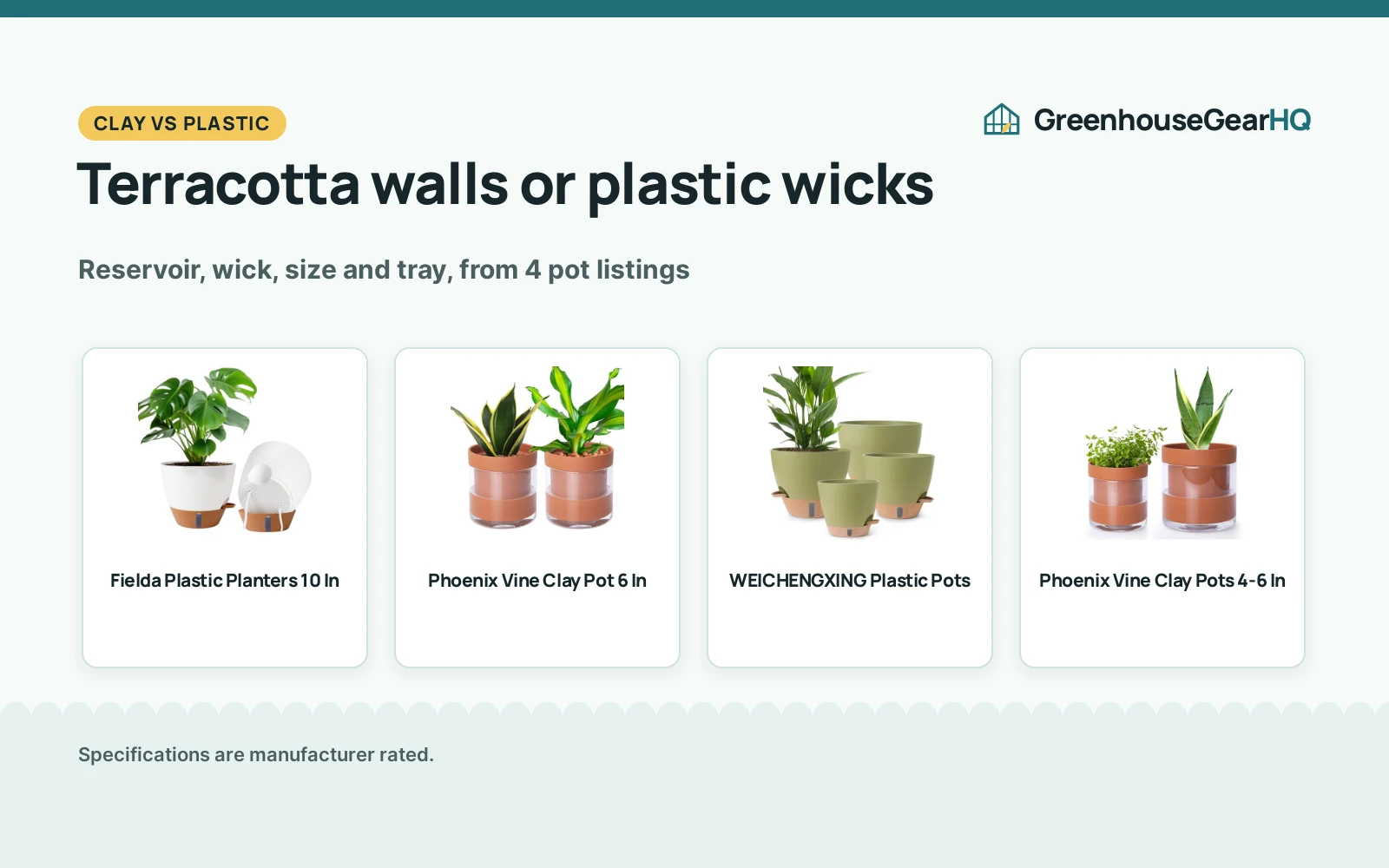
 Fielda Plastic Planters 10 In9.7/10View on Amazon
- 2
 Phoenix Vine Clay Pot 6 In9.7/10View on Amazon
- 3
 WEICHENGXING Plastic Pots9.6/10View on Amazon
- 4
 Phoenix Vine Clay Pots 4-6 In9.6/10View on Amazon
A pot that waters itself sounds simple until the reservoir runs dry, and the clay vs plastic self watering pots choice comes down to how each material moves water to the roots.
GreenhouseGearHQ earns a commission when you buy through links on this page, at no extra cost to you. As an Amazon Associate I earn from qualifying purchases. Affiliate disclosure.
Quick verdict: choose clay for unglazed terracotta walls and a glass reservoir with no drainage holes. Choose plastic for wicks, a water level window, drainage holes and a detachable tray. Neither side states a warranty term.
The pots
| # | Product | Greenhouse Score | Buy |
|---|---|---|---|
| 1 | Fielda Plastic Planters 10 In | 9.7/10 | Buy on Amazon |
| 2 | Phoenix Vine Clay Pot 6 In | 9.7/10 | Buy on Amazon |
| 3 | WEICHENGXING Plastic Pots | 9.6/10 | Buy on Amazon |
| 4 | Phoenix Vine Clay Pots 4-6 In | 9.6/10 | Buy on Amazon |
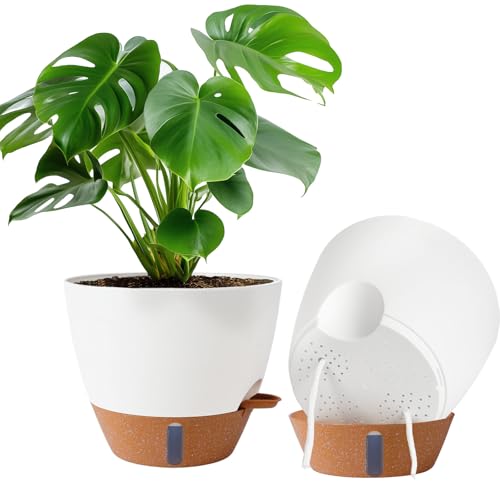
Fielda Plastic Planters 10 In
2 white plastic planters, 10 inches across the top, with cotton wicks and a detachable tray.
Pros
- Cotton wicks draw water from the bottom tray
- Transparent water level window with clear measurement markings
- Drainage holes and a detachable tray
- Plastic resists cracking, fading and high temperatures
Cons
- No warranty term is stated
- Best for plants in 6 to 8 inch nursery pots
- 2 pack only
- Wicks only work while the tray holds water

Phoenix Vine Clay Pot 6 In
2 terracotta clay pots, 6 inches across, with a glass reservoir.
Pros
- Unglazed terracotta walls absorb only what the plant needs
- Glass reservoir shows when it is time to refill
- Plants thrive for at least 10 days without daily care
- No drainage holes means no leakage on the tabletop
Cons
- Glass reservoir can break if knocked over
- 2 pots only, one 6 inch size
- One size only, with no smaller pot for seedlings
- Clear glass shows the level but no markings are stated
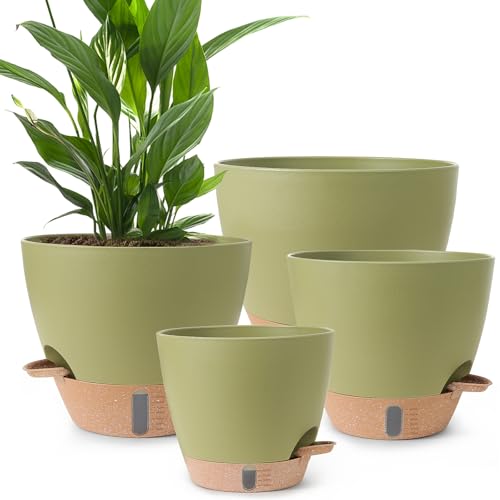
WEICHENGXING Plastic Pots
4 green plastic pots in 12, 10, 9 and 8 inch sizes with a rope wick and a removable tray.
Pros
- 4 sizes, 12, 10, 9 and 8 inch, in one order
- Rope wick draws water from the reservoir
- Transparent water level window with clear measurement marks
- Removable drainage tray for easy cleaning
Cons
- No warranty term is stated
- Wick only works while the reservoir holds water
- 12 inch size suits large plants
- 4-pack suits a collection more than one plant

Phoenix Vine Clay Pots 4-6 In
Terracotta clay pots in 4 and 6 inch sizes with a glass reservoir and unglazed walls.
Pros
- Two sizes, 4 and 6 inch, in one listing
- Unglazed bottom quarter lets plants absorb water
- Glass reservoir stores excess water for easy refilling
- No drainage holes keeps the tabletop clean
Cons
- Glass reservoir can break if knocked over
- Small size is 4.1 inches tall
- 2 sizes only, no larger pot
- No water level markings are stated
As an Amazon Associate I earn from qualifying purchases.
Clay vs plastic self watering pots: side by side
| Pots | Greenhouse Score | Material | Reservoir | Size | Drainage | Warranty | Amazon |
|---|---|---|---|---|---|---|---|
| Fielda Plastic Planters 10 In | 9.7/10 | Plastic | Cotton wicks | 10 in top dia | Drainage holes | Not stated | View on Amazon |
| Phoenix Vine Clay Pot 6 In | 9.7/10 | Terracotta clay | Glass reservoir | 6 in outer dia | No drainage holes | Not stated | View on Amazon |
| WEICHENGXING Plastic Pots | 9.6/10 | Plastic | Reservoir, rope wick | 12, 10, 9, 8 in | Removable tray | Not stated | View on Amazon |
| Phoenix Vine Clay Pots 4-6 In | 9.6/10 | Terracotta clay | Glass reservoir | 4 and 6 in | No drainage holes | Not stated | View on Amazon |
Size and build specs are the manufacturer’s ratings as published on each listing, gathered 29 November 2026.
How the water reaches the roots
The clay listings water through the pot walls: the bottom quarter is unglazed, so plants absorb water through the walls, and the glass reservoir stores excess water. The 6 inch set says to fill about 1/3 at once, and plants thrive for at least 10 days.
The plastic listings water through wicks: Fielda uses cotton wicks from the bottom tray, and WEICHENGXING uses a rope from the bottom of the pot. Both add a transparent water level window with markings.
Size and fit
Clay sizes run small: the 4 and 6 inch listing holds a medium pot 6.5 inches tall and 4.7 inches across, and a small pot 4.1 inches tall and 3.0 inches across. The set of 2 is 6.0 inches across and 6.5 inches tall.
Plastic sizes run larger: Fielda measures 10 inches across the top by 8.3 inches high, with 6.1 inches depth, for plants in 6 to 8 inch nursery pots. WEICHENGXING offers 12, 10, 9 and 8 inch sizes.
Trays, drainage and cleanup
The plastic listings drain and detach: Fielda has drainage holes, a detachable tray and holes for watering, drainage and airflow, and WEICHENGXING has a removable drainage tray.
Which should you choose?
Choose clay self watering pots if you want unglazed terracotta that waters through the walls and a glass reservoir you can see through. For another material comparison, see terracotta vs ceramic planter.
Choose plastic self watering pots if you want wicks, a water level window, drainage holes and a detachable tray. Compare more options in our best self watering planter for balcony picks.
In the Greenhouse
- Fill the clay reservoir about 1/3 at once.
- Check the Fielda water level window before watering.
- Set the clay pots on a tabletop, since they have no drainage holes to leak.
Scoring notes
| Product | Greenhouse Score | Perf. /35 | Build /25 | Value /25 | Safety /10 | Warranty /5 |
|---|---|---|---|---|---|---|
| Fielda Plastic Planters 10 In | 9.7 | 32 | 22 | 21 | n/a | 0 |
| Phoenix Vine Clay Pot 6 In | 9.7 | 30 | 21 | 22 | n/a | 0 |
| WEICHENGXING Plastic Pots | 9.6 | 29 | 21 | 22 | n/a | 0 |
| Phoenix Vine Clay Pots 4-6 In | 9.6 | 29 | 21 | 21 | n/a | 0 |
Greenhouse Scores use 9.2 as the lowest value and 9.8 as the highest, with weighted points placed between them in proportion. More points always earns more score. Safety counts for heaters, fans, lights and other powered gear and for listings stating safety features; anything else is scored on 90 points.
The Greenhouse Score weighs performance, build, value, safety and warranty, as explained on our How we pick page. For self watering pots, safety means a stated stable base or overflow control; none of the listings states one, so neither side earns safety points.
FAQ for growers
How long can self watering pots go without watering?
The Phoenix Vine 6 inch listing says plants thrive for at least 10 days, and WEICHENGXING describes a Two Weeks Self Care System.
Do clay self watering pots have drainage holes?
No. Both clay listings state no drainage holes, which keeps water and soil off the tabletop.
How do plastic self watering pots work?
Through wicks: Fielda uses cotton wicks, and WEICHENGXING uses a rope from the bottom of the pot.
Do self watering pots come with a warranty?
None of the listings states a warranty term. Both clay listings offer hassle-free replacement or refund.
Keep reading
See every planters and pots guide and all raised beds and planters guides.
More picks: browse planter for tomatoes, planter for vegetables and clear flower pots.