On this page
Top picks at a glance
As an Amazon Associate I earn from qualifying purchases.
- 1
 Farm Plastic Supply 4 Year Clear 6 mil Greenhouse Film9.6/10View on Amazon
- 2
 6 Mil Greenhouse Plastic SheetingView on Amazon
- 3
 10x20 FT Greenhouse Plastic SheetingView on Amazon
- 4
 A&A Green Store Greenhouse Plastic 4 Year 6 mil UV ResistantView on Amazon
- 5
 6 Mil Clear Greenhouse Plastic SheetingView on Amazon
- 6
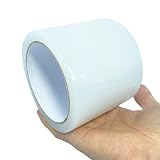 Greenhouse Repair TapeView on Amazon
- 7
 Farm Plastic SupplyView on Amazon
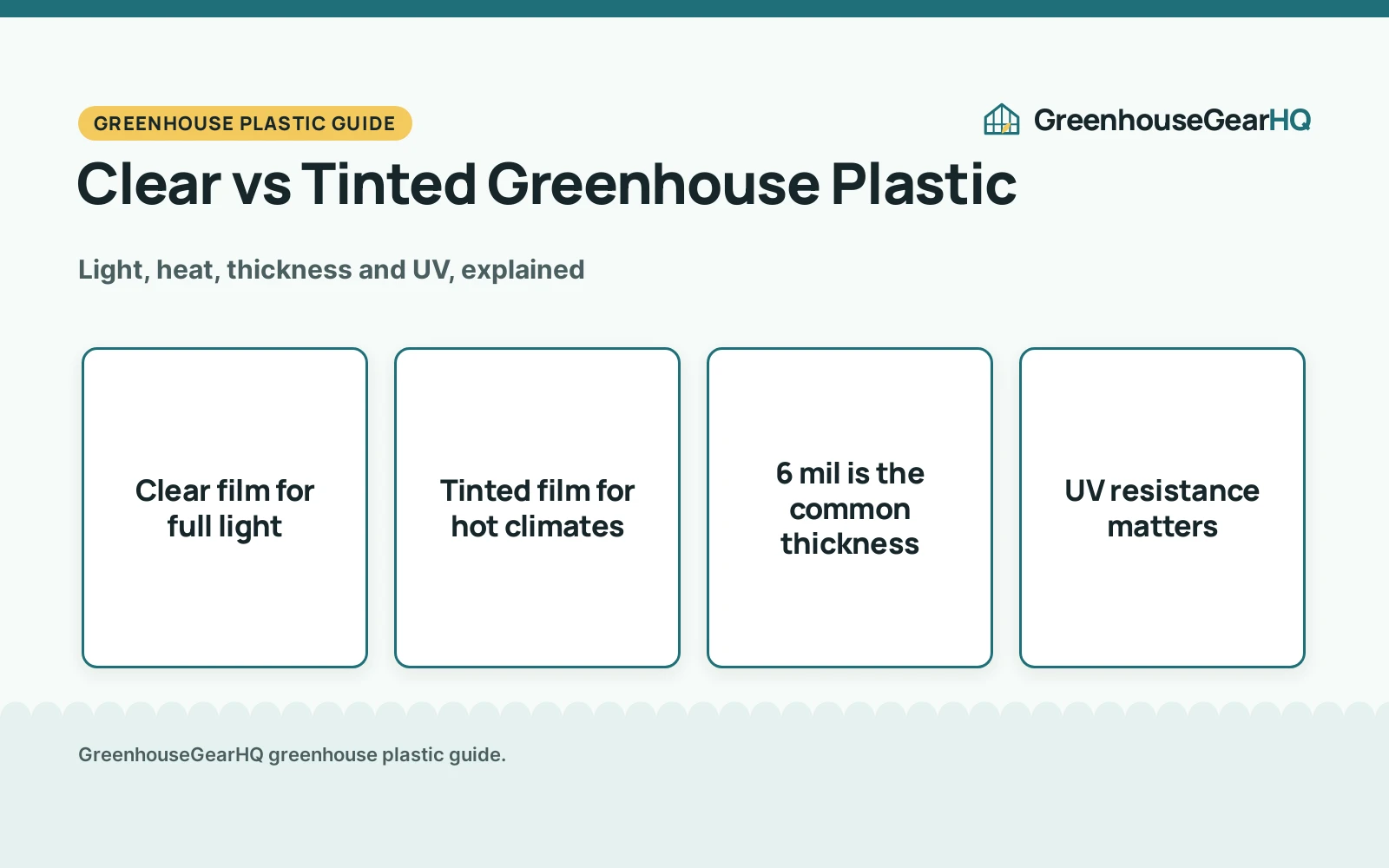
Clear plastic wins for most greenhouses: it lets in the most light, and light is what plants need. Tinted plastic makes sense only where heat is the problem, cutting light to cool the house on hot afternoons. That is the clear vs tinted greenhouse plastic question in one line: match the film to your climate, not to the catalog photo.
Other options worth a look
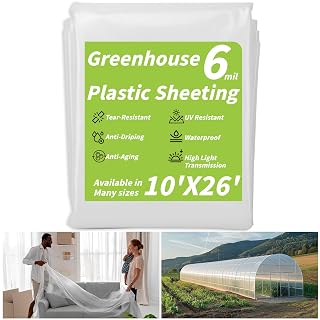 6 Mil Greenhouse Plastic SheetingCheck price on Amazon
 10x20 FT Greenhouse Plastic SheetingCheck price on Amazon
 A&A Green Store Greenhouse Plastic 4 Year 6 mil UV ResistantCheck price on Amazon
 6 Mil Clear Greenhouse Plastic SheetingCheck price on Amazon
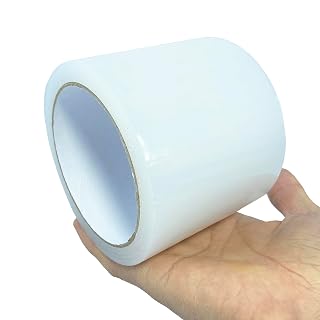 Greenhouse Repair TapeCheck price on Amazon
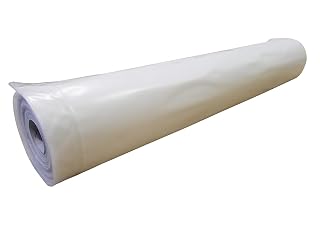 Farm Plastic SupplyCheck price on Amazon
GreenhouseGearHQ earns a commission when you buy through links on this page, at no extra cost to you. Affiliate disclosure.
Clear plastic: what it does
Clear film passes the most daylight to the plants. The UZLU listing states excellent light transmission for even lighting through the house, which the maker links to healthier, more consistent growth. Clear film also retains warmth, which matters on cold nights and in shoulder seasons. Every product in this guide is clear: the UZLU 10 x 26 ft sheet, the VEVOR 12 x 25 ft sheet, the Film-Gard 10×100 ft roll and the MATADAKUL 4x6ft tarp. For seedlings, leafy greens and most fruiting crops, clear is the default choice because nothing about the film stands between the sun and the leaf.
Tinted plastic: what it does
Tinted film trades light for cool. By cutting the light that enters, it lowers the temperature inside on hot afternoons, which suits growers in hot climates and crops that dislike heat stress. The trade is real: less light means slower growth for light-hungry plants, so tinted film is a climate tool, not an upgrade. None of the four products here is tinted; they are all clear, which tells you where the market sits. If your summers regularly push the house too hot even with vents open, tinted film or shade cloth over clear film is the answer.
Clear vs tinted greenhouse plastic: how to choose
Start with your climate. Mild summers and cold winters point to clear film: you want every bit of light and every degree of retained warmth. Hot summers with mild winters point the other way: heat becomes the limiting factor, and cutting light with tinted film keeps the house workable. Next, look at your crops. Seedlings and greens want full light; heat-sensitive crops appreciate the cooler house that tinted film gives. Finally, check what the listing states: thickness, UV resistance and size. Three of the four picks here state 6 mil thickness and UV resistance, which are the two specs that decide how the film handles sun and weather.
The gear, ranked
1. UZLU 6 Mil Greenhouse Plastic Sheeting, 10 x 26 ft. Clear polyethylene, 6 mil thick, stated UV resistant and weatherproof, with tear resistance and warmth retention. The listing states a 7.28 pound weight and covers large structures like grow tunnels or mini greenhouses. Top pick: the fullest listing here, with light transmission, UV and size all stated.
2. VEVOR Greenhouse Plastic Sheeting, 12 x 25 ft, 6 mil, UV resistant. A wider sheet than the UZLU at 12 x 25 ft, with 6 mil thickness and UV resistance stated. The listing is short, title only with no bullets, so less is confirmed. Second pick on width and stated specs.
3. Film-Gard Construction Plastic Sheeting, 10×100 ft, 6 mil. The longest roll here at 10×100 ft, 6 mil thick. It is construction sheeting rather than greenhouse-specific film, and the listing is title only. Third pick: huge coverage, but no UV or greenhouse claims stated.
4. MATADAKUL Clear Tarp, 4x6ft. A clear water-resistant tarp with reinforced edges and rust-proof grommets, UV-resistant and tear-resistant, at 0.39 kg and 72 x 48 in. It suits patching, small covers and chicken coops rather than skinning a whole house. Fourth pick: handy, but too small for a greenhouse skin.
What this guide does not cover
Installation methods, frame types and multi-year lifespan claims are outside this guide. We compare film types and the four listed products only; for attaching film to hoops or frames, see a greenhouse build guide.
FAQ for growers
Will tinted plastic starve my plants of light?
It can, for light-hungry crops. Tinted film cuts the light that reaches the leaves, which slows growth in plants that want full sun. In hot climates the cooler house can still be a net win, but for seedlings and greens, clear film is the safer choice.
What thickness should greenhouse plastic be?
Three of the four picks here state 6 mil, which is the common greenhouse thickness in these listings. Thicker film resists tears and weather better; thinner film costs less but wears faster. The MATADAKUL tarp states no mil figure, so compare it on size and features instead.
Does greenhouse plastic need UV resistance?
Yes. Sun breaks down plain plastic, so UV resistance is the spec that decides whether the film survives the season. The UZLU, VEVOR and MATADAKUL listings all state UV resistance; the Film-Gard listing states none, which fits its construction-sheeting label.
Can I use a clear tarp instead of greenhouse film?
For small jobs, yes. The MATADAKUL 4x6ft clear tarp with grommets suits patching, cold frames and small covers. For skinning a whole house, the sheet sizes make more sense: 10 x 26 ft, 12 x 25 ft or 10×100 ft, which cover a structure with fewer seams.
How much plastic do I need for my greenhouse?
Measure the house first, then pick a sheet that covers it with room to spare. The picks here run from a 4x6ft tarp up to a 10×100 ft roll, so match the sheet to the structure rather than piecing small tarps together.