On this page
Top picks at a glance
As an Amazon Associate I earn from qualifying purchases.
- 1
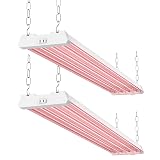 Sunco 2 Pack 4FT Full Spectrum LED Grow Lights 80W9.8/10View on Amazon
- 2
 VIVOSUN LumaLight 100W LED Grow Light9.7/10View on Amazon
- 3
 Spider Farmer SF1000 LED Grow Light9.7/10View on Amazon
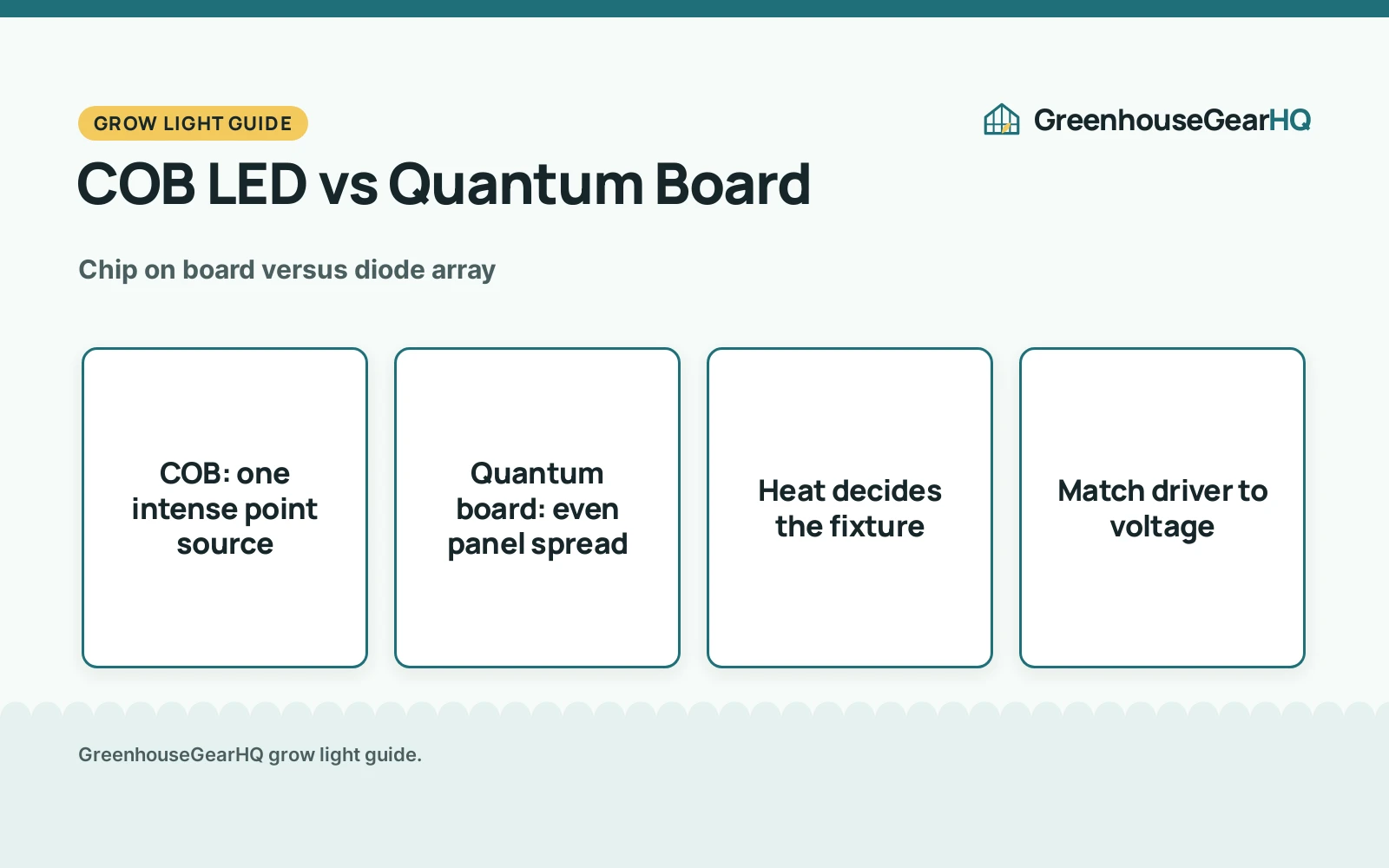
COB LED grow lights pack many diodes into one chip, creating a single intense point of light with deep penetration; quantum boards spread diodes across a large panel for even, efficient coverage. Pick COB when one intense source must punch deep into a small canopy; pick quantum boards when even coverage across a tent matters more. This guide explains each design, with concrete figures from the listings.
GreenhouseGearHQ earns a commission when you buy through links on this site, at no extra cost to you. As an Amazon Associate I earn from qualifying purchases. Affiliate disclosure.
COB LED vs quantum board: what each one is
COB stands for chip on board: many LED dies bonded directly to one substrate, acting as a single light source. The CHANZON listing describes 3W white chips at 6000K to 6500K, the building blocks of COB arrays. A quantum board is the opposite approach: hundreds of small diodes spread across a wide panel, each running softly, so the light leaves the fixture as a broad, even sheet rather than a point.
COB: one intense point of light
Because the dies sit together, a COB behaves like a tiny sun: intense, with strong penetration into the canopy. The listings show COB in strip form too: a 5W USB COB strip at 6500K pure white with a 50000 hour rating, and dotless COB strips like the PAUTIX 16.4-foot, 2700K warm white, where the dies blend into a continuous line with no visible points. The EMITEVER listing states 3W per foot and 305-plus lumens per foot at 3000K, with a 5-year rating. The trade of the point source: intensity concentrates heat in one spot, so COBs need serious heatsinking.
Quantum boards: diodes spread wide
Quantum boards trade the point source for area. Diodes spread across the panel run cooler individually and overlap their output, giving even coverage with soft shadows. No quantum board listings appear in this data set, so figures here come from the COB side for contrast: the 200-foot COB rope listing states 8W per meter at 6000K with CRI above 85, a reminder that efficiency and color quality are stated per design, not per category. In practice, boards suit tents where the whole canopy must receive similar light.
Heat, drivers and form
Heat decides the fixture. A COB’s concentrated dies need a chunky heatsink and often active cooling; a board’s spread-out diodes can cool passively. The listings show the range of COB formats: 12V and 24V FCOB strips at 3000K in 16.4-foot lengths, RGBICW COB strips in 9.8 and 16.4-foot lengths, and rope light at 8W per meter. Whatever the form, match the driver voltage to the strip: 12V and 24V are not interchangeable, per the BTF-LIGHTING listings.
How to buy: match the format to the grow
Start with the job. A single specimen plant or a small, deep canopy wants a point source: the CHANZON listing describes 3W white chips at 6000K to 6500K, the building blocks of COB arrays, and the 5W USB COB strip at 6500K pure white with a 50000 hour rating covers a desk plant. A tent or shelf grow wants even spread, which is the quantum board’s home turf.
Then check the practical figures. The EMITEVER listing states 3W per foot and 305-plus lumens per foot at 3000K with a 5-year rating, so you can estimate output per length before buying. The PAUTIX 16.4-foot dotless strip at 2700K warm white suits accent or supplemental warm light, while the 200-foot COB rope listing states 8W per meter at 6000K with CRI above 85 for color-critical work. For flexible runs, the BTF-LIGHTING listings offer FCOB strips at 3000K in 16.4-foot lengths in both 12V and 24V; pick the voltage your driver supports, since the two are not interchangeable. Match the format to the grow first, then the spectrum and the driver.
Which should you choose?
Choose COB when the grow needs one intense source over a small area: deep penetration, simple optics, and the dotless strips here show how smooth COB light can look. Choose quantum boards when the grow is a tent or room where even coverage beats peak intensity: spread diodes, cooler running, fewer hot spots. For most home tents, the board’s even sheet of light is the easier win; for a single specimen plant, a COB’s punch is hard to beat.
FAQ for growers
What does COB mean?
Chip on board: many LED dies on one substrate acting as a single source. The CHANZON listing describes 3W white chips at 6000K to 6500K.
Do COB lights run hot?
The concentrated dies produce heat in one spot, so COB fixtures need good heatsinks. Spread-out diodes on boards run cooler per diode.
What is a dotless strip?
A COB strip where the dies blend into a continuous line, like the PAUTIX 2700K listing, with no visible individual points.
Can I mix 12V and 24V strips?
No. The BTF-LIGHTING listings offer the same 3000K strip in 12V and 24V versions; the driver must match the strip voltage.
Keep reading
See every grow lights guide and all greenhouse climate guides.
More picks: grow lights with timer, grow lights for microgreens.