On this page
Top picks at a glance
As an Amazon Associate I earn from qualifying purchases.
- 1
 Outsunny Raised Garden Bed9.6/10View on Amazon
- 2
 MCombo Wooden Cold Frame9.5/10View on Amazon
- 3
 Giantex Wood Cold Frame Greenhouse with Flip-Top Roof9.3/10View on Amazon
- 4
 GIANTEX Wood Cold Frame with Flip-Top RoofView on Amazon
- 5
 Garden Raised Bed and Cold Frame Greenhouse ClocheView on Amazon
- 6
 Outsunny Wooden Cold Frame Greenhouse 30" L x 24" W x 44" HView on Amazon
- 7
 MCombo Cold Frame GreenhouseView on Amazon
- 8
 Juwel Cold Frame OpenerView on Amazon
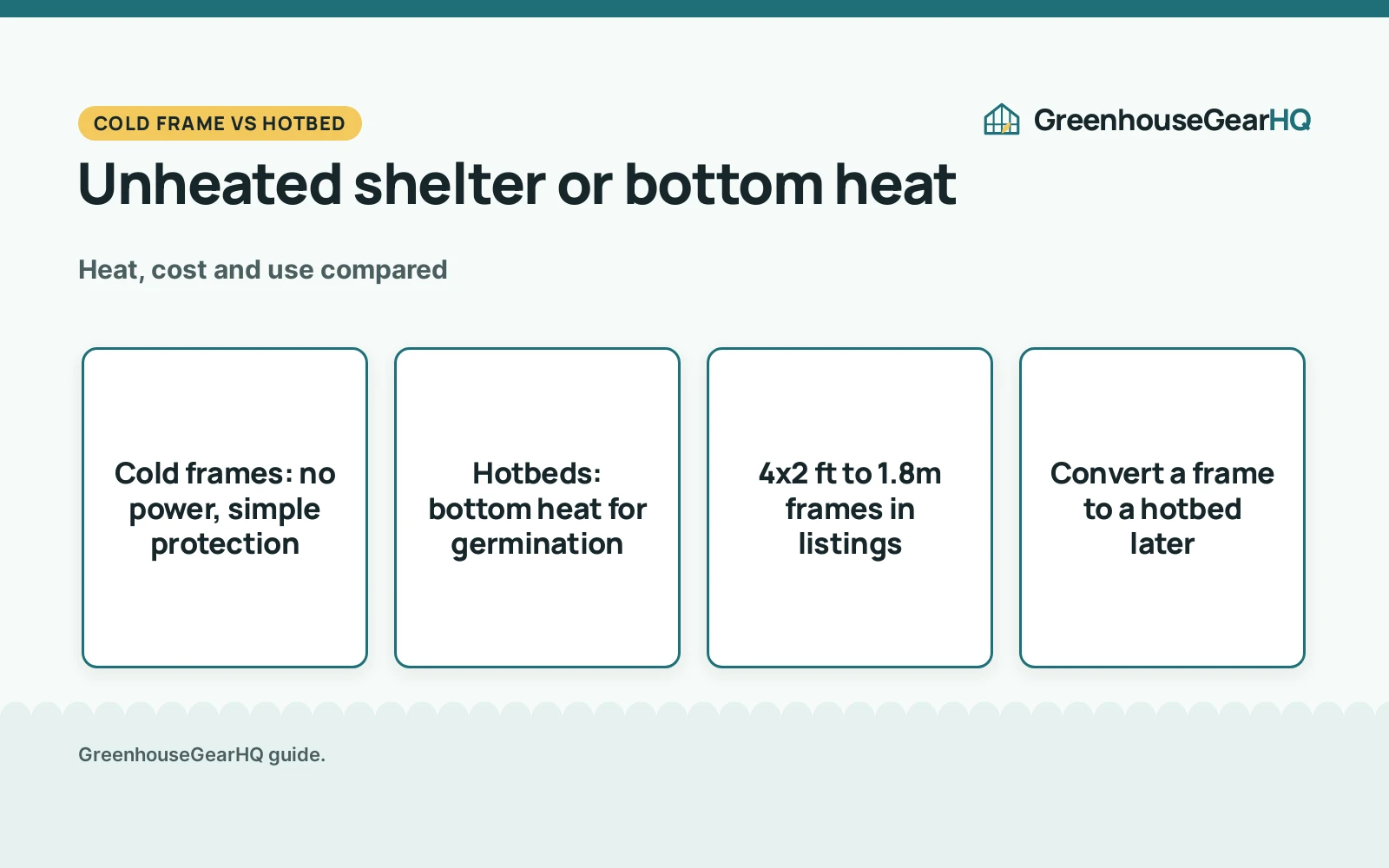
Cold frame vs hotbed comes down to heat: a cold frame is an unheated glazed box that shelters plants with trapped sun, while a hotbed is the same idea with bottom heat added underneath. The listings here are all cold frames, from the Backyard Discovery 4 x 2 ft cedar model to VegTrug cold frames for 1m and 1.8m raised beds and Giantex wood cold frames. No hotbed listing is in the data, so this guide explains hotbeds from general knowledge and cites cold frame figures from the listings. Choose a cold frame for simple protection; build a hotbed when you need real warmth.
Other options worth a look
 GIANTEX Wood Cold Frame with Flip-Top RoofCheck price on Amazon
 MCombo Wooden Cold Frame Garden Greenhouse Flower Planter 0160Check price on Amazon
 Garden Raised Bed and Cold Frame Greenhouse ClocheCheck price on Amazon
 Outsunny Wooden Cold Frame Greenhouse 30" L x 24" W x 44" HCheck price on Amazon
 MCombo Cold Frame GreenhouseCheck price on Amazon
 Juwel Cold Frame OpenerCheck price on Amazon
GreenhouseGearHQ earns a commission when you buy through links on this page, at no extra cost to you. As an Amazon Associate I earn from qualifying purchases. Affiliate disclosure.
What a cold frame is
A cold frame is a low box with a transparent lid that sits over plants and warms them with trapped sunlight. The listings show the range: Backyard Discovery sells a 4 x 2 ft cedar wood cold frame, VegTrug makes cold frames sized for its 1m and 1.8m raised beds, and Giantex lists several wood cold frame greenhouses. Sinimaka’s 8 x 4 x 0.24 inch twin-wall polycarbonate panels are the kind of glazing a DIY cold frame uses. Cold frames harden off seedlings, overwinter tender plants and start spring crops early, all with no power at all.
What a hotbed is
A hotbed is a cold frame with heat under the soil: traditionally a thick layer of fresh manure, today usually a soil heating cable or heat mat. The bottom warmth germinates seeds and roots cuttings weeks earlier than an unheated frame. No hotbed listing is in the data here, so compare heating products on their own stated figures. Building one means a cold frame plus a heat source plus a thermostat, which is more money and more wiring than a plain frame.
Warmth and what you can grow
The heat difference decides the use. A cold frame buys you a few degrees of frost protection and a head start on spring; it will not keep tropicals alive in January. A hotbed’s bottom heat keeps the root zone warm even when the air is cold, which is what seeds need to germinate. If your goal is hardening off and overwintering hardy plants, the cold frame suffices. If your goal is starting heat-loving seeds early, only the hotbed delivers.
Cost and effort
Cold frames win on simplicity: buy one like the 4 x 2 ft Backyard Discovery model or build one from panels like the Sinimaka 8 x 4 ft sheets, set it down and open the lid on sunny days. Hotbeds add the heating layer, the electricity and the monitoring: soil thermometers, thermostats and the discipline to vent before seedlings cook. For most gardeners, a cold frame plus patience beats a hotbed plus fuss.
Cold frame vs hotbed: which suits you
Match the structure to the job. Protecting plants and starting hardy crops early: a cold frame, sized to your bed like the VegTrug 1m and 1.8m models. Germinating seeds in late winter or rooting cuttings: a hotbed with bottom heat. Many gardeners own a cold frame first and convert it to a hotbed later by adding a heating cable, which is the cheapest path to both.
Ventilation is the shared skill. Both structures overheat on sunny days: a closed cold frame cooks seedlings fast, and a hotbed adds bottom heat to the same risk. Prop the lid open on mild days, close it before evening, and watch a thermometer inside the frame until you learn its rhythm. The automatic vent openers in our best automatic vent opener for cold frame picks handle this chore for you.
What this guide does not cover
This guide covers cold frames and hotbeds only. For related structures, see our cold frame vs mini greenhouse and low tunnel vs cold frame guides.
FAQ for growers
Can I turn a cold frame into a hotbed?
Yes: add a soil heating cable or heat mat under the soil with a thermostat. The frame itself, like the wood models in the listings, works for either.
Do cold frames need electricity?
No. A cold frame runs on sunlight alone, which is its main advantage over a hotbed.
What size cold frame do I need?
Match it to the bed: VegTrug lists frames for 1m and 1.8m beds, and Backyard Discovery a 4 x 2 ft standalone model. Bigger frames hold more plants but overheat faster.
Will a cold frame keep plants alive all winter?
It protects hardy plants and buys degrees of frost protection, but it is unheated. Tender plants need the hotbed’s bottom warmth or a move indoors.
Keep reading
See every cold frame guide and all greenhouse guides.
More picks: best cold frame for gardening, cold frame vs mini greenhouse and low tunnel vs cold frame.