On this page
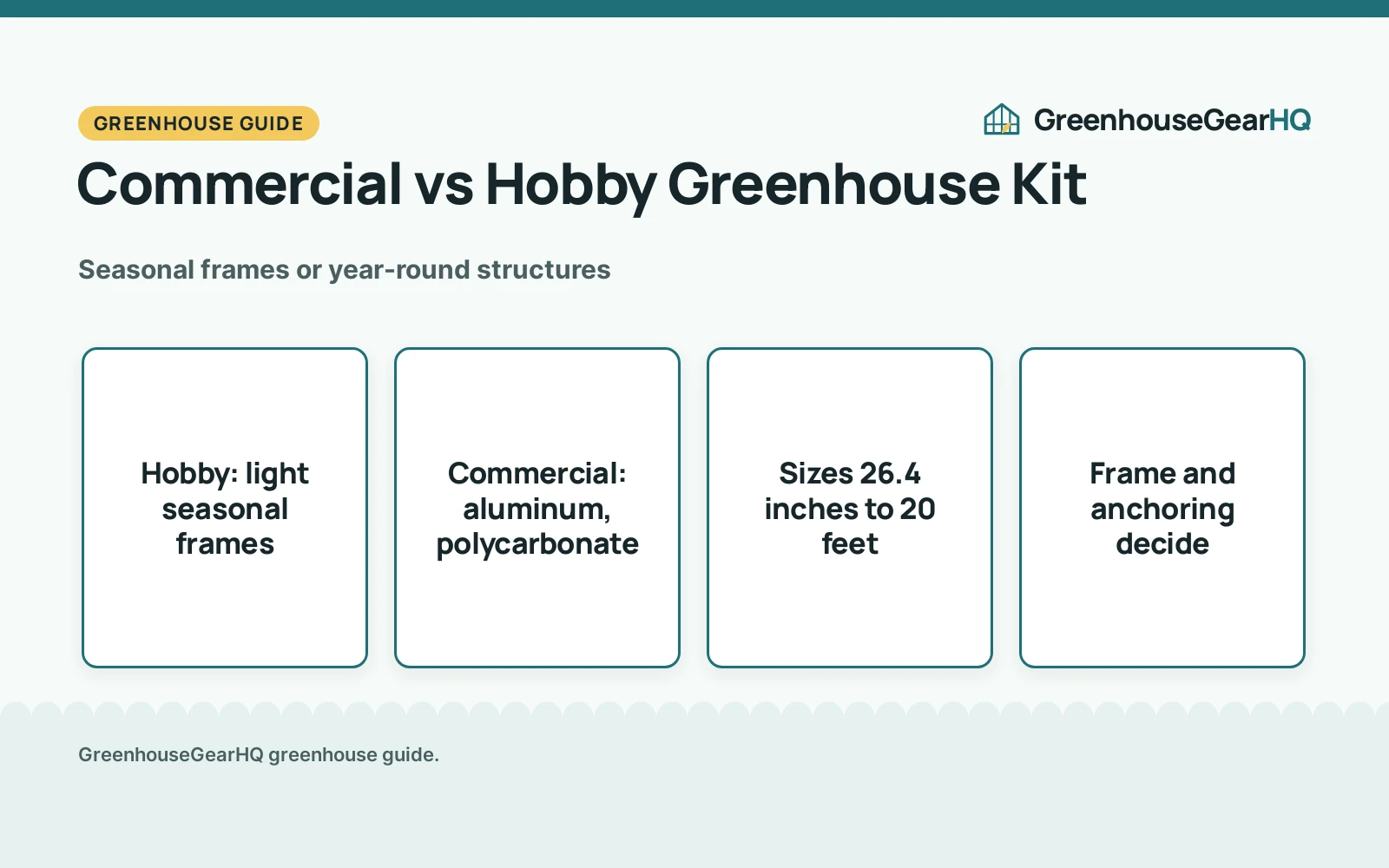
Commercial vs hobby greenhouse kit: the short answer is that commercial kits use heavier aluminum framing, polycarbonate glazing and proper anchoring for year-round production, while hobby kits favor light tunnel or pop-up frames for seasonal growing. One is built for decades of weather; the other for seasons of convenience. The reference listings below give concrete figures for both sides.
GreenhouseGearHQ earns a commission when you buy through links on this page, at no extra cost to you. As an Amazon Associate I earn from qualifying purchases. Affiliate disclosure.
Commercial vs hobby greenhouse kit: how they differ
The difference is not just size; it is what the frame is expected to survive. A hobby kit is designed for mild seasons and easy setup; a commercial kit is designed to stand through wind, snow and years of daily use. Four things separate them: frame material, glazing, anchoring and ventilation.
Hobby kits: light frames for seasonal growing
Hobby kits go up fast and come down before bad weather. The Outsunny 20′ x 10′ x 7′ walk-in tunnel listing shows the type: a steel frame with a fabric cover and a roll-up zipper door, but the listing says to take it down before inclement weather such as wind, rain, snow or hail. At the small end, the SpeePlant indoor listing states 26.4 by 19 by 61 inches with 4-tier shelving and a T5 grow light, a shelf greenhouse for seedlings rather than a structure. Hobby kits suit extending the season for a few plants, not winter production.
Commercial kits: framed for weather and years
Commercial kits are framed like buildings. The WKM 10×18 FT listing states a heavy aluminum frame with reinforced sidewalls and base for wind and snow resistance. The CDCASA 12x10x10 FT listing states a rust-resistant aluminum frame, rain gutters on both sides, 2 windows and two base-securing options for snow and wind. The WUKHG and Sylviera 8×14 FT listings state high-quality aluminum alloy frames, windproof corners and UV protection. The Backyard Discovery listings show cedar wood and polycarbonate kits at 9′ x 6′ and 13′ x 11′, with cedar framing for a permanent, heavy structure.
How to decide: frame, glazing, anchoring and size
Start with the frame. Aluminum and galvanized steel appear across both sides here, but the commercial listings add reinforcement: the WKM listing states reinforced sidewalls and base, and the CDCASA listing states two ways of securing the base. If the listing tells you to take the structure down before storms, like the Outsunny tunnel, it is a hobby kit.
Then check the glazing. The WUKHG, Sylviera, WKM and CDCASA listings state polycarbonate panels with anti-UV coating, rigid glazing that survives weather. Hobby tunnels use fabric covers that the listings say to remove before storms. Rigid glazing suits year-round growing; fabric suits a season.
Finally, match the size to the job. The listings show 26.4 by 19 by 61 inches (SpeePlant shelf), 8×14 FT (WUKHG, Sylviera), 10×18 FT (WKM), 12x10x10 FT (CDCASA) and 20′ x 10′ x 7′ (Outsunny tunnel). Bigger means more plants but more glazing, more framing and more anchoring; pick the smallest size that fits the plan.
Which one should you buy?
| Kit type | Example size | Frame and glazing | Suits |
|---|---|---|---|
| Hobby | 20′ x 10′ x 7′ tunnel | Steel frame, fabric cover | Seasonal growing, easy setup |
| Hobby | 26.4 by 19 by 61 inches | Shelf with grow light | Seedlings indoors |
| Commercial | 10×18 FT | Heavy aluminum, polycarbonate | Wind and snow resistance |
| Commercial | 12x10x10 FT | Aluminum, gutters, 2 windows | Year-round production |
Buy commercial when the structure must stand through winter and work every day: heavy aluminum, polycarbonate and proper anchoring. Buy hobby when the plan is a season or two of extra growing space with easy setup. See our budget greenhouses for kit examples and every walk-in greenhouse guide.
FAQ for growers
Can a hobby greenhouse stay up in winter?
Not the tunnel type. The Outsunny 20′ x 10′ x 7′ listing says to take the cover down before heavy snow, strong wind and heavy rain. For winter, the aluminum and polycarbonate listings here are the safer class.
What frame material lasts longest?
Of the listings, reinforced aluminum appears on the commercial side: the WKM, CDCASA, WUKHG and Sylviera listings all state aluminum frames, with the CDCASA listing adding rust resistance and two base-securing options. Cedar appears on the Backyard Discovery kits for a permanent wood structure.
Which size should I start with?
The listings range from a 26.4 by 19 by 61-inch indoor shelf to a 20′ x 10′ x 7′ tunnel, with aluminum kits at 8×14 FT, 10×18 FT and 12x10x10 FT. Pick the smallest size that fits the planting plan.
Do commercial kits include ventilation?
The CDCASA 12x10x10 FT listing states 2 windows, and the Outsunny tunnel listing states a roll-up zipper door. Ridge or roof vents are not stated in these listings; plan ventilation around the openings each listing states.
Keep reading
See every walk-in greenhouse guide and all greenhouse guides.
More picks: budget greenhouses, greenhouse plastic for cold climates, greenhouse fans.