On this page
Top picks at a glance
As an Amazon Associate I earn from qualifying purchases.
- 1
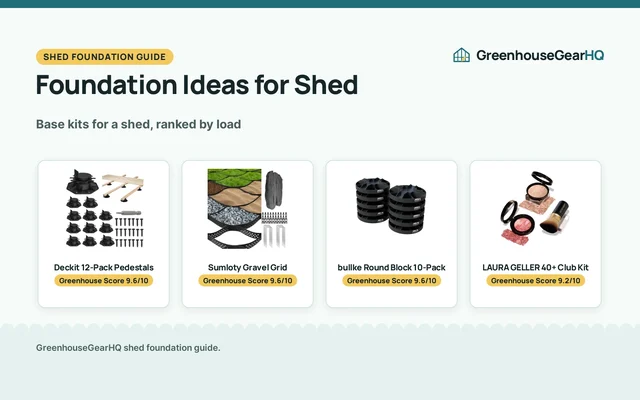
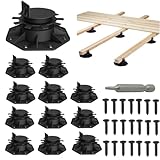 Deckit 12-Pack Adjustable Deck Support Pedestals9.6/10View on Amazon
- 2
 bullke Round Foundation Block 10-Pack9.6/10View on Amazon
- 3
 Sumloty Gravel Grid 4 x 33 FT9.6/10View on Amazon
Do you need a foundation for a shed? For most sheds, yes: a base that lifts the floor off the ground, keeps the building level and lets water drain away is the part that decides how long the shed lasts. The first seed trays go out in late winter, and the shed that holds the pots, tools and bags of soil sits through the same frost nights. This guide explains what a shed foundation does and how to choose between the base types listings describe. Where a number appears, it comes from a listing compared for this guide, and the listing is named so it can be checked.
GreenhouseGearHQ earns a commission when you buy through links on this page, at no extra cost to you. As an Amazon Associate I earn from qualifying purchases. Affiliate disclosure.
Do you need a foundation for a shed? What a base does
A foundation does three jobs: it lifts the floor off wet ground, it holds the building level, and it spreads the load so the floor does not sag. A shed that sits straight on soil takes moisture from below, and a sagging floor makes doors stick. Each base type below does those jobs in a different way, and the right choice depends on the shed size, the ground and how level the spot is.
- Adjustable pedestals: supports that hold joists, with height adjustment for leveling. See the sand vs gravel shed foundation comparison for the ground layer beneath them.
- Foundation blocks: blocks that hold posts or beams at a fixed height.
- Gravel grids: grids that hold gravel in place and spread the load.
- Floor frame kits: a steel frame that fits a named shed size. See the storage shed size guide to match the frame to the shed.
How to choose a shed foundation, step by step
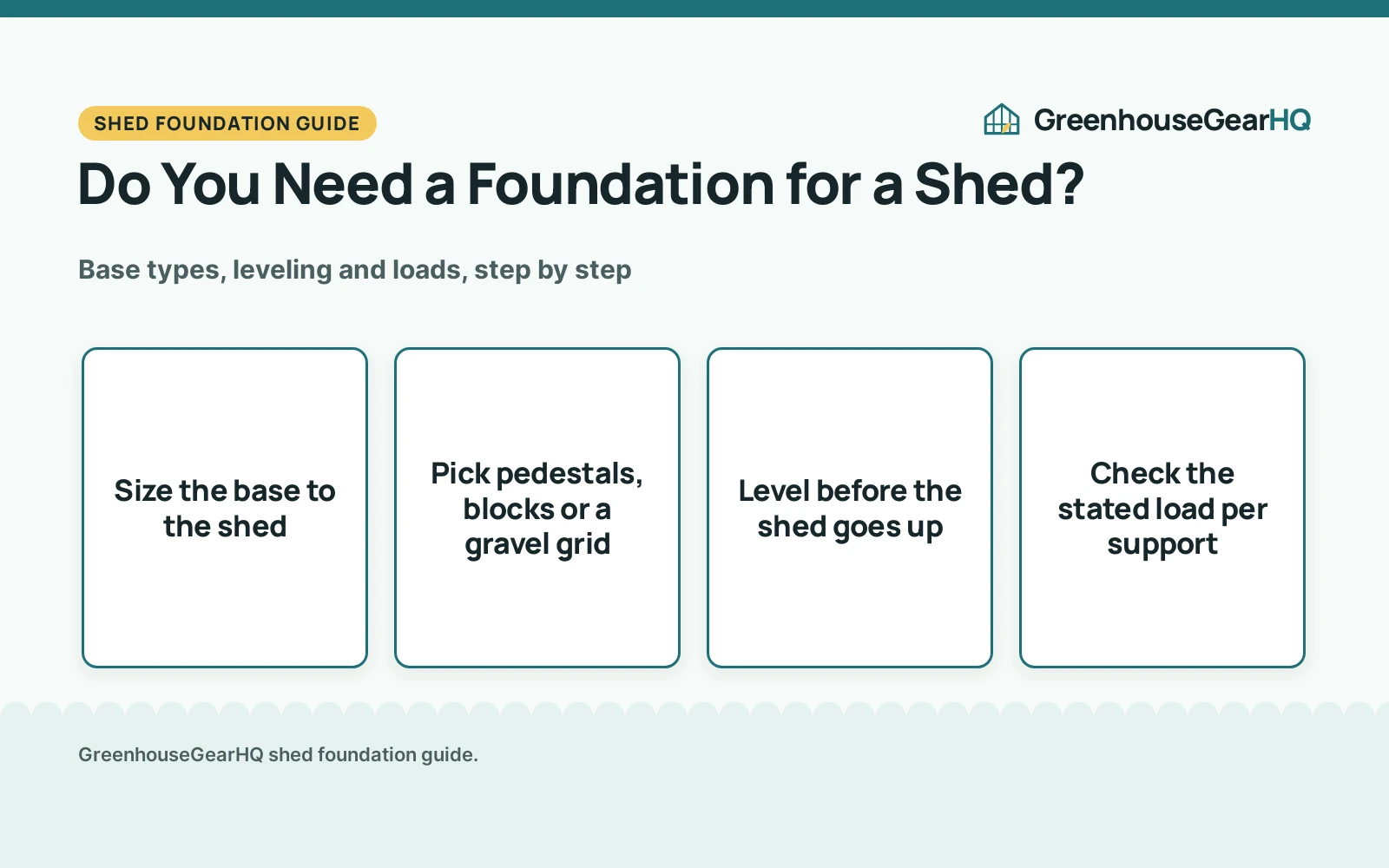
Step 1: Size the base to the shed
Measure the shed footprint first, then pick a base made for it. The Arrow FDN109 floor base kit fits 8 x 8, 10 x 8 and 10 x 9 ft Arrow sheds, with a hot-dipped electro-galvanized steel frame and all hardware included, though plywood is not included. The Arrow FKE05 floor frame kit fits 12 x 12, 12 x 14 and 14 x 12 ft sheds in hot-dipped galvanized steel, with flooring not included. The best wood storage shed for small backyard picks show the shed sizes these kits match.
Step 2: Pick a base type
Pedestals suit low shed bases where the ground needs leveling without digging. The Deckit 12-pack pedestals (on Amazon) are made of UV-resistant polypropylene, adjust from 1.18 to 2.36 in, hold up to 1000 lbs, and are designed for 2 x 4 and 2 x 6 joists, with spacing of 16 to 20 in. Blocks suit piers and floating platforms: the bullke round foundation block (on Amazon) is 10 in in diameter and 1 7/8 in tall, made from 100% recycled plastic, and each block supports up to 1,250 lbs on level, solid ground. The listing’s spec table lists a 17.5 in dimension where the bullets state 1 7/8 in tall, so the bullets win. Gravel grids suit a wide flat base: the Sumloty grid (on Amazon) covers 132 square feet in three 4 x 11 ft sections, with cells 8.66 x 8.66 in and 2 in high, and a stated load of 1885 lbs per square foot when filled.
| Base type | Stated size | Stated load | Best fit |
|---|---|---|---|
| Deckit adjustable pedestals | 1.18 to 2.36 in high | 1000 lbs | Low shed bases that need leveling |
| bullke round foundation block | 10 in diameter, 1 7/8 in tall | 1,250 lbs per block | Piers and floating shed platforms |
| Sumloty gravel grid | 4 x 33 ft, 132 square feet | 1885 lbs per sq ft | Wide gravel bases for sheds and patios |
| Arrow floor frame kit | Fits 8 x 8, 10 x 8, 10 x 9, 12 x 12, 12 x 14 and 14 x 12 ft sheds | Not stated | Arrow sheds needing a square frame |
Adjustable height matters most when the ground slopes. A fixed-height block needs level ground under it, while a pedestal or a grid can take up small differences.
Step 3: Level the ground and plan drainage
Leveling comes before the shed, not after. The Deckit pedestals adjust from 1.18 to 2.36 in for slope correction and fine leveling, with spacing of 16 to 20 in, and need no digging. The bullke block sets a post or beam at a fixed height and is not adjustable, so level the gravel or soil under the block before setting it. The Sumloty grid comes with 20 galvanized steel U-shaped stakes and 30 connectors, and its honeycomb design allows water drainage. The Deckit listing states 10 sq ft for 8 to 12 pieces, 20 sq ft for 16 to 24 pieces, and 40 sq ft for 32 to 48 pieces.
Step 4: Check the load and the hardware
Match the stated load to the shed and what goes inside it. The Deckit pedestals hold up to 1000 lbs and are not for 4×4 posts. The bullke block supports up to 1,250 lbs on level, solid ground. The Sumloty grid states over 1885 lbs per square foot when filled. The Deckit kit includes 12 pedestals, 24 screws and 1 Torx bit, and the Sumloty grid includes 20 stakes and 30 connectors. The Arrow frame kits include all hardware, with flooring not included, so plan the floor boards separately.
When a shed can sit without a poured base
Not every shed needs concrete. A small, light shed on level ground can sit on pedestals, blocks or a gravel grid instead of a poured slab, as long as the floor stays off wet ground, the building stays level, and water drains away from the walls. A base that can be adjusted later suits ground that moves with the seasons. Check local rules before building.
What this guide does not cover
This guide does not cover concrete mixing or pouring, electrical work or plumbing for a shed. It also does not set frost depths or footing sizes, since those depend on the ground and the local rules for the area.
FAQ for growers
Do all sheds need a foundation?
Most sheds last longer on a base. Pedestals, blocks, a gravel grid or a steel frame kit all lift the floor off the ground and keep the building level.
Can a shed sit directly on grass?
Grass holds moisture against the floor, so a base is the safer choice. The Arrow frame kit keeps the building off the ground, and the Deckit pedestals improve drainage and moisture protection.
How level does a shed base need to be?
Level enough that the building sits square and the doors close cleanly. The Deckit pedestals adjust from 1.18 to 2.36 in for slope correction and fine leveling, while the bullke block is not adjustable, so the gravel or soil under it must be leveled first.
How much weight can a shed base hold?
The Deckit pedestals hold up to 1000 lbs, each bullke block supports up to 1,250 lbs on level, solid ground, and the Sumloty grid states over 1885 lbs per square foot when filled.
Keep reading
See every storage sheds guide and all backyard structures guides. Also see the sand vs gravel shed foundation and storage shed size.
More picks: wood storage shed for small backyard, resin shed for small backyard and steel vs wood storage shed.