On this page
Top picks at a glance
As an Amazon Associate I earn from qualifying purchases.
- 1
 MQHUAYU Garden Hoops for Raised Beds9.7/10View on Amazon
- 2
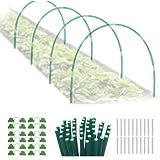 DIELLY Garden Hoops for Raised Beds9.6/10View on Amazon
- 3
 Garden Hoops 60pcsView on Amazon
- 4
 Greenhouse Hoops for 2-4ft Wide Raised BedsView on Amazon
- 5
 Garden Hoops 36pcsView on Amazon
- 6
 Garden HoopsView on Amazon
- 7
 Metal Greenhouse Hoops Set for Raised Beds,21.2'' x 31.1''View on Amazon
- 8
 VEVOR Walk-in Tunnel GreenhouseView on Amazon
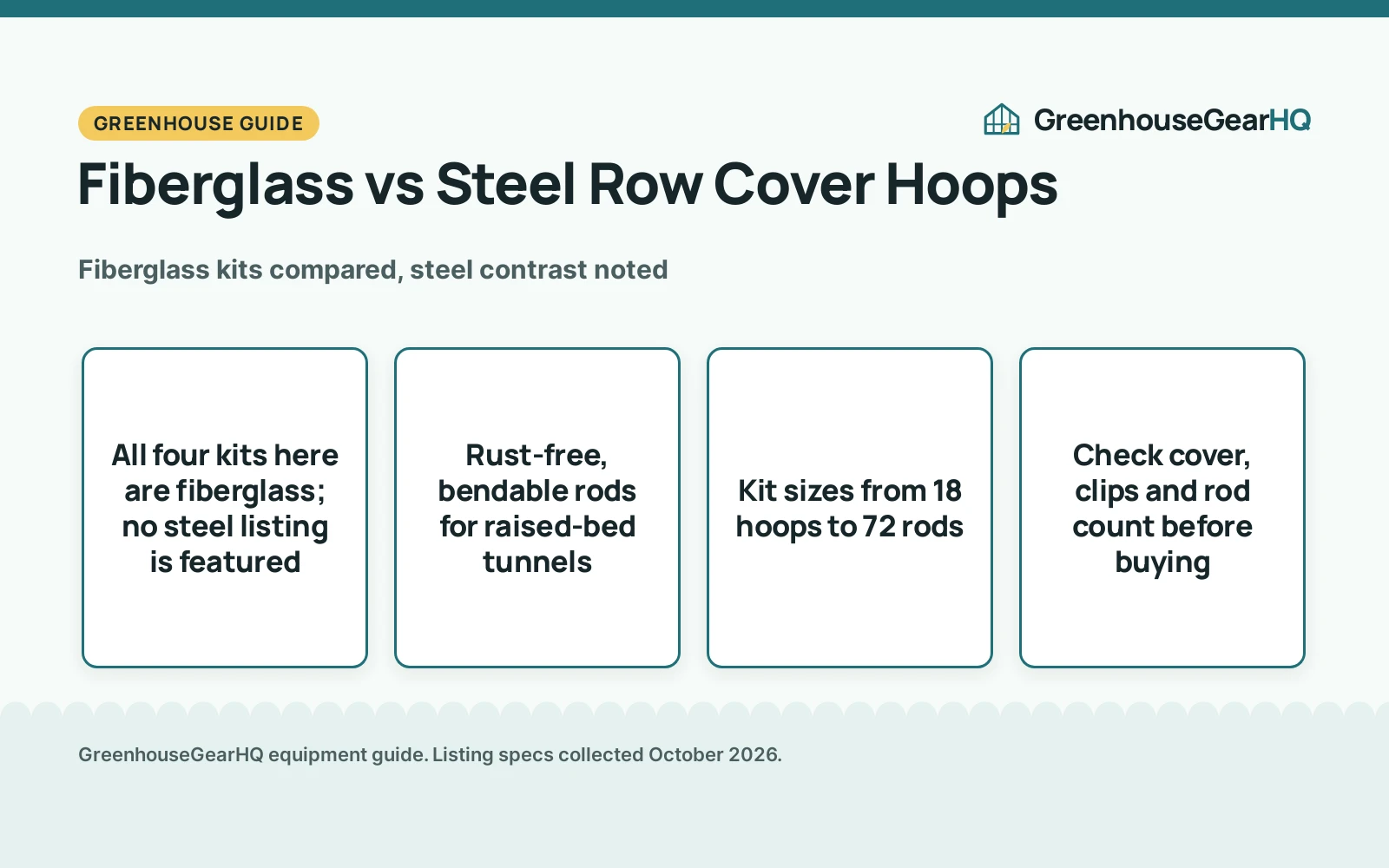
A row cover only works if the hoops under it hold their shape, stay put in the soil and come back out at the end of the season without a fight, and that is where the fiberglass vs steel row cover hoops choice starts. The direct answer from the listings in this guide is that fiberglass wins the kits compared here: all four are fiberglass, all four state rust-free use, and all four bend into arches for raised beds. No steel hoop listing is featured in this set, so the steel side below is only what these fiberglass listings claim by contrast, and a buyer who wants a rigid permanent hoop should check a steel listing on its own terms.
Other options worth a look
 Garden Hoops 60pcsCheck price on Amazon
 Greenhouse Hoops for 2-4ft Wide Raised BedsCheck price on Amazon
 Garden Hoops 36pcsCheck price on Amazon
 Garden HoopsCheck price on Amazon
 Metal Greenhouse Hoops Set for Raised Beds,21.2'' x 31.1''Check price on Amazon
 VEVOR Walk-in Tunnel GreenhouseCheck price on Amazon
GreenhouseGearHQ earns a commission when you buy through links on this page, at no extra cost to you. As an Amazon Associate I earn from qualifying purchases. Affiliate disclosure.
Fiberglass vs steel row cover hoops: the short answer
Start with how the tunnel will be used. If the hoops move between beds, come out for storage and go back in next season, fiberglass fits: the listings state bendable rods, rust-free materials and reusable kits with connectors and clips. If the hoop must stay rigid in one place for years, that is the case for checking a steel listing, since none of the four kits here states a steel frame and none states a rigid permanent install. For most raised-bed row covers, the fiberglass kits below cover the job, and the choice comes down to kit size, rod length and how many tunnels the kit builds.
The gear in this guide
The kits below are ranked in order, largest kit first, on what each listing states for row cover work. Every kit here is fiberglass, so the ranking compares kit size and completeness, not material.
| Kit | Rods | Length | Connectors and clips | Frame |
|---|---|---|---|---|
| Gardeningwill 72 Rods Kit | 72 rods | 8FT tunnels | 60 connectors, 48 clips | Reinforced fiberglass, plastic coating |
| MQHUAYU 60 Pcs Kit | 60 hoops | 8.5 FT | 48 connectors, 36 clips | Double-layer fiberglass |
| OOTONAT 36 Pcs Kit | 36 hoops | 8FT | 30 connectors, 24 clips | Fiberglass |
| RIFNY 18 Pcs Kit | 18 hoops | 15.75 inch rods | Aluminum connectors, 9 clips | Double-layer fiberglass, plastic outer |
Gardeningwill 72 Rods Kit
The Gardeningwill kit lists 72 fiberglass rods, 60 thick plastic connectors, 48 stainless steel clips and 1 pair of gardening gloves, building 12 complete 8FT tunnels, or custom sizes by combining 4 or more rods. The rods are reinforced fiberglass with a thick plastic coating, stated to bend easily without cracking, spring back into shape, and resist weather without rusting or corroding like metal hoops. The listing states a weight of 3.6 pounds and a black color, and it suits raised beds, vegetable gardens and flower beds for row covers, frost blankets, insect netting, bird netting, shade cloth and greenhouse film.
MQHUAYU 60 Pcs Kit
The MQHUAYU kit lists 12 sets with 60 hoops, 10 ground studs, 48 connectors and 36 garden clips, at 8.5 FT, with double-layered fiberglass stated to be strong, bendable and flexible with excellent resistance to rust and oxidation. The listing states a weight of 2.2 pounds and a green color, and it covers yards, vegetable gardens, raised beds and climbing plants. Its assembly tip states to avoid direct force on the connectors in the middle of a pole, to assemble single rods in counts such as 3, 5 or 7 rods, and to increase the number of pole connections when raising the arch height.
OOTONAT 36 Pcs Kit
The OOTONAT kit lists 36 rust-resistant fiberglass hoops, 30 connectors, 24 garden clips and 12 support bases, at 8FT, with an ivory color and a weight of 1.02 kg. The listing states no specialized tools are required, that the hoops suit garden nets, frost cloths and sun shades, and that the kit protects against frost, insects, birds and intense sunlight. One point to note: the listing states that garden mesh net is not included, so the cover itself is a separate purchase.
RIFNY 18 Pcs Kit
The RIFNY kit lists 18 hoops with 15.75 inch length and 0.28 inch diameter fiberglass rods, rust-free aluminum connectors and 9 plastic clips, at a weight of 1.26 pounds. The listing states beds from 2 to 4 feet wide, with 4 to 6 hoops creating 2 to 4 feet in width and 1.9 to 3 feet in height, and it suits insect mesh netting, shade cloth and freeze plant covers. The rods are double-layer, inner fiberglass with an outer plastic material, and the connectors and clips are stated as non-rusting and oxidation-resistant for use in summer and winter.
What fiberglass gives you
Every listing here makes the same three claims for fiberglass: it does not rust, it bends, and it lasts across seasons. The Gardeningwill listing states its rods bend without cracking and spring back into shape, the MQHUAYU listing states strong, bendable and flexible double-layered fiberglass, the RIFNY listing states rods that can be bent at will, and the OOTONAT listing states a complete DIY kit for year-long plant protection. The steel contrast comes from the Gardeningwill listing alone, which states its rods will not rust or corrode like metal hoops; no listing here states a steel hoop spec, so this guide makes no claim about steel weight, strength or price. For a tunnel that is taken down and stored, bendable fiberglass is easier to handle than a rigid hoop, and the kits state lightweight, reusable builds.
Sizing a tunnel to a raised bed
Size comes from rod count, not from a single hoop. The RIFNY listing is the most specific: beds from 2 to 4 feet wide, with 4 to 6 hoops giving 2 to 4 feet in width and 1.9 to 3 feet in height. The Gardeningwill listing states custom sizes by combining 4 or more rods, and the MQHUAYU listing states 4 or more garden stakes for various structures, with more pole connections for a taller arch. The OOTONAT listing states an 8FT kit with support bases that go into the soil first, then hoops onto the bases. Measure the bed width first, then count rods per tunnel: a low cover for seedlings needs fewer rods than a taller tunnel for mature vegetables, and the Gardeningwill listing states exactly that adjustment.
What to check before buying
- Cover included? The OOTONAT listing states garden mesh net is not included. The other three listings state clips and connectors for fixing a row cover, but none states a cover in the box, so budget for the cover separately.
- Connectors and clips count. The Gardeningwill kit lists 60 connectors and 48 clips, the MQHUAYU kit lists 48 connectors and 36 clips, the OOTONAT kit lists 30 connectors and 24 clips, and the RIFNY kit lists aluminum connectors and 9 clips. A short clip count limits how many tunnels can be covered at once.
- Assembly tips. The MQHUAYU listing states to avoid direct force on the middle connectors and to assemble rods in counts such as 3, 5 or 7 rods. The OOTONAT listing states no specialized tools are required.
- Storage. The Gardeningwill listing states the hoops are easy to disassemble for compact storage, and the RIFNY listing states materials that can be used over and over again in summer and winter.
What this guide does not cover
This guide covers hoop kits only: material, kit contents, sizing and assembly as stated on each listing. It does not cover row cover fabrics, planting dates or pest control, and it does not compare a steel hoop listing, since none is featured here. For fabric choice, see our polypropylene vs polyester row cover guide.
FAQ for growers
Which hoop material do these kits use?
All four kits use fiberglass. The Gardeningwill kit states reinforced fiberglass with a thick plastic coating, and the RIFNY and MQHUAYU kits state double-layer fiberglass.
How many hoops make one tunnel?
The RIFNY listing states 4 to 6 hoops for beds from 2 to 4 feet wide, and the Gardeningwill listing states 4 or more rods for custom sizes. The MQHUAYU listing states 4 or more garden stakes per structure.
Do these kits include a row cover?
No listing here states a cover in the box. The OOTONAT listing states garden mesh net is not included, and the other kits state connectors and clips for fixing a cover.
Can fiberglass hoops stay out year-round?
The listings state year-long and all-season use. The OOTONAT listing states year-long plant protection, the MQHUAYU listing states all-season plant protection, and the RIFNY listing states use in summer and winter.
Keep reading
See every row cover hoops for raised beds guide. Also see our best greenhouse clips for hoop house guide.
More picks: best row cover for beginners, best hoop house for hobby farm and best trellis netting for hoop house.