On this page
Top picks at a glance
As an Amazon Associate I earn from qualifying purchases.
- 1
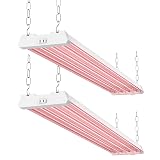 Sunco 2 Pack 4FT Full Spectrum LED Grow Lights 80W9.8/10View on Amazon
- 2
 VIVOSUN LumaLight 200W Dimmable LED Grow Light9.8/10View on Amazon
- 3
 VIVOSUN LumaLight 100W LED Grow Light9.7/10View on Amazon
- 4
 Grow Lights for Indoor PlantsView on Amazon
- 5
 Sondiko LED Grow Light StripView on Amazon
- 6
 Grow Lights for Indoor Plants Full SpectrumView on Amazon
- 7
 MA120 Grow Light Full SpectrumView on Amazon
- 8
 4 Head LED Plant Grow LightView on Amazon
- 9
 GooingTop Grow LightView on Amazon
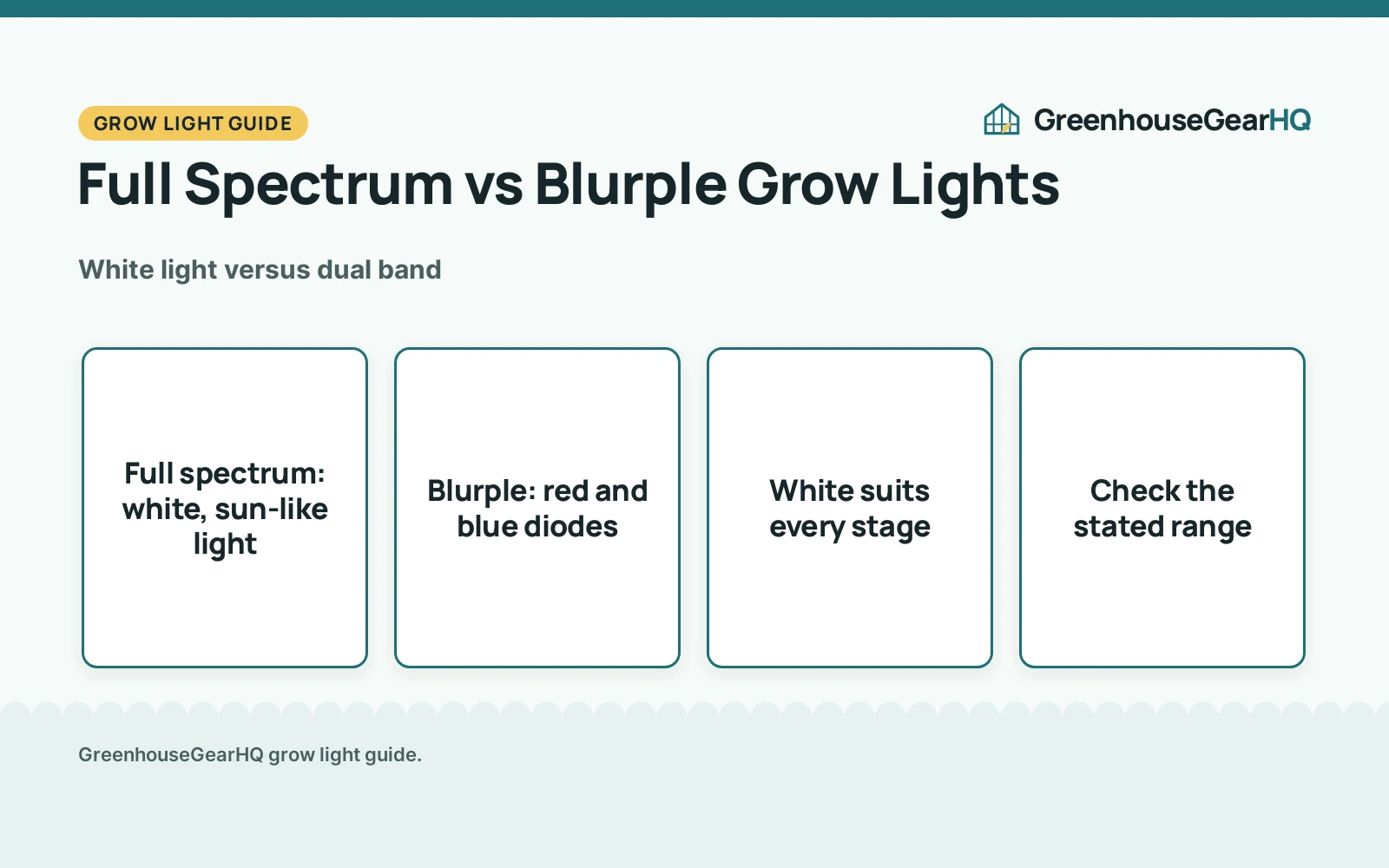
Full spectrum grow lights mimic sunlight with white light across the visible range; blurple grow lights use mostly red and blue diodes, which glow purple. Pick full spectrum for most grows, since white light suits every stage and lets you see the plants’ true color; pick blurple only when the listing’s red-blue mix fits the stage you are growing. This guide explains the difference with concrete figures from the listings.
Other options worth a look
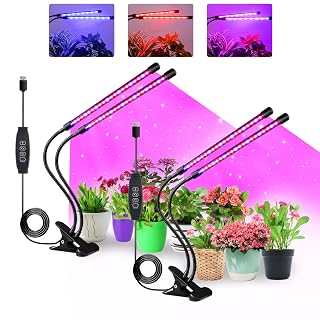 Grow Lights for Indoor PlantsCheck price on Amazon
 Sondiko LED Grow Light StripCheck price on Amazon
 Grow Lights for Indoor Plants Full SpectrumCheck price on Amazon
 MA120 Grow Light Full SpectrumCheck price on Amazon
 4 Head LED Plant Grow LightCheck price on Amazon
 GooingTop Grow LightCheck price on Amazon
GreenhouseGearHQ earns a commission when you buy through links on this site, at no extra cost to you. As an Amazon Associate I earn from qualifying purchases. Affiliate disclosure.
Full spectrum vs blurple grow lights: what the terms mean
Full spectrum means the light covers the whole photosynthetic range, roughly 380nm to 800nm, in white light. The LBW dual-head listing states exactly that: 380nm up to 800nm, built from 60 warm white plus 28 cold white diodes. Blurple means the fixture leans on red and blue diodes only, like the Sondiko strip listing, which describes a red-blue spectrum and a 50,000 hour lifetime. Both grow plants; they differ in how they look and how flexible they are.
Full spectrum: white light that mimics the sun
White full-spectrum lights render plants in natural color, so spotting pests or deficiencies is easier. The listings show several: the LBW dual-head with 60 warm white and 28 cold white diodes on a 15 to 63-inch tripod; the Diboys 45W full spectrum light, with 8-inch height guidance and 10 inches suggested for seedlings; the Maygrove T5 2-foot strips at 5000K with 440nm blue, 60W (4 x 15W); and a 48-LED full spectrum light covering 380nm to 760nm with a 12-hour timer. White light works for seedlings through flowering without changing fixtures.
Blurple: red and blue diodes
Blurple fixtures concentrate on the red and blue bands plants use most. The Sondiko listing describes a red-blue spectrum strip with a 50,000 hour lifetime; the RWNTAO listing describes red, blue and white diodes covering 380nm to 800nm with a 12-hour timer. The purple glow makes it hard to judge plant color by eye, and a fixed red-blue ratio cannot be tuned across growth stages the way white light with added red can. Blurple suits growers who want a simple, cheap vegetative light and check their plants under white light separately.
What the listings show about power and features
Power spans a wide range. A 4-foot T8 listing states 180W (4 x 45W) replacing 1080W of general lighting, with 36-inch connecting cords. The Diboys lists 45W. Timers appear across both types: 3, 6 or 12 hours on the Otryad 20-LED listing, 12 hours on the RWNTAO and 48-LED listings. Neither spectrum owns the features; timers, tripods and dimming attach to white and blurple fixtures alike. Choose by spectrum first, features second.
How to buy: match the listing to your grow
Start with the stage. Seedlings and propagation want gentle, even light: the Diboys 45W listing suggests 10 inches for seedlings, and the Maygrove T5 2-foot strips at 5000K with 440nm blue suit propagation shelves. Vegetative growth wants more intensity; flowering wants red, which is where the RWNTAO listing’s red, blue and white diodes covering 380nm to 800nm earn their keep.
Then check the features you will actually use. Timers are common: the LBW dual-head offers 3, 6 or 12 hours with 6 dimmable levels, the SDOVUERC offers 3, 9 or 12 hours, and the RWNTAO and 48-LED listings state 12-hour timers. If the light hangs over a shelf, the LBW’s 15 to 63-inch tripod adjusts to the plants; the 4-foot T8 listing states 180W (4 x 45W) with 36-inch connecting cords for linking fixtures. Match the spectrum to the stage first, then pick the features, and the listing figures above tell you exactly what each fixture offers.
Which should you choose?
Choose full spectrum for most grows: white light from 380nm to 800nm covers every stage, shows true plant color, and the listings here offer it from clip lights to 45W panels to T5 strips. Choose blurple when the price is right and the grow is simple, like seedlings under a red-blue strip, accepting the purple glow and the fixed spectrum. For a single light that must do everything, the full spectrum examples here are the more useful buy.
FAQ for growers
Do blurple lights grow plants well?
Yes for vegetative growth; red and blue are the bands plants use most. White full spectrum suits more stages and shows true color.
What does 380nm to 800nm mean?
It is the light range the listings state for full spectrum fixtures, covering violet through far red. The 48-LED listing states 380nm to 760nm.
Can I check plants under a blurple light?
Poorly; the purple glow hides true color. Growers often inspect plants under white light separately.
Which full spectrum light suits seedlings?
The Diboys 45W listing suggests 10 inches for seedlings; the Maygrove T5 strips at 5000K suit propagation shelves.
Keep reading
See every grow lights guide and all greenhouse climate guides.
More picks: grow lights with timer, grow lights for microgreens.