On this page
Top picks at a glance
As an Amazon Associate I earn from qualifying purchases.
- 1
 Abbott Collection 27-Carolyn Bell Shaped Glass Cloche9.6/10View on Amazon
- 2
 ZEERSHEE Cloche Glass Dome with Wooden BaseView on Amazon
- 3
 NCYP Glass Cloche Dome with Air Hole and BaseView on Amazon
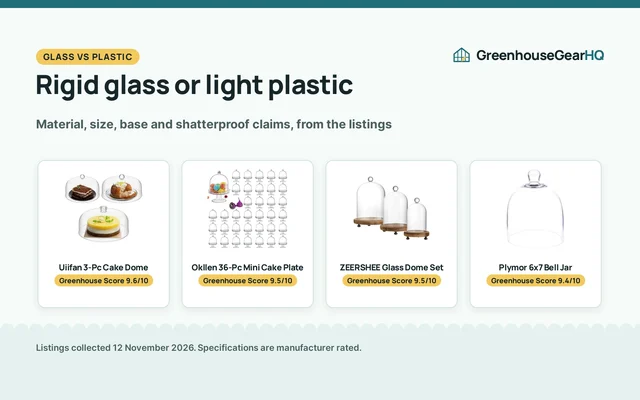
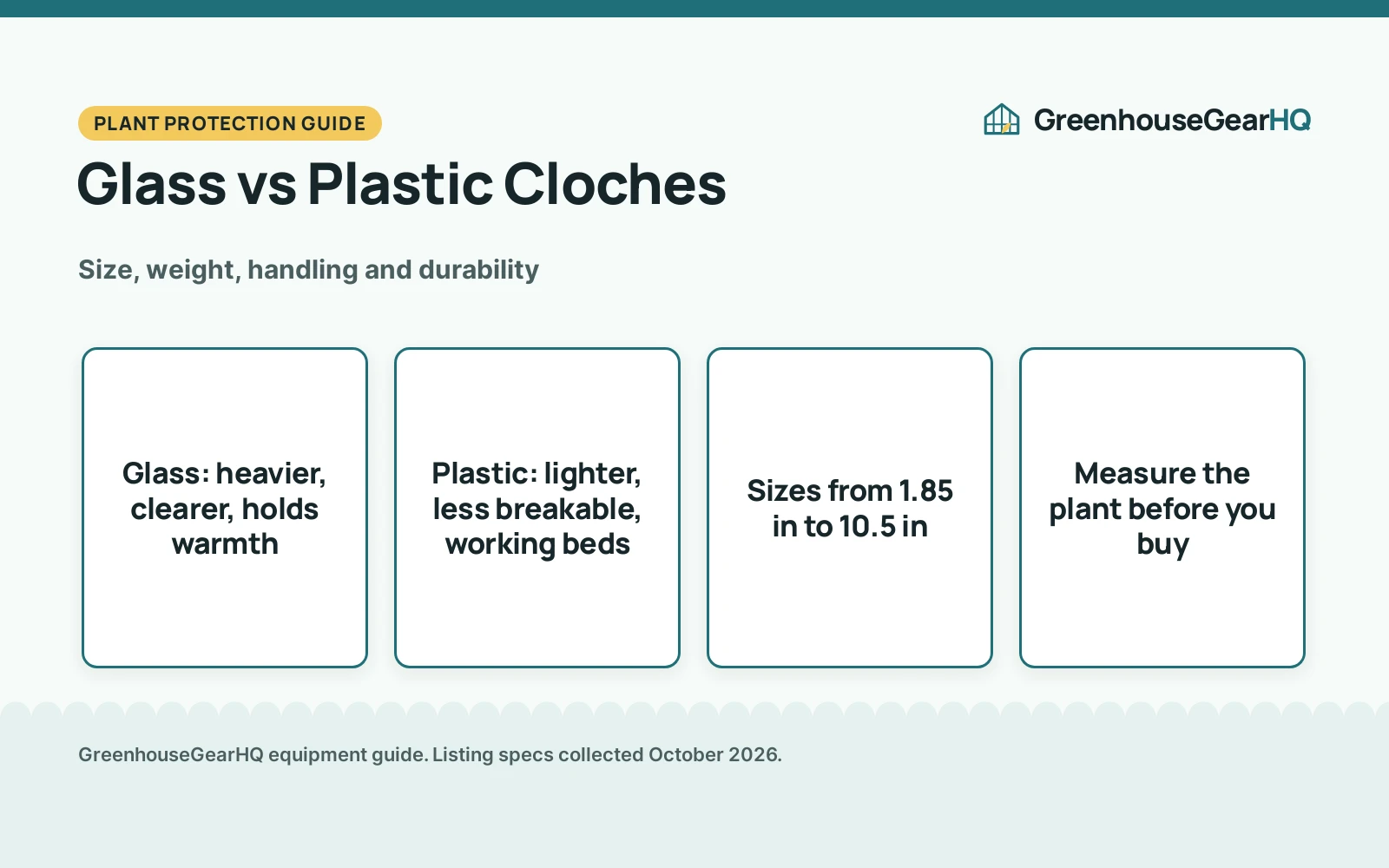
The glass vs plastic cloches question comes down to what the cloche has to survive. Glass cloches are heavier, clearer and hold heat well, which suits a display or a sheltered patio spot. Plastic cloches are lighter and less likely to break when they get knocked over, which suits a working bed where cloches get moved around. Pick the material for the spot, then pick the size from the listings below.
Other options worth a look
 ZEERSHEE Cloche Glass Dome with Wooden BaseCheck price on Amazon
 NCYP Glass Cloche Dome with Air Hole and BaseCheck price on Amazon
GreenhouseGearHQ earns a commission when you buy through links on this page, at no extra cost to you. As an Amazon Associate I earn from qualifying purchases. Affiliate disclosure.
Glass vs plastic cloches: the short answer
Choose glass when the cloche sits somewhere visible and stays put: it is the clearer material, it feels substantial, and the listings show sizes from tiny 1.85-inch domes to 10.5-inch showpieces. Choose plastic when the cloche lives in the vegetable bed, gets carried in and out, or sits where kids or pets knock things over. Glass breaks; plastic scratches and weathers. Neither material is wrong, but the wrong material for the spot means a broken dome or a scratched-up one.
What the glass listings tell you
Every reference listing here is glass, and the sizes cover a wide range:
| Listing | Stated size | Stated weight | Notes |
|---|---|---|---|
| CYS EXCEL dome | H 10.5 in, D 6 in; inner H 9.5 in, D 5.5 in | Not stated | Hand-blown glass |
| MyGift dome with wood base | Exterior 9.5 H x 7.3 dia; interior 7.0 H x 6.3 W | 1.7 pounds | Top handle design |
| NCYP with air hole | Total height 21 cm / 8.2 in; diameter 12 cm / 4.7 in | 1.5 pounds | Borosilicate glass, air hole on top |
| Creative Co-Op with metal tray | 8.5 in diameter x 10 in | 3.3 pounds | Metal tray with antique brass finish |
| Abbott Collection 10 in | 6 x 6 x 10 in | 1.4 pounds | Classic shape |
| Abbott Collection 6 in | 4 x 4 x 6 in | 7.7 ounces | Small bell shape |
| KMwares dome | 5.1 x 8.9 in | Not stated | Hand-blown high borosilicate glass |
| PH PandaHall, 4 pack | 1.85 in wide, 3.35 in height | Not stated | Cork base |
Measure the plant first, then pick a dome that clears it. The small end, such as the 1.85 by 3.35 inch PH PandaHall domes, suits cuttings and single seedlings; the large end, such as the 10.5-inch CYS EXCEL dome, suits an established plant in a pot.
Where glass wins
Glass is the heavier, clearer choice. The weight figures above, from 7.7 ounces for the small Abbott bell to 3.3 pounds for the Creative Co-Op with its metal tray, keep the dome planted in a breeze without staking. Borosilicate listings, the NCYP and the KMwares, describe heat-resistant glass, which matters when the sun hits the dome. Glass also stays clearer over the years, so you can see the plant inside without lifting the dome. For a front-porch display or a tabletop arrangement, glass looks the part in a way plastic does not.
Where plastic wins
Plastic is the working material. A plastic cloche is lighter to carry, less likely to break when it tips over, and easier to replace when one goes missing in the shed. That matters in a vegetable bed, where cloches go on and off through the season and get knocked by tools, hoses and elbows. Plastic also suits larger row coverage, since a big glass dome gets heavy and awkward. The trade is weathering: plastic scratches and dulls with sun exposure, while glass keeps its clarity.
What this guide does not cover
This guide covers cloche materials only: size, weight, handling and durability. It does not cover which plants to start under cloches or when to harden seedlings off. Ask your local extension office about planting dates and cold hardiness.
FAQ for growers
Which cloche keeps seedlings warmer at night?
Glass holds warmth longer, so a glass dome suits cold nights. The NCYP borosilicate listing includes an air hole on top, which lets excess heat out on sunny days.
Do glass cloches need a vent hole?
Only the NCYP listing states an air hole on top. The other glass listings state none, so on warm days lift the dome or use a vented model.
What size cloche do I need?
Measure the plant and pick a dome that clears it. The listings range from 1.85 inches wide for cuttings to 10.5 inches tall for established plants.
Can a cloche stay outside all season?
Glass suits a sheltered spot where it will not get knocked over, since it breaks. Plastic suits the open bed, where cloches get moved and knocked around.
Keep reading
See every cold frames guide and all greenhouses guides.
More picks: glass cloches for garden, small cloches for garden, row covers for strawberry plants and row covers for squash.