On this page
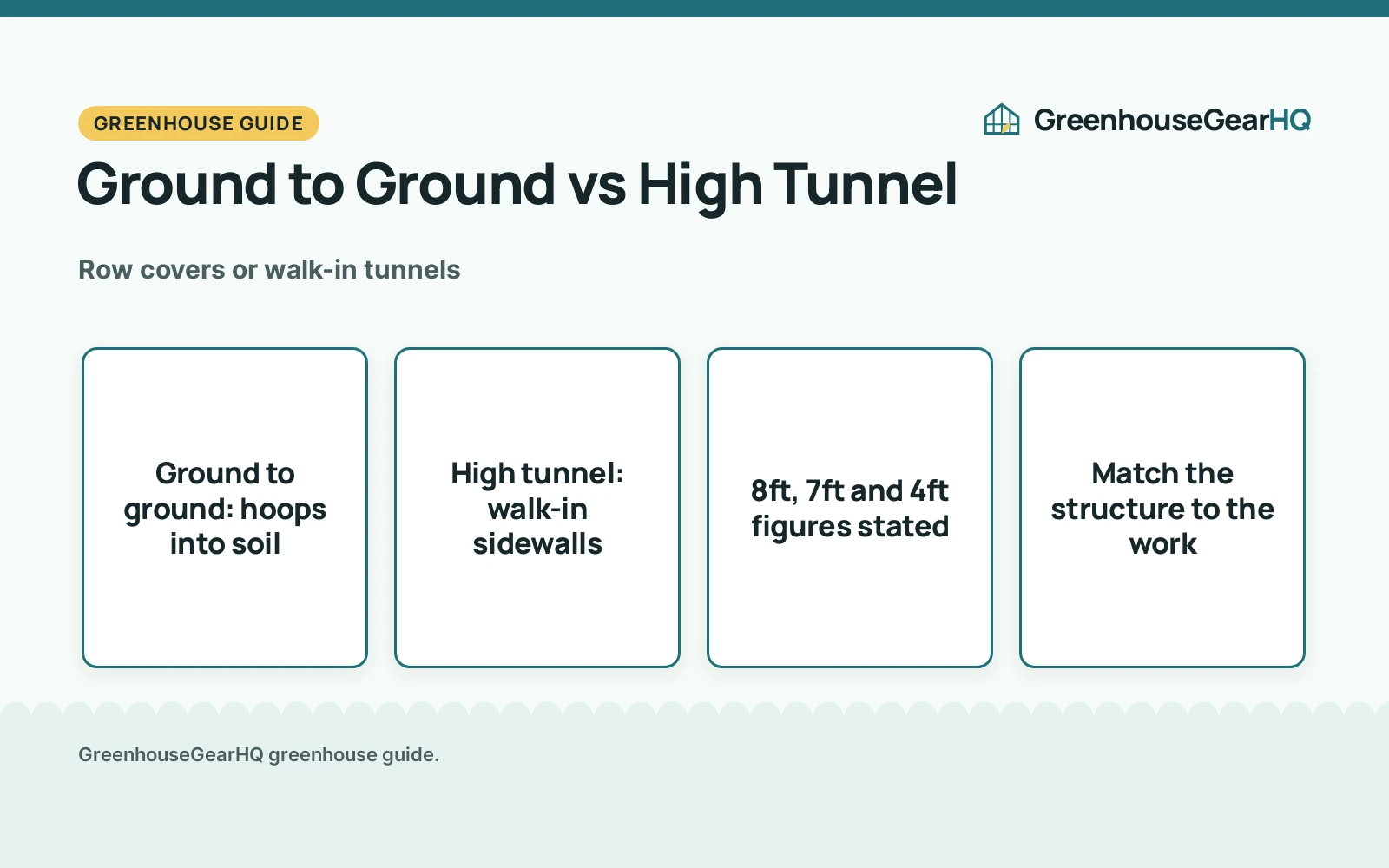
Ground to ground vs high tunnel: the short answer is that ground-to-ground tunnels are low hoops pushed straight into the soil for covering rows, while high tunnels are tall structures with sidewalls you can walk into. One is a row cover; the other is a building without a foundation. The reference listings give concrete figures for the ground-to-ground side; the high tunnel side is explained without figures where none are stated.
GreenhouseGearHQ earns a commission when you buy through links on this page, at no extra cost to you. As an Amazon Associate I earn from qualifying purchases. Affiliate disclosure.
Ground to ground vs high tunnel: how they differ
The difference is where the frame meets the ground. Ground-to-ground means each hoop runs from the soil on one side, arches over the row, and goes back into the soil on the other side. A high tunnel means the hoops sit on posts or a base rail, giving straight sidewalls and walk-in height. Everything else follows from that: access, ventilation and what you can grow.
Ground to ground: hoops straight into the soil
Ground-to-ground tunnels are low, light and seasonal. The MAXPACE listing describes a DIY 8ft grow tunnel kit of 25 fiberglass pieces that fits raised garden beds 2.8ft wide and up. The Gardzen listing describes a DIY garden hoops kit at 7 feet and 1.2 lbs for row covers. The warmfarm listing describes a 4ft pop-up garden bed tunnel with 6 stakes, ready to use. The Haxnicks Easy Poly Tunnel cloche listing states 150 micron heavy duty UV-stabilized polyethylene. These are row covers: they protect seedlings and extend the season, but you work them from outside, not inside.
Choose ground-to-ground when the job is covering rows, protecting seedlings, or extending the season on a budget. Setup is minutes with stakes and hoops.
High tunnel: walk-in height with sidewalls
A high tunnel raises the same hoop idea to walking height. Hoops mount on posts or a base rail, giving straight sidewalls and headroom to stand, wheel in a barrow and work inside. Roll-up sides or end-wall doors give the ventilation a low tunnel cannot. High tunnels are season-extension structures for market growers: bigger, anchored, and built to stay up for years. No high tunnel listings appear in this data set, so figures here are limited to the ground-to-ground side; treat high tunnel dimensions as a per-listing check.
Choose a high tunnel when you need to walk the rows, grow tall crops under cover, or keep a structure up across seasons.
Buying advice: sizing and anchoring
Start with the row. Ground-to-ground hoops are sized to the bed: the Gardzen listing describes 17-inch hoops for raised beds, the MAXPACE kit builds an 8-foot grow tunnel 2.8 feet wide and up with 25 pieces, and the warmfarm listing is a 4-foot pop-up row accelerator. Measure the bed, then buy the hoop length that spans it; hoops pushed into the soil need no frame, which is the whole point of the design.
Anchor for the wind. The warmfarm listing includes 6 stakes. Ground-to-ground hoops rely on stakes and the soil itself; a high tunnel needs posts, base rails and end walls to resist wind. Neither type should stay up unanchored in a storm, and exposed sites need more anchoring than sheltered ones.
Cover to the job. Row fabric over low hoops buys frost protection for a row; tunnel-length film over a high tunnel buys a walk-in season. Buy the cover with the structure: joining short kits or buying tunnel-length film separately costs more than a matched set.
Which one should you buy?
| Type | Height | Example | Suits |
|---|---|---|---|
| Ground to ground | Low, row height | 8ft tunnel kit, 25 pcs | Row covers, seedlings |
| Ground to ground | Low, row height | 4ft pop-up tunnel, 6 stakes | Quick seasonal cover |
| High tunnel | Walk-in | Hoops on posts or base rail | Tall crops, market growing |
Match the structure to the work. Covering rows cheaply leans ground-to-ground: see our budget greenhouses for kit examples. Walking the rows leans high tunnel; browse every walk-in greenhouse guide for walk-in structures.
FAQ for growers
Can you walk inside a ground-to-ground tunnel?
No. The listings here are low row covers: an 8ft tunnel kit, a 7-foot hoops kit and a 4ft pop-up tunnel. You lift or open the cover to work; you do not walk inside.
What does 150 micron polyethylene mean?
It is the stated thickness of the Haxnicks Easy Poly Tunnel cloche cover: 150 micron heavy duty UV-stabilized polyethylene. Thicker film lasts longer in sun and wind.
How long is a garden hoop tunnel?
The listings state 8 feet (MAXPACE), 7 feet (Gardzen) and 4 feet (warmfarm, in a 2-pack). Longer runs come from joining kits or buying tunnel-length film separately.
Which handles wind better?
A high tunnel, when anchored: posts, base rails and end walls resist wind. Ground-to-ground hoops rely on stakes and the soil; the warmfarm listing includes 6 stakes. Neither type should stay up unanchored in a storm.
Keep reading
See every walk-in greenhouse guide and all greenhouse guides.
More picks: budget greenhouses, greenhouse plastic for cold climates, greenhouse fans.