On this page
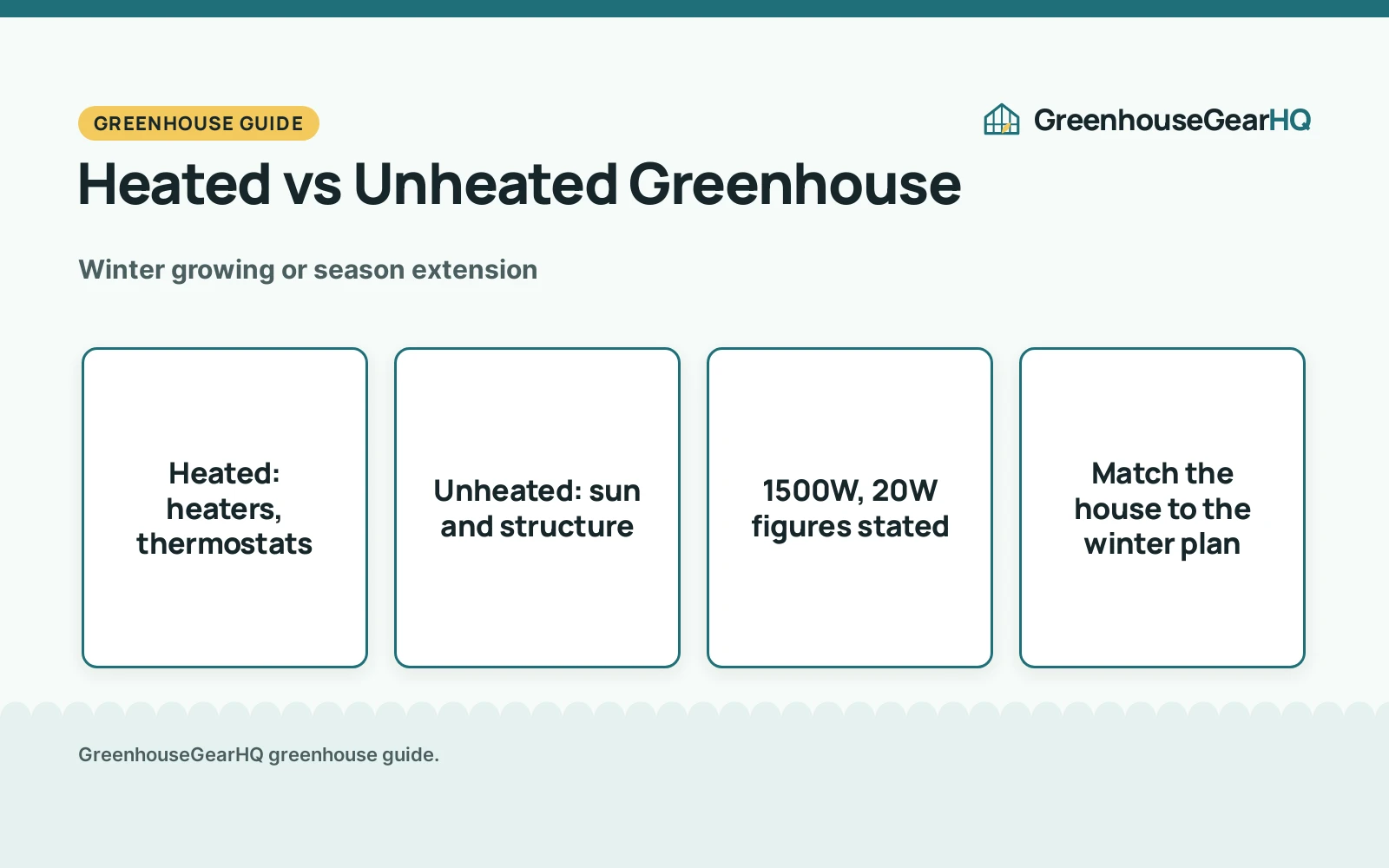
Heated vs unheated greenhouse: the short answer is that a heated greenhouse uses heaters and thermostats to hold a target temperature through winter, while an unheated greenhouse relies on the sun and the structure alone. One grows year-round for the cost of power; the other extends the season for free. The reference listings give concrete figures for the heating side; the unheated side is explained with structure figures where stated.
GreenhouseGearHQ earns a commission when you buy through links on this page, at no extra cost to you. As an Amazon Associate I earn from qualifying purchases. Affiliate disclosure.
Heated vs unheated greenhouse: how they differ
The difference is what holds the temperature at night. A heated greenhouse adds active heat: an electric heater with a thermostat, and sometimes heat mats for seed starting. An unheated greenhouse adds nothing: it captures daytime solar heat under glazing and loses it overnight. The crop list, the running cost and the equipment all follow from that choice.
Heated: climate control for winter growing
Heated suits growers who want winter harvests. The BioGreen PALMA listing describes an electric greenhouse heater and fan with a digital thermostat at 1500 watts and 750 watts, 5100 BTU, weighing 11 lbs with a 6.6-foot reach. The ZIZIWIN listing describes a 1500W electric heater with a digital thermostat at 3.5 lbs. For seed starting, the BN-LINK listing describes a 10 by 20.75-inch seedling heat mat at 20 watts, holding 70 to 85 degrees Fahrenheit, in a 2-pack with a 12-month warranty. A thermostat holds the target temperature; the heater does the work.
Choose heated when the plan is winter growing, when tender crops must never freeze, and when the budget covers the power the heater draws.
Unheated: sun and structure only
Unheated suits season extension without running costs. The structure captures daytime warmth under glazing and sheds it at night, which suits hardy greens and spring starts rather than winter tomatoes. The listings show the structures: the Sylviera 6×8 FT and 8×14 FT greenhouses with hygrometers, the Garvee 6×10 FT aluminum greenhouse, and the Bamworld 2-tier mini greenhouse with a 15-minute setup and an 85% clear PE cover. No heater, no thermostat, no power bill: the sun does everything, and the structure does the rest.
Choose unheated when the goal is a longer season, not a winter harvest, and when simple and cheap beats year-round.
How to decide: crop, climate and cost
Start with the crop. Winter harvests of tender plants need heat: the 1500W heaters here with digital thermostats hold a set temperature, and the 20W heat mats start seeds at 70 to 85 degrees. Hardy greens and spring starts manage unheated under glazing. Then check the climate: mild winters favor unheated; hard freezes demand heat. Finally, weigh the cost: an unheated 6×8 or 8×14-foot house costs nothing to run, while a heated house pays for every watt the thermostat calls for.
Which one should you buy?
| Type | Heat source | Example figure | Suits |
|---|---|---|---|
| Heated | 1500W heater, thermostat | 5100 BTU, 11 lbs | Winter harvests |
| Heated | 20W heat mat | 70 to 85 degrees, 2-pack | Seed starting |
| Unheated | Sun only | 6×8 to 8×14-foot houses | Season extension |
Match the house to the winter plan. Year-round growing leans heated: see our best greenhouse heater guide for heater examples. A longer season leans unheated; browse every walk-in greenhouse guide for more.
FAQ for growers
What heater size suits a greenhouse?
The listings here show 1500W electric heaters with digital thermostats: the BioGreen PALMA at 1500 and 750 watts with 5100 BTU, and the ZIZIWIN at 1500W and 3.5 lbs. Size the heater to the house volume and the coldest nights.
Can a heat mat replace a greenhouse heater?
No. The BN-LINK listing describes a 20W, 10 by 20.75-inch seedling heat mat holding 70 to 85 degrees for germination, a 2-pack with a 12-month warranty. It warms the soil for seeds, not the air for plants.
What grows in an unheated greenhouse in winter?
Hardy greens and overwintering plants, not tender crops. An unheated house captures daytime warmth but loses it overnight; only a heated house holds growing temperatures through hard freezes.
How fast can a mini greenhouse go up?
The Bamworld 2-tier mini greenhouse listing states a 15-minute setup with an 85% clear PE cover. Mini houses suit quick season extension without a build project.
Keep reading
See every walk-in greenhouse guide and all greenhouse guides.
More picks: best greenhouse heater, greenhouse plastic for cold climates, greenhouse fans.