On this page
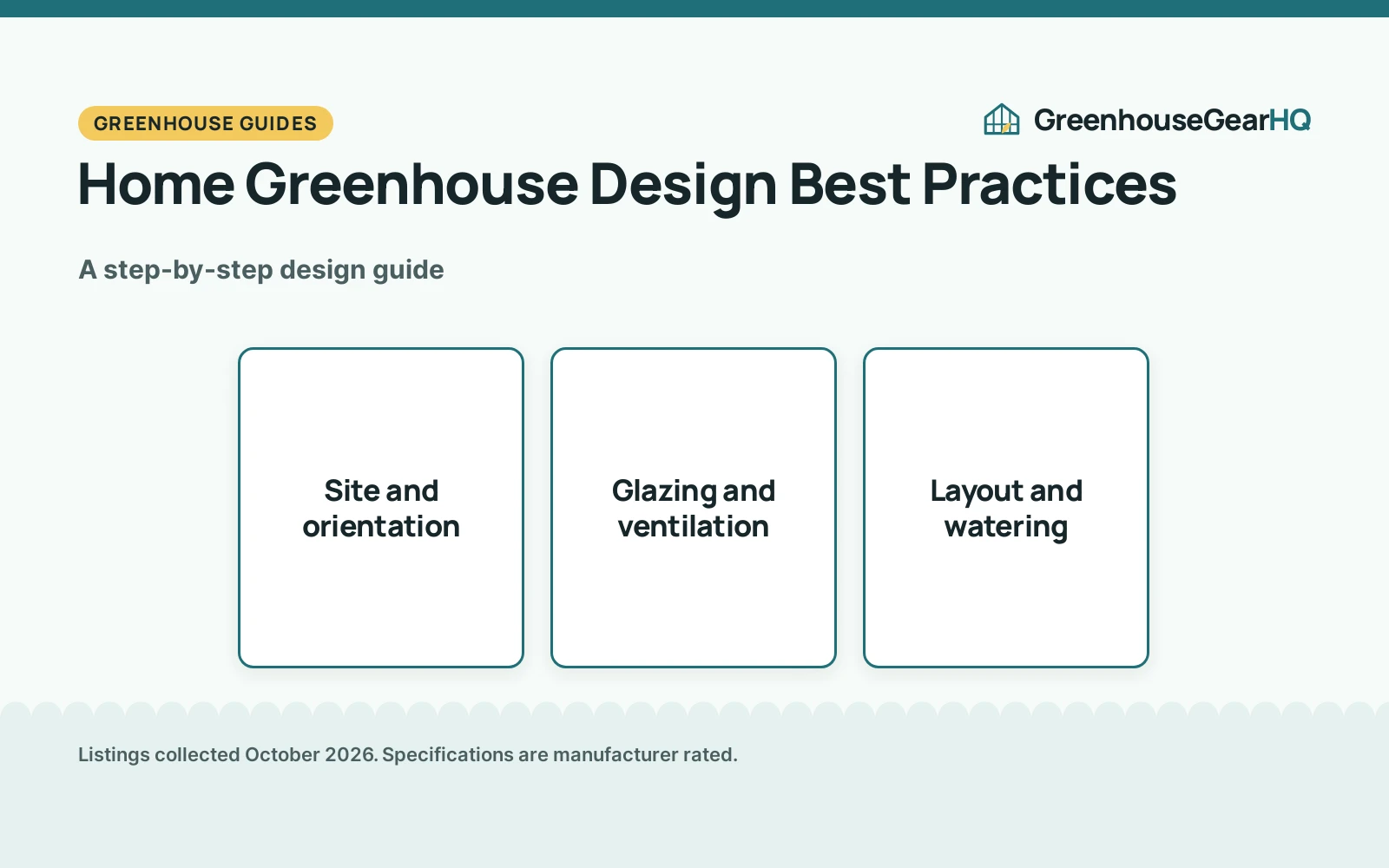
Home greenhouse design best practices start with the site, not the structure: a level spot with full sun, good drainage and water nearby beats a perfect kit on a bad plot. Orient the long axis to catch the most light, glaze for the climate, ventilate from day one, and lay out beds and paths before the first seedling goes in. This guide walks through each decision step by step.
GreenhouseGearHQ earns a commission when you buy through links on this page, at no extra cost to you. As an Amazon Associate I earn from qualifying purchases. Affiliate disclosure.
What are home greenhouse design best practices?
The short version: pick a sunny, level, well-drained site; orient for maximum light; choose glazing for the climate; plan ventilation and watering up front; and lay out paths and beds for the way people actually work. Published guides on the subject span 1997 to 2026, and the steps below distill what they agree on.
Site and orientation
Pick the sunniest level ground available, away from tree shade and low spots where cold air pools. Face the long side toward the sun’s daily path so the glazing catches light from morning to evening. Keep the house close to water and power, and leave room around all four sides for maintenance and snow sliding off the roof.
Glazing and structure
Glass gives the clearest light and the longest life but costs more and needs a strong frame. Twin-wall polycarbonate insulates better, shrugs off hail, and suits most home growers. Whatever the skin, the frame must stand up to local wind and snow loads, with sealed joints that keep driving rain out of the walls.
Ventilation and airflow
A greenhouse without vents cooks plants by mid-morning on a sunny day. Plan roof vents that open automatically with heat, plus side vents or louvered windows for cross-flow. A fan keeps air moving on still, hot days, which prevents hot spots and builds sturdier stems. Size the intake to match the exhaust so the fan can actually pull air through.
Watering and layout
Run water to the house before planting anything; dragging hoses through a planted house gets old fast. Lay out one wide central path with beds reachable from both sides, and keep tall crops where they will not shade short ones. Group plants by water needs so one zone can run drier than another.
Passive solar and year-round design
The biggest design decision is whether the house runs year-round or just extends the season. Passive solar designs bank daytime heat in thermal mass and release it at night, cutting heating to near zero. Lindsey Schiller’s The Year-Round Solar Greenhouse (2016) lays out net-zero energy designs for all-season growing, while Dan Chiras’s The Chinese Greenhouse (2020, Mother Earth News) covers low-cost passive solar builds for year-round vegetables. Jerome Osentowski’s The Forest Garden Greenhouse (2015) takes it further into indoor permaculture, managing a whole growing ecosystem under glass.
Passive solar changes the shape of the house: a well-insulated north wall, glazing angled to the low winter sun, and water barrels or masonry as thermal mass. It costs more to build and far less to run. If the goal is spring seedlings and fall greens rather than January tomatoes, a simpler seasonal house is the better buy.
Read before you build
The literature on home greenhouses spans three decades, from Mark Freeman’s Building Your Own Greenhouse (1997, Greenhouse Basics series) to Rowan Hartley’s The Greenhouse of the Future (2026). Roger Marshall’s The Greenhouse Gardener’s Manual (2014, Timber Press) and his How to Build Your Own Greenhouse (2006, Storey Publishing) remain the standard references for plans matched to growing needs. For beginners, Amy Greenbriar’s The Greenhouse Revolution (2024), Annie Roy’s Greenhouse Gardening Handbook for Beginners (2025) and Barb Knight’s Absolute Beginners Blueprint (2025) cover budget-conscious building, climate control and organic pest control in plain language.
Read at least one design book before buying a kit. The cost of a book is nothing next to a greenhouse sited wrong, glazed wrong or vented as an afterthought.
In the Greenhouse
- Walk the site at morning, noon and evening before marking the footprint.
- Leave the central path wide enough for a wheelbarrow from day one.
- Label every vent and fan switch so helpers can run the house.
- Keep a thermometer at plant height, not up on the wall.
FAQ for growers
Does a greenhouse need a fan?
Not always, but moving air prevents hot spots and builds sturdier stems. Roof vents handle calm days; a fan earns its keep in heat.
How do I install a greenhouse fan?
Mount it high on the shaded end wall to pull air through the house, wire it to a thermostat, and match the intake vent to the fan. Follow the fan’s own instructions for wiring.
What is greenhouse farming?
Growing crops inside a glazed or covered structure to extend the season and steady the climate. Home growers do the same thing at bench scale.
Keep reading
See every greenhouses guide and all growing guides.
More picks: browse walk-in greenhouses and air and water.