On this page
Top picks at a glance
As an Amazon Associate I earn from qualifying purchases.
- 1
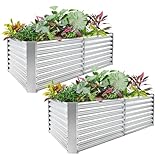 Land Guard 2 Pack 8x4x2ft Galvanized Raised Garden Bed Kit9.6/10View on Amazon
- 2
 Rakukiri 5ft Oval Galvanized Raised Garden Bed9.7/10View on Amazon
- 3
 Vego garden Elevated Raised Garden Bed9.7/10View on Amazon
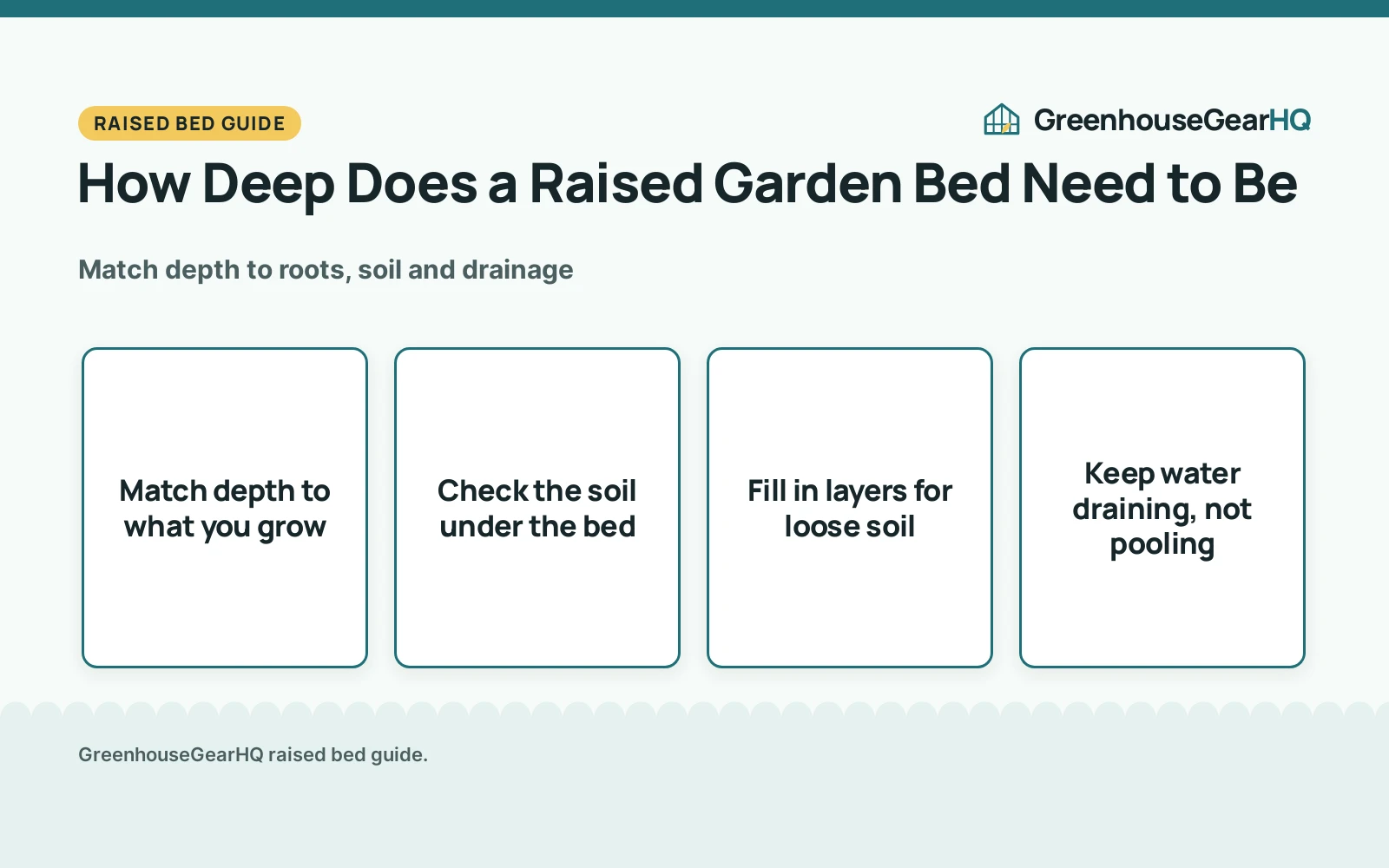
Seed trays on the windowsill and a warm afternoon in the garden mean planting time is close, and how deep does a raised garden bed need to be is the question that decides whether roots find loose soil or hit a hard floor. A bed needs to be deep enough for the roots of what you grow, with loose soil below it and drainage that keeps water moving, and this guide walks through matching depth to crops, checking what sits under the bed and filling it in layers.
GreenhouseGearHQ earns a commission when you buy through links on this page, at no extra cost to you. As an Amazon Associate I earn from qualifying purchases. Affiliate disclosure.
What decides bed depth
Bed depth comes down to roots, soil and water. Shallow-rooted crops such as lettuce, herbs and greens need less depth than deep-rooted crops such as tomatoes, carrots and parsnips, whose roots grow straight down. The soil below the bed matters as much as the soil inside it: roots keep growing into the ground below when it is loose, and stop short when it is hard or paved. Drainage matters too: water should move through the bed and away, not sit at the bottom.
- Crop roots: match depth to the deepest roots you plan to grow.
- Soil below: loose ground below the bed adds depth roots can use.
- Bed base: a bed on soil drains and roots freely; a bed on concrete needs its own drainage.
- Fill: layered fill keeps soil loose from top to bottom.
How deep does a raised garden bed need to be: matching depth to your garden
Match depth to what you grow
Start with the crops. Lettuce, herbs and salad greens root near the surface, so a shallow bed over loose soil suits them. Tomatoes, peppers and squash send roots deeper, and carrots and parsnips grow straight down, so they need a deep bed with loose soil all the way through. When a bed holds a mix of crops, build for the deepest roots in the mix, and put shallow-rooted crops at the edges where the bed meets the ground.
| Crop | Roots | What the bed needs |
|---|---|---|
| Lettuce, herbs and greens | Shallow | A shallow bed over loose soil |
| Tomatoes, peppers and squash | Deep | A deep bed with loose soil below |
| Carrots and parsnips | Deep, straight down | A deep bed, since roots grow straight down |
Check what sits under the bed
Lift the turf and look at the ground before you set the bed down. Loose, dark soil with a crumbly feel welcomes roots, while pale, hard or compacted ground stops them. On open soil, loosen the ground under the bed so roots and water can move down. On concrete, pavers or weed fabric, roots cannot reach the soil below, so the bed itself must hold all the depth the crops need, with drainage built into the fill.
Fill the bed in layers
Fill from the bottom up, in layers that stay loose. Coarse material such as sticks and leaves goes at the bottom, compost-rich soil sits in the middle, and loose planting mix tops the bed. Each layer should stay soft enough for roots to push through, and the top layer should crumble in the hand when you sow. Settle the fill with water as you build, and top it up before planting, since fresh fill sinks as it settles. See our best soil compost mix for raised beds picks for the middle layer.
Keep water moving
Water should pass through the bed and away, not pool at the bottom. Loose, layered fill drains well, while fine, packed soil holds water and starves roots of air. After heavy rain, check the bed: water sitting on the surface or seeping slowly means the fill is too dense or the base is blocked. Loosen the top layer, add coarse material below, and keep the bed base open to the ground where the site allows.
What this guide does not cover
Depth figures in inches depend on the crop, the soil and the site, so this guide gives none; match depth to root depth, the soil below the bed and drainage instead. Your seed packet gives the spacing and timing for each crop, and your local extension office can advise on soil and planting dates for your area. We also do not cover fertilizer or pest products; follow the product label.
FAQ for growers
Can a raised bed be too deep?
Yes. A bed deeper than its crops need holds extra soil that stays wet at the bottom, and the fill costs more. Match depth to root depth instead of building taller than the garden needs.
Does a raised bed need a bottom?
No. An open bottom lets roots reach the soil below the bed and lets water drain away. A bottom only helps when the bed sits on concrete or pavers, where roots and water have nowhere to go.
What goes under a raised bed on concrete?
A bed on concrete needs a layer of coarse material at the bottom for drainage, then soil above it, since roots cannot reach soil below and water cannot drain through the slab.
How do I know the soil below is good enough?
Dig a small hole and look at the soil: loose, dark soil with worms and crumbly texture welcomes roots, while hard, pale or compacted soil needs loosening or a deeper bed above it.
Should I dig under a new raised bed?
Loosening the ground under the bed helps roots move down and helps water drain. Break up compacted ground before setting the bed in place, and clear grass and weeds from the footprint.
What should I fill a raised bed with?
Fill in layers: coarse material at the bottom, compost-rich soil in the middle and loose planting mix on top, so roots meet soft soil all the way down.
Keep reading
See every raised garden beds guide and all garden beds and planters guides. Also see our best soil compost mix for raised beds. Also see our best raised garden bed for small patio.