On this page
Top picks at a glance
As an Amazon Associate I earn from qualifying purchases.
- 1
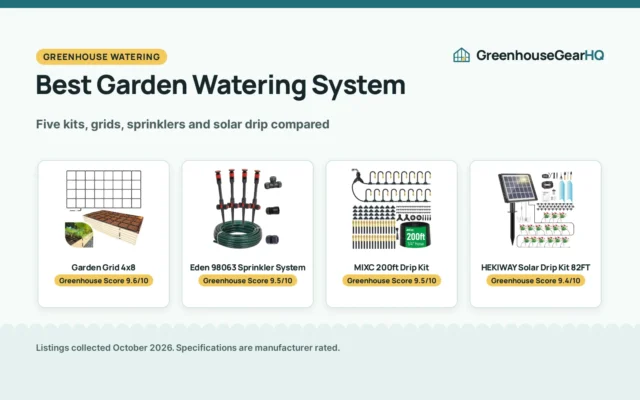
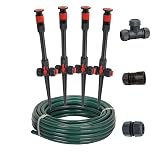 Eden 98063 Multi-Adjustable Flex Design Above Ground9.5/10View on Amazon
- 2
 Garden Grid 4x89.6/10View on Amazon
- 3
 82FT Solar Drip Irrigation System Kit9.4/10View on Amazon
- 4
 Eden 94143 Multi-Pattern Sprinkler Plus One-Direction MistingView on Amazon
- 5
 LumDecor Set of 2 Large Self Watering Terracotta Pots withView on Amazon
- 6
 LABOTA 24 Pack Self Watering Spikes for PlantView on Amazon
- 7
 ORIMERC 100 feet 1/4 inch Self Watering Rope Capillary WickView on Amazon
- 8
 4-Piece Watering Globe SetView on Amazon
- 9
 50pcs Adjustable Drip Irrigation Emitters: Garden DrippersView on Amazon
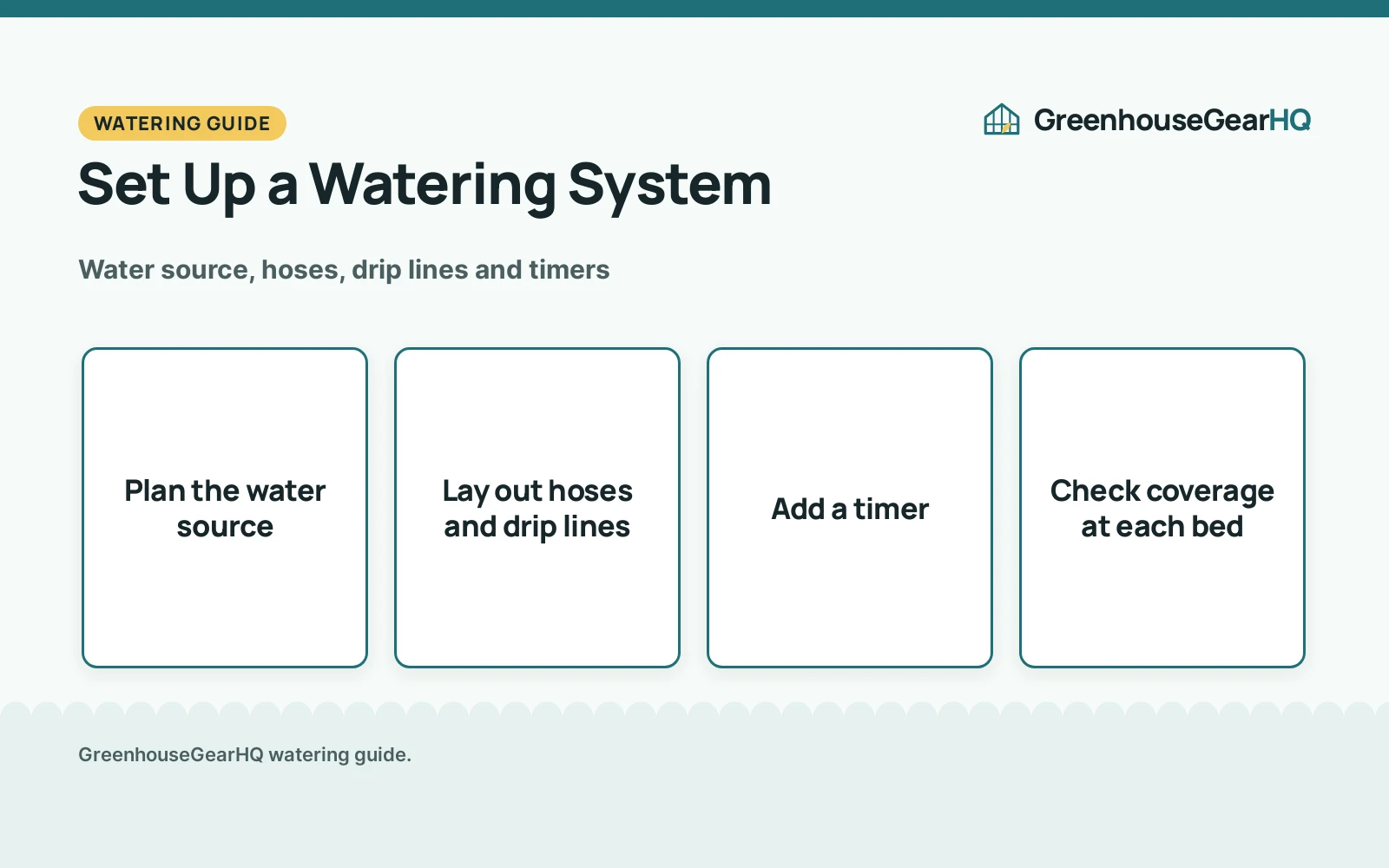
On a hot July afternoon the beds are dry and the hose is already out, and the question is how to set up watering system for garden beds so every bed gets water without dragging the hose around all day. The short answer is to plan the water source, lay out hoses and drip lines that reach each bed, add a timer, and check coverage at every bed before the season settles in. This guide walks through those parts in order, with the fittings and habits that keep the system running.
Other options worth a look
 Eden 94143 Multi-Pattern Sprinkler Plus One-Direction MistingCheck price on Amazon
 LumDecor Set of 2 Large Self Watering Terracotta Pots withCheck price on Amazon
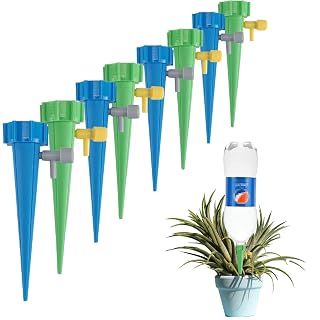 LABOTA 24 Pack Self Watering Spikes for PlantCheck price on Amazon
 ORIMERC 100 feet 1/4 inch Self Watering Rope Capillary WickCheck price on Amazon
 4-Piece Watering Globe SetCheck price on Amazon
 50pcs Adjustable Drip Irrigation Emitters: Garden DrippersCheck price on Amazon
GreenhouseGearHQ earns a commission when you buy through links on this page, at no extra cost to you. As an Amazon Associate I earn from qualifying purchases. Affiliate disclosure.
What a garden watering system needs
Every working garden watering system has the same parts: a water source that feeds the system, hoses that carry water to the beds, drip lines that lay water at the roots, a timer that turns the water on and off, and fittings that join the parts and hold them in place. Buy them in that order, because the source decides how far the hoses can reach and the layout decides where the timer sits.
- Water source: a spigot or hose bibb that feeds the system, with a backflow preventer where the local code calls for one. See our best garden hose for greenhouse picks.
- Hoses and drip lines: hoses that carry water to the beds and drip lines that lay water at the roots. See our best drip irrigation kit for greenhouse picks.
- Timer: a timer that turns the water on and off on a schedule, so the beds get water without dragging the hose out each day. See our best water timer for vacation picks.
- Filter: a filter at the source that keeps grit out of the emitters. See our best inline water filter for garden hose picks.
- Fittings and stakes: fittings that join the lines and stakes that hold them in place along the beds.
How to set up watering system for garden, step by step
Plan the water source
Start at the spigot. Walk the beds and note where the water has to reach, then pick the spigot closest to the beds. A backflow preventer on the spigot keeps water from flowing back into the house supply, and the local code decides whether one is required. Check the spigot thread against the hose and the timer fittings before you buy, so every part threads together without adapters.
If the spigot sits far from the beds, plan the hose run along a path or a fence line where feet and tools will not catch it. Keep the hose out of the beds themselves, so the hose does not crush plants or block the rows.
Lay out hoses and drip lines
Run the hose from the spigot to the beds, then lay drip lines along each row with the emitters at the plants. Keep the lines on the soil under mulch where they stay cool and out of the way, and stake them where they cross a path. Leave slack at each bend so the line does not kink, and cap the ends so water reaches the far end of the line.
Connect the drip lines to the hose with a filter between them, so grit in the water does not clog the emitters. Flush the lines before you connect the emitters, so grit and air leave the line before the season starts. Our best drip irrigation kit for raised beds picks compare kits with filters and fittings included.
Add a timer
Put the timer between the spigot and the hose, and set the schedule from the timer manual. Start with a short run and watch the beds: if water pools on the surface, shorten the run; if the soil stays dry below the surface, lengthen it. A timer with a rain delay saves water when rain is on the way, and a manual override lets you water by hand when the beds need it.
Keep the timer above the soil and out of standing water, and keep the battery cover closed. Check the timer at the start of the season and after any freeze, since a cracked timer leaks.
Check coverage and adjust
Walk the beds while the system runs and watch each emitter. A dry spot means the line is kinked, the emitter is clogged, or the bed needs a longer run. A wet spot means the emitter is too close to the plant or the line has a leak. Fix the line, clear the emitter, or move the stake, then run the system again and check the same spot.
Check the soil with a finger before you water again. If the top feels dry and the soil below feels damp, the bed has enough water for now. If the soil feels dry down deep, lengthen the run a little and check again the next day.
Drip lines or sprinklers?
Drip lines lay water at the roots and keep the leaves dry, which suits beds and rows where the plants stay in place for the season. Sprinklers cover a wide area fast and suit lawns and new seed, but they wet the leaves and lose water to wind. Pick drip lines for beds that you water all season, and sprinklers for areas you water for a short while while seed takes hold.
A soaker hose offers a middle path: it seeps water along its length and suits a row of plants that share a bed. Lay it on the soil under mulch, and check it the same way you check a drip line.
What this guide does not cover
We do not give flow rates, run times or spacing figures, because they depend on the water source, the soil and the beds. Your timer and hose manuals give those figures, and your local extension office can advise on timing for your area. We also do not cover fertilizer or pest products; follow the product label.
FAQ for growers
What does a garden watering system include?
A water source, hoses and drip lines, a timer, and fittings that join them. Add a filter at the source if the water carries grit, and a backflow preventer where the local code calls for one.
Do I need a timer for a garden watering system?
A timer turns the water on and off on a schedule, so the beds get water without dragging the hose out each day. Set the schedule from the timer manual and watch the beds for the first few days.
Should I water in the morning or the evening?
Water in the morning so the leaves dry during the day. Check the soil with a finger before you water again; if the top feels dry and the soil below feels damp, the bed has enough water for now.
Can I use a garden hose for a watering system?
Yes. A garden hose feeds the drip lines through a timer and a filter, and the hose stays in place for the season. Check the hose and the fittings for leaks when you set the system up.
Keep reading
See every air and water guide and all drip irrigation kits guides.
More picks: garden watering system, drip irrigation kit for greenhouse, automatic watering system for plants and backflow preventer for drip irrigation.