On this page
Top picks at a glance
As an Amazon Associate I earn from qualifying purchases.
- 1
 VIVOSUN Outdoor Tumbling Composter Dual Rotating Batch9.5/10View on Amazon
- 2
 F2C Compost Bin Outdoor 43 Gallon Garden Dual Chamber9.6/10View on Amazon
- 3
 SQUEEZE master Large Compost Tumbler Bin9.6/10View on Amazon
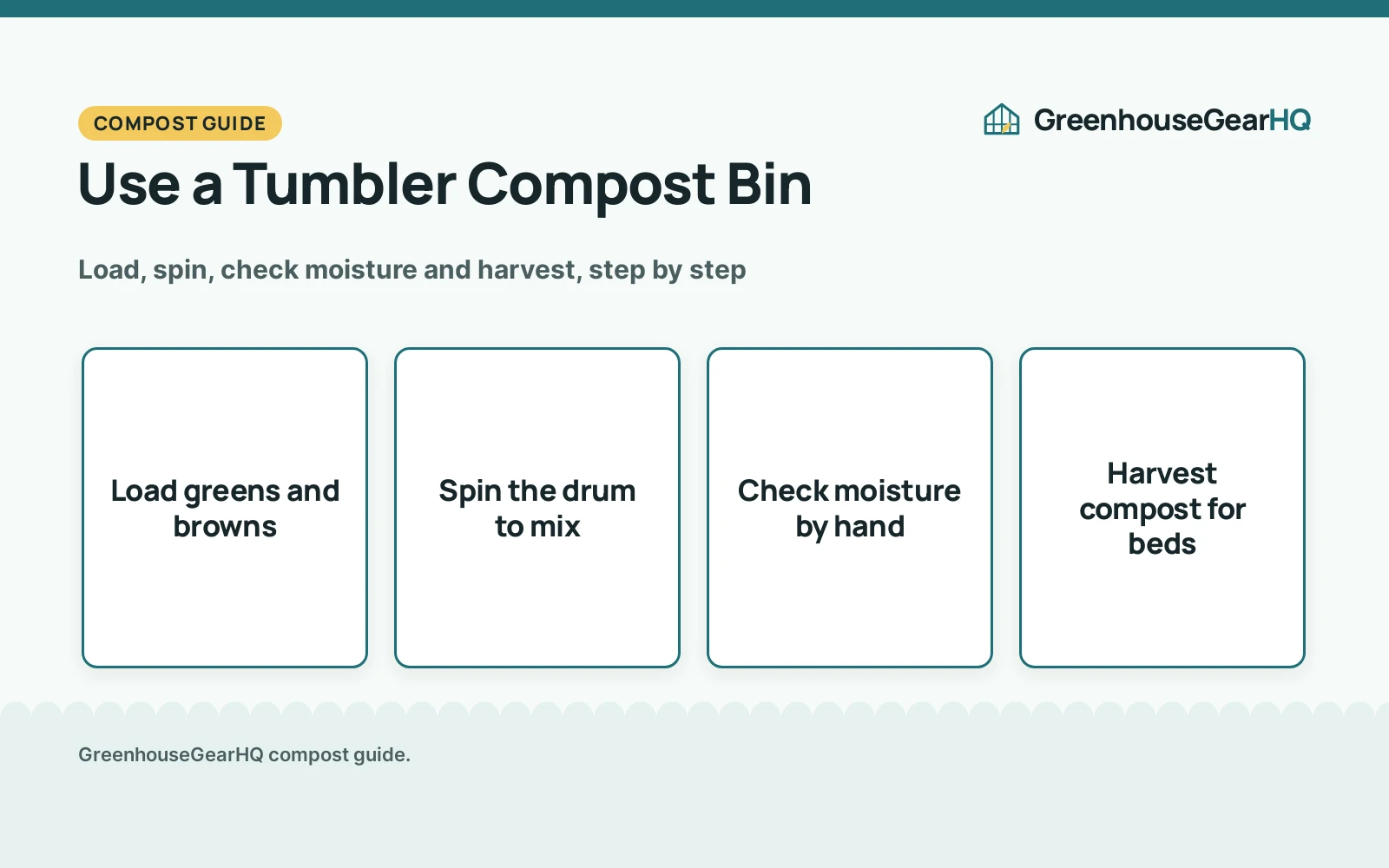
A tumbler bin turns kitchen scraps and dry leaves into dark, crumbly compost, and this guide explains how to use a tumbler compost bin step by step. The drum keeps the mix contained and off the ground, so the work is mostly loading, spinning and waiting. Load greens and browns in balance, spin the drum to mix and let air in, check the moisture by hand, and harvest when the batch looks dark and crumbly.
GreenhouseGearHQ earns a commission when you buy through links on this page, at no extra cost to you. As an Amazon Associate I earn from qualifying purchases. Affiliate disclosure.
What goes into a tumbler compost bin
Greens are soft, wet material: kitchen scraps, fresh grass clippings and coffee grounds. Browns are dry, carbon-rich material: dry leaves, straw and shredded paper. A tumbler batch needs greens and browns together. Greens alone turn wet and matted, while browns alone break down slowly, so mix the load as it goes in and keep wet scraps against dry leaves rather than in a clump.
Keep meat, dairy, fats, oils and diseased plants out of the drum. Those scraps break down poorly in a home tumbler, and diseased plants can carry problems back into the garden. Eggshells, vegetable peelings, fruit cores, tea leaves and coffee grounds all belong in the greens, while dry leaves, straw and torn cardboard belong in the browns.
How to use a tumbler compost bin, step by step
Pick a level spot
Set the tumbler on level ground where the drum can spin freely and the door opens without hitting a wall or fence. A spot near the kitchen door shortens the walk with a full caddy, and a spot near the beds shortens the walk with finished compost. Sun warms the drum, while shade keeps the mix from drying out, so pick the balance that suits the yard.
Collect scraps in a countertop caddy
Scraps build up a little at a time, so keep a countertop caddy by the sink and carry it out to the tumbler when it fills. The Joseph Joseph Compo caddy (on Amazon) holds 1 gallon / 4 liters and has an adjustable air vent that opens to reduce moisture and odor, or closes as an insect barrier. The Chef’n EcoCrock (on Amazon) holds 3.3 liter and includes two replaceable charcoal filters in the lid to trap odors. The Now Designs Vintage bin (on Amazon) holds 1.25 gallon in a 7 x 8.5 inch tin, with a charcoal filter in the lid and a swing handle for carrying.
| Countertop caddy | Stated size | Odor control |
|---|---|---|
| Joseph Joseph Compo | 1 gallon / 4 liters | Adjustable air vent |
| Chef’n EcoCrock | 3.3 liter | Two charcoal filters |
| Now Designs Vintage | 1.25 gallon | Charcoal filter in the lid |
Empty the caddy into the tumbler before scraps sit long enough to smell, and rinse the caddy with warm, soapy water after each trip. The Now Designs bin lists hand washing with warm, soapy water, and the Chef’n inner bucket is top-rack dishwasher safe.
Load greens and browns
Open the drum door and add a layer of browns, then a layer of greens, then more browns on top. Shred or tear dry leaves and cardboard so they mix with wet scraps instead of matting into sheets. Fill the drum loosely, never packed tight, so air can move through the load when the drum turns.
Spin the drum
Close the door and turn the drum a few turns each time fresh material goes in, and again whenever the mix needs air. Spinning mixes wet scraps with dry browns and pulls fresh air into the load, which keeps the batch breaking down instead of sitting wet and still. If the drum feels heavy or hard to turn, the load is too wet or too full, so add dry browns and spin again.
Check the moisture
Open the door and squeeze a handful of the mix. It should feel damp like a wrung-out sponge, holding together without dripping. If water drips out, add dry browns and spin the drum to mix them in. If the mix feels dry and dusty, sprinkle water over it and spin again. Check moisture each time fresh scraps go in, since a wet kitchen load changes the balance.
Let the batch finish
Once the drum holds a full batch, stop adding fresh scraps and let the load finish. Keep spinning the drum so air reaches the whole batch, and keep the door closed between turns so moisture stays in. A finished batch looks dark and crumbly, smells earthy, and shows no sign of the scraps that went in.
Harvest the finished compost
Open the door and scoop the finished compost into a bucket or wheelbarrow, then spread it over garden beds or mix it into potting soil. Any lumps that still look like scraps go back into the drum with the next batch. See the soil compost mix for raised beds picks for mixes that take finished compost.
Tumbler or open pile?
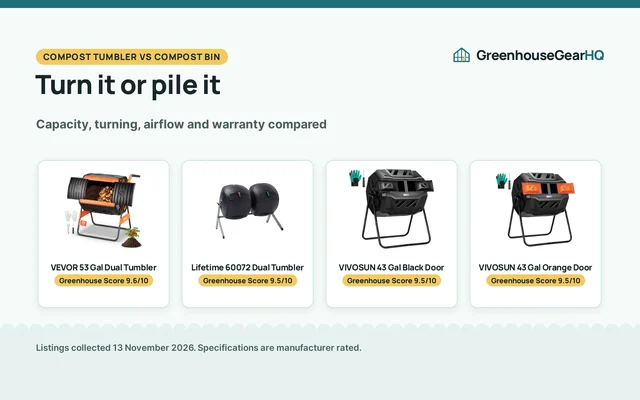
A tumbler suits a small yard where the mix needs to stay contained and turning needs to stay easy: the closed drum holds the load, and spinning replaces forking. An open pile suits bulky material and a larger heap, since the drum limits what fits through the door. If the yard has room for a heap and the material runs bulky, a pile fits; if the mix needs to stay neat and turning needs to stay light, a tumbler fits. Our compost tumbler vs compost bin comparison walks through the same choice in more detail.
What this guide does not cover
This guide does not give temperatures, turning schedules or finish times, because they depend on the mix, the drum and the weather. The local extension office can advise on timing for the area. This guide also does not cover fertilizer or pest products; follow the product label.
FAQ for growers
What goes into a tumbler compost bin?
Greens and browns together. Greens are kitchen scraps, fresh grass clippings and coffee grounds, while browns are dry leaves, straw and shredded paper. Keep meat, dairy, fats and diseased plants out of the drum.
How often should the drum be spun?
Spin the drum a few turns each time fresh material goes in, and again whenever the mix needs air. Spinning mixes wet scraps with dry browns and keeps the batch breaking down.
What if the mix smells bad?
A bad smell means the mix is too wet or short of air. Add dry browns, spin the drum to mix them in, and keep the door closed between turns so the batch can settle.
When is the compost ready to use?
The batch is ready when it looks dark and crumbly, smells earthy, and shows no sign of the scraps that went in. Scoop it out, spread it over garden beds, and send any unfinished lumps back into the drum.
Keep reading
See every raised beds and planters guide and all soil and compost guides. Also see compost bin how to start. Also see compost tumbler vs compost bin. Also see best compost starter for tumbler.
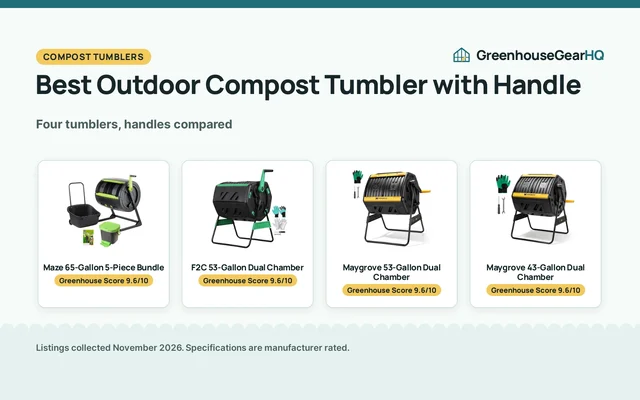
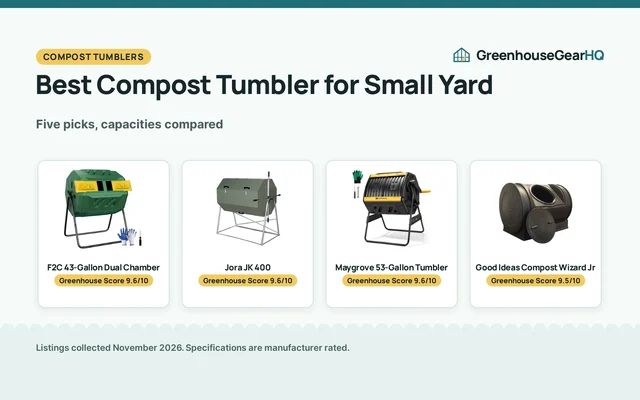
More picks: compost tumblers, compost tumbler for small yard, outdoor compost tumbler with handle and dual chamber compost tumbler.