On this page
Top picks at a glance
As an Amazon Associate I earn from qualifying purchases.
- 1
 Outsunny 10 x 5 x 7 ft Lean to Greenhouse with 3 Wire Shelves9.6/10View on Amazon
- 2
 Lean to Greenhouse with 3-Tier Shelves: Ohuhu PortableView on Amazon
- 3
 Lean to Greenhouse for Outdoors: Ohuhu Portable Tomato GreenView on Amazon
- 4
 Ohuhu Tomato Greenhouse for Outdoors: Portable Lean to GreenView on Amazon
- 5
 Outsunny 6' x 4' Aluminum Lean-to Greenhouse Adjustable RoofView on Amazon
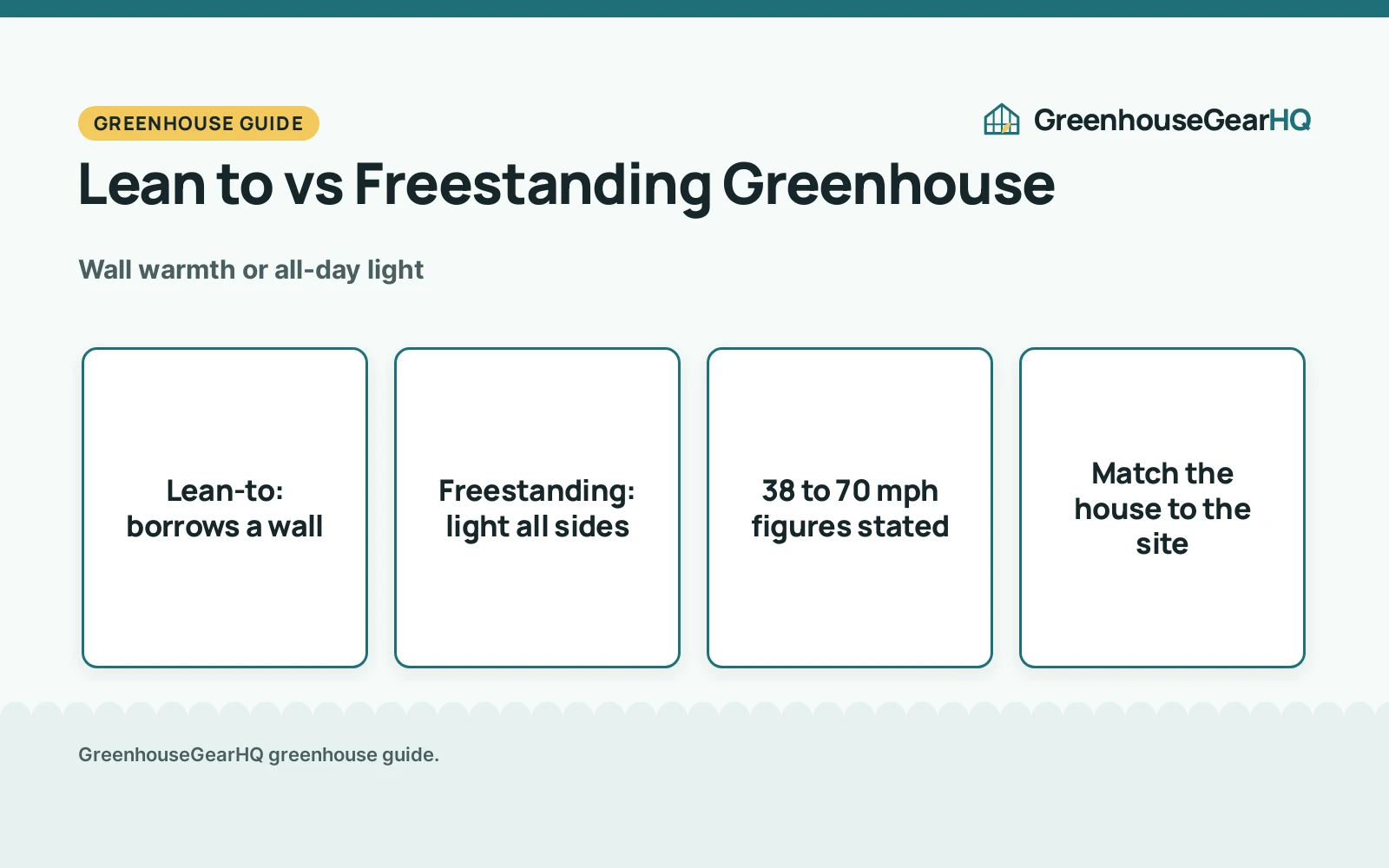
Lean to vs freestanding greenhouse: the short answer is that a lean-to borrows a wall from the house for shelter and warmth, while a freestanding greenhouse stands alone with light on all sides. One saves space and gains warmth; the other gains light and placement freedom. The reference listings give concrete figures for lean-to structures; the freestanding side is explained without figures where none are stated.
Other options worth a look
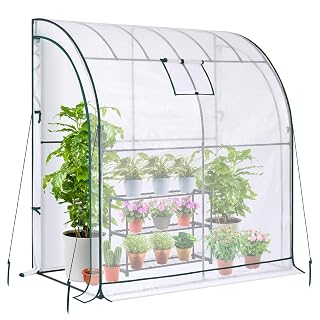 Lean to Greenhouse with 3-Tier Shelves: Ohuhu PortableCheck price on Amazon
 Lean to Greenhouse for Outdoors: Ohuhu Portable Tomato GreenCheck price on Amazon
 Ohuhu Tomato Greenhouse for Outdoors: Portable Lean to GreenCheck price on Amazon
 Outsunny 6' x 4' Aluminum Lean-to Greenhouse Adjustable RoofCheck price on Amazon
GreenhouseGearHQ earns a commission when you buy through links on this page, at no extra cost to you. As an Amazon Associate I earn from qualifying purchases. Affiliate disclosure.
Lean to vs freestanding greenhouse: how they differ
The difference is what holds one side up. A lean-to attaches to an existing wall, using the building as its fourth side and its windbreak. A freestanding greenhouse carries its own frame on all four sides and can sit anywhere with sun. Everything else follows: cost, warmth, light and where it can go.
Lean-to: borrows a wall
Lean-tos suit gardeners with a suitable wall and a tight yard. The listings show the range: the Aoxun 10 by 12-foot and 10 by 14-foot lean-to pergolas at 185 and 233.7 lbs with 38 mph wind ratings; the AECOJOY 14 by 10-foot lean-to at 50 mph with a 1-year warranty; the Aoxun 12 by 10-foot lean-to at 160 lbs with a 40 mph rating; the AECOJOY 6 by 8-foot lean-to shed at 143 lbs with a 70 mph rating; and the Domi 12 by 20-foot lean-to at 413 lbs with a 60 mph rating and a stated snow load rating. The house wall gives free warmth and shelter, and power and water are steps away. The trade is placement: the lean-to only works where a suitable wall faces the right way.
Choose a lean-to when a south-facing wall is available, when space is tight, and when the wall’s warmth and easy utilities matter.
Freestanding: light on all sides
Freestanding suits growers who want the sun from every direction. A standalone house takes glazing on all four sides, so plants get morning and evening light a lean-to misses, and it can sit in the best spot in the yard rather than against the house. The trade is exposure: all four sides face the wind, and utilities run further. No freestanding greenhouses with stated figures appear in these listings, so check each listing for the frame material, glazing and wind rating before buying.
Choose freestanding when the yard has a better sunny spot than the house wall, when all-day light matters, and when the budget covers a full four-sided frame.
How to decide: site, sun and access
Start with the site. A suitable wall facing the sun makes the lean-to the easy win: the listings show lean-tos from 6 by 8 feet to 12 by 20 feet with wind ratings from 38 to 70 mph. No suitable wall means freestanding by default. Then weigh the sun: a lean-to gets one orientation, while a freestanding house takes light all day. Finally, check access: the lean-to’s utilities are at the back door, while the freestanding house needs water and power run to it.
Which one should you buy?
| Type | Support | Example figure | Suits |
|---|---|---|---|
| Lean-to | Borrows a wall | 38 to 70 mph wind ratings | Tight yards, wall warmth |
| Lean-to | Borrows a wall | 6 by 8 ft to 12 by 20 ft | Small to large walls |
| Freestanding | Own four-sided frame | Not stated | All-day light, open yards |
Match the house to the site. A good wall leans lean-to: see our budget greenhouses for kit examples. An open sunny yard leans freestanding; browse every walk-in greenhouse guide for more.
FAQ for growers
Which way should a lean-to face?
South in the northern hemisphere, for the most sun through the glazing. The lean-to only works where a suitable wall faces the right way.
How much wind can a lean-to take?
The listings state 38 mph for the Aoxun 10 by 12 and 10 by 14-foot lean-tos, 40 mph for the 12 by 10-foot, 50 mph for the AECOJOY 14 by 10-foot, 60 mph for the Domi 12 by 20-foot, and 70 mph for the AECOJOY 6 by 8-foot shed. The wall itself adds shelter the rating may not count.
Can a freestanding greenhouse go anywhere?
Anywhere with sun, a level base and anchoring. Unlike a lean-to, it needs no wall, but all four sides face the weather, so anchor it per the listing.
Which costs less to build?
The lean-to: it borrows a wall, so it needs less framing and glazing. A freestanding house carries its own frame on all sides. No prices are stated in the listings.
Keep reading
See every walk-in greenhouse guide and all greenhouse guides.
More picks: budget greenhouses, greenhouse plastic for cold climates, greenhouse fans.