On this page
Top picks at a glance
As an Amazon Associate I earn from qualifying purchases.
- 1
 TianC beauty 4-Tier Mini Greenhouse with 16mm Steel Frame and9.7/10View on Amazon
- 2
 TABYIK 35 OZ Dehumidifier9.6/10View on Amazon
- 3
 PROWORX Mini Greenhouse 36"×18"×33" Small Greenhouse SeedView on Amazon
- 4
 Bstrip Indoor Greenhouse with Grow LightView on Amazon
- 5
 Barrina CX83Z Indoor Greenhouse with Grow LightView on Amazon
- 6
 Gardzen Mini Greenhouse 36.2”View on Amazon
- 7
 Indoor Greenhouse with Grow LightView on Amazon
- 8
 Mushroom Grow Tent Martha TentView on Amazon
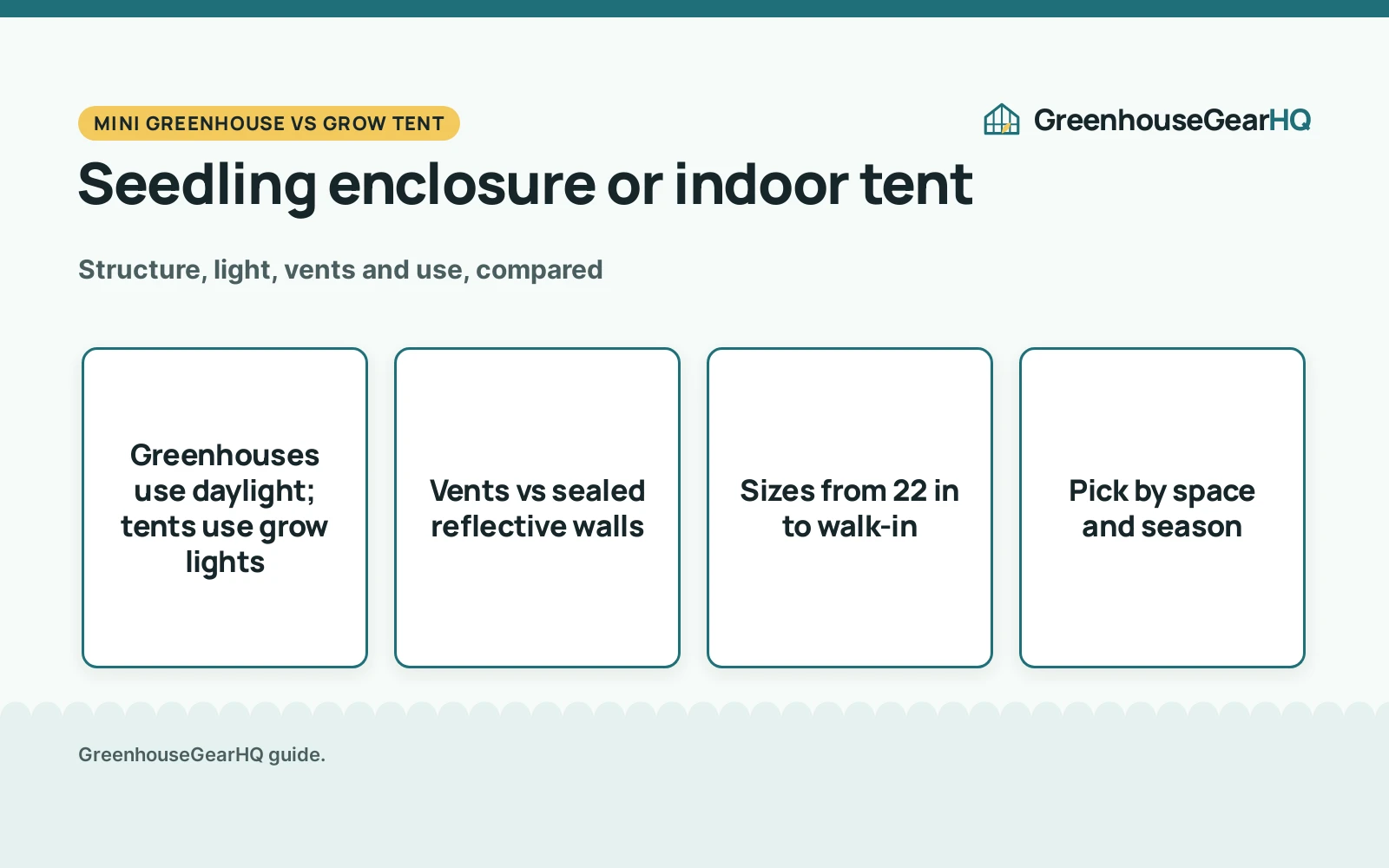
The mini greenhouse vs grow tent question comes down to light source and location. A mini greenhouse is a small transparent structure that uses daylight, suited to a patio, balcony or garden bed. A grow tent is an indoor fabric enclosure with reflective walls that uses grow lights, suited to a spare room or basement. Pick the greenhouse when you have sun and outdoor space; pick the tent when you grow indoors year round.
Other options worth a look
 PROWORX Mini Greenhouse 36"×18"×33" Small Greenhouse SeedCheck price on Amazon
 Bstrip Indoor Greenhouse with Grow LightCheck price on Amazon
 Barrina CX83Z Indoor Greenhouse with Grow LightCheck price on Amazon
 Gardzen Mini Greenhouse 36.2”Check price on Amazon
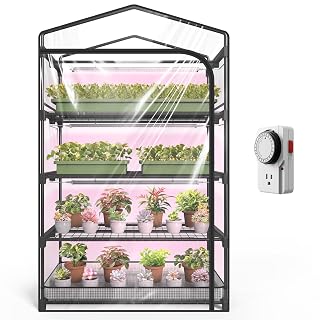 Indoor Greenhouse with Grow LightCheck price on Amazon
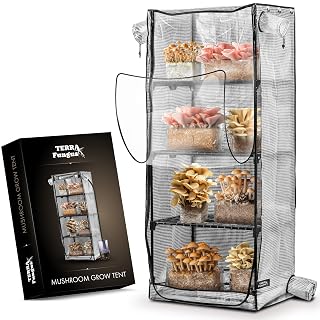 Mushroom Grow Tent Martha TentCheck price on Amazon
GreenhouseGearHQ earns a commission when you buy through links on this page, at no extra cost to you. As an Amazon Associate I earn from qualifying purchases. Affiliate disclosure.
Mini greenhouse vs grow tent: the short answer
A mini greenhouse traps solar heat under a clear cover, so it extends the season on a patio or balcony using free daylight. A grow tent seals light in and reflects it back onto the plants, so it runs on electricity indoors in any season. The greenhouse is the simpler and cheaper route for seed starting in spring; the tent is the controlled route for growing indoors through winter. Our grow tent vs greenhouse guide compares the full-size versions.
What a mini greenhouse is
A mini greenhouse is a small framed structure with a transparent PE or PVC cover, sized from tabletop to walk-in. The Outvita example lists 27 by 19.6 by 63 inches with 4 tiers and 22 lb per shelf, and the BPS example lists a 6 by 3 by 3 ft model with two zippered windows. Some include extras: the Bamworld 2-tier example lists 22.8 by 16.7 by 33.1 inches with a grow light and a 3, 9 and 12 hour timer, and the PROWORX 36 by 18 by 33 inch example includes a waterproof floor mat. Ventilation comes from roll-up doors and windows: the VEVOR walk-in example lists 6 ventilation windows and a roll-up zipper door. See our best mini greenhouse for succulents picks.
What a grow tent is
A grow tent is a fabric enclosure with reflective inner walls, light-proof zippers and ports for ventilation equipment, used indoors with grow lights. It does not use daylight; the plants get all their light from lamps you hang inside. That makes the tent independent of season and weather, but it needs electricity, lights and usually a fan for air movement. Tents suit growers who want full control of light hours, such as running 18-hour days in winter.
Mini greenhouse vs grow tent, side by side
| Feature | Mini greenhouse | Grow tent |
|---|---|---|
| Light source | Daylight through clear cover | Grow lights inside |
| Location | Patio, balcony, garden | Indoors |
| Ventilation | Roll-up doors and windows | Vents and fan ports |
| Season | Extends the season | Year round |
| Sizes listed | 22 in tabletop to 9.6 ft walk-in | Varies by model |
| Power needed | None, unless lights added | Lights and fan |
The table shows the split. Greenhouses trade control for simplicity: sun does the lighting and a zipper does the ventilation. Tents trade simplicity for control: you supply the light, the schedule and the airflow, and the plants never see a cloudy day. The Bamworld example blurs the line a little, pairing a mini greenhouse with a grow light and timer for indoor seed starting.
Which should you buy
Buy a mini greenhouse if you have outdoor space with sun, you start seeds in spring or shelter plants in fall, and you want the lowest running cost. The Outvita 4-tier example fits a balcony, and the VEVOR walk-in example fits a garden bed. Buy a grow tent if you grow indoors, you want to control light hours through winter, or you have no sunny outdoor spot. Our best humidity for grow tent guide covers the climate side of tent growing.
Some growers end up with both: a mini greenhouse for spring seed starting on the patio and a tent for winter growing indoors. If you go that way, match each structure to its job rather than forcing one to do both.
FAQ for growers
Can a mini greenhouse be used indoors?
Some can. The Bamworld and XHIKOWAT examples are listed for indoor use, and the PROWORX includes a waterproof floor mat for indoor floors. Check the listing’s indoor and outdoor rating before placing one inside.
Does a grow tent need a fan?
Tents are sealed enclosures, so most growers add a fan for air movement through the tent’s vent ports. Greenhouses vent passively through roll-up doors and windows instead.
Which is better for seed starting?
A mini greenhouse on a sunny patio is the simple pick for spring seed starting, using free daylight. A grow tent with lights is the pick for starting seeds indoors in winter, when daylight is short.
What sizes do mini greenhouses come in?
The listings range from the Bamworld 2-tier at 22.8 by 16.7 by 33.1 inches to the VEVOR walk-in at 9.6 by 6.4 by 6.2 ft. The Outvita 4-tier at 27 by 19.6 by 63 inches sits in the middle.
Keep reading
See every mini greenhouse guide and all greenhouse guides.
More picks: grow tent vs greenhouse, pop up greenhouse vs hoop house and humidity for grow tents.