On this page
Top picks at a glance
As an Amazon Associate I earn from qualifying purchases.
- 1
 EAGLE PEAK 8x8 Pop Up Greenhouse9.8/10View on Amazon
- 2
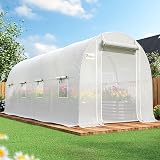 KING BIRD 15x7x7 Walk-in Greenhouse9.8/10View on Amazon
- 3
 Outsunny 20x10x7 Walk-in Greenhouse9.8/10View on Amazon
- 4
 6x8 FT Greenhouse with HygrometerView on Amazon
- 5
 Garvee 6x10 FT GreenhouseView on Amazon
- 6
 Garvee 6 x 10 FT GreenhouseView on Amazon
- 7
 Inkbird Humidity Controller IHC200 Humidistat for MushroomView on Amazon
- 8
 Bayliss XL AutoventView on Amazon
- 9
 BioGreen Electric Greenhouse Heater & Fan with DigitalView on Amazon
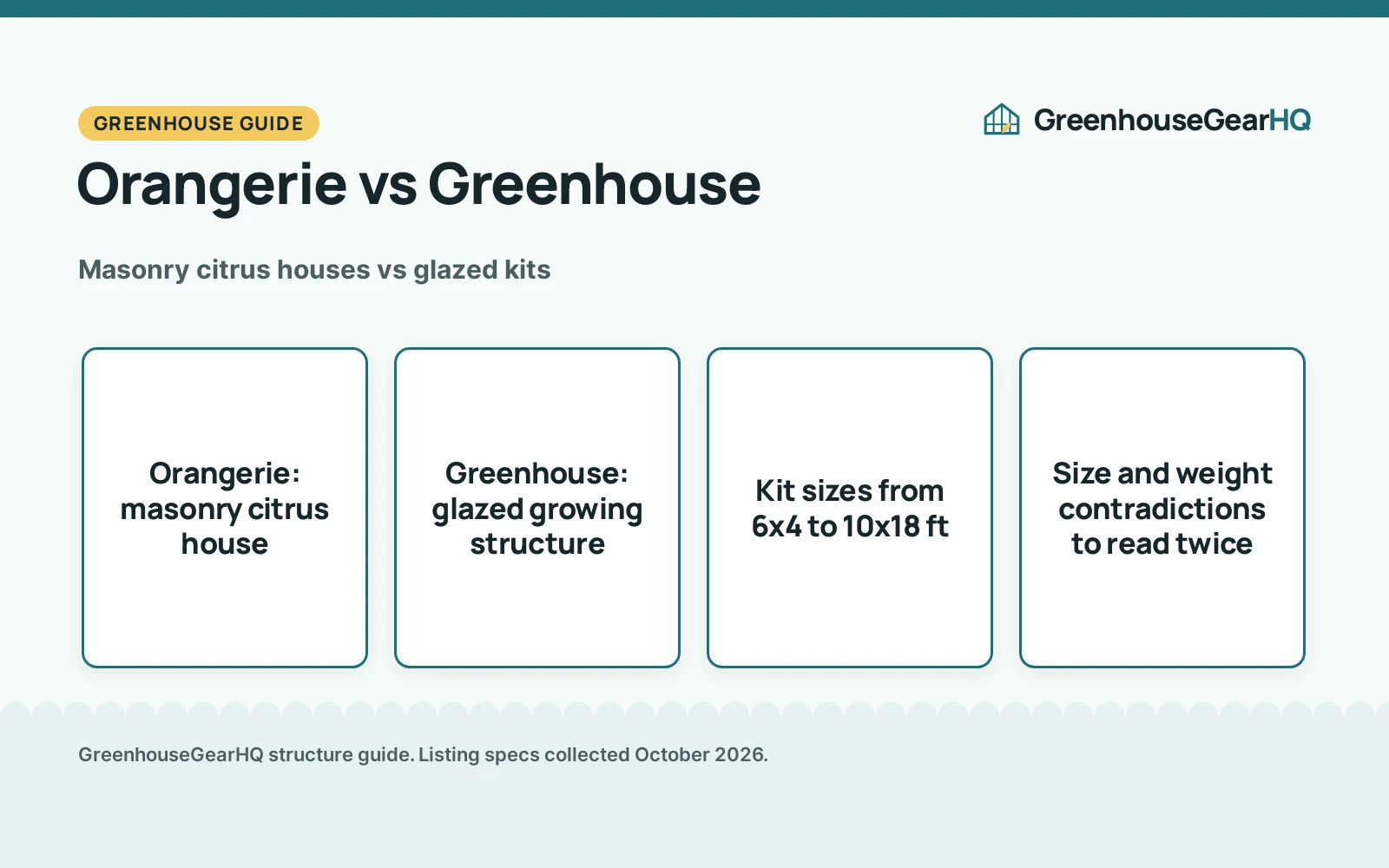
When the first frost threatens the potted citrus on the patio, the question is not just where to put them but what to put them in. The orangerie vs greenhouse question comes down to this: an orangerie is a masonry building with tall windows, built to overwinter citrus in style, while a greenhouse is a glazed growing structure built for plants first. We compared greenhouse listings to explain what each one is and which gardeners each suits. Every number below comes from a product listing; where a listing gives no figure, we say so.
Other options worth a look
 6x8 FT Greenhouse with HygrometerCheck price on Amazon
 Garvee 6x10 FT GreenhouseCheck price on Amazon
 Garvee 6 x 10 FT GreenhouseCheck price on Amazon
 Inkbird Humidity Controller IHC200 Humidistat for MushroomCheck price on Amazon
 Bayliss XL AutoventCheck price on Amazon
 BioGreen Electric Greenhouse Heater & Fan with DigitalCheck price on Amazon
GreenhouseGearHQ earns a commission when you buy through links on this page, at no extra cost to you. As an Amazon Associate I earn from qualifying purchases. Affiliate disclosure.
Orangerie vs greenhouse: the short answer
Choose an orangerie when the building matters as much as the plants: masonry walls, tall windows and a permanent home for citrus and garden living. Choose a greenhouse when growing comes first: the Palram 7 by 8 foot kit lists 111 pounds with a 55 MPH wind rating and a 5-year warranty, and the Garvee 6 by 10 foot kits list 720 g/m2 panels. If you would rather compare greenhouse kits, our walk-in greenhouses guide covers the options.
What an orangerie is
An orangerie is a masonry citrus house: brick or stone walls, a glazed sunny front, and enough thermal mass to carry tender trees through winter. None of these listings is an orangerie kit; they are greenhouse kits, so we give no orangerie figures here. The tradeoffs are qualitative: an orangerie costs like a building because it is one, needing foundations, masonry and glazing, while it pays back as a garden room you can live in. For overwintering a citrus collection in a harsh climate, masonry beats polycarbonate on temperature stability.
What a greenhouse is
A greenhouse is a glazed growing structure: light frame, transparent or translucent cover, built to trap sun for plants. The listings show the market: the Palram 7 by 8 foot kit lists twin-wall polycarbonate with over 90% light transmission, a 55 MPH wind rating and a 5-year limited warranty at 111 pounds. The Jocoevol 10 by 18 foot kit lists a galvanized steel frame with double-layer polycarbonate blocking 99% of UV. The Sannwsg listing gives a 31 MPH wind rating with 176 lbs per square meter of snow load and 92%+ light transmission. Greenhouses are bought by the foot and assembled in a weekend; orangeries are built by masons.
Orangerie vs greenhouse at a glance
| Building | What it is | Suits | Watch for |
|---|---|---|---|
| Orangerie | Masonry walls, tall glazed front | Citrus collections, garden living | Built like a house; no kit figures listed |
| Greenhouse | Light frame, glazed all over | Vegetables, herbs, flowers | 6×4 to 10×18 ft kits; wind ratings 31 to 55 MPH |
Which should you buy?
Match the building to the job. A citrus collection that needs a frost-proof winter home and a room to sit in points to an orangerie: budget for masonry, not a kit. A vegetable garden that needs season extension points to a greenhouse: the Palram 7 by 8 foot kit or the Jocoevol 10 by 18 foot kit, sized to the beds. Read our greenhouses guide for kit types before you decide.
Read the listing twice
Greenhouse kit listings contradict themselves on size and weight:
- Palram 7×8: the size line says 7 by 8 by 9 feet, but the dimensions list 96 by 84 by 96 inches, which is 8 by 7 by 8 feet.
- Garvee 6×10: two listings for the same size give different weights, 55 pounds versus 89.6 pounds, and different colors.
- Sannwsg: the bullets mention glass greenhouses, but the cover material is polycarbonate.
Trust the dimensions over the size line, and confirm the cover material: it decides light transmission and hail resistance.
What this guide does not cover
This guide covers building types only. It does not cover foundations, heating or glazing installation, which depend on the site and the structure. A local builder gives those figures, and your local extension office can advise on siting for your area.
FAQ for growers
Can I grow citrus in a regular greenhouse?
The listings show greenhouses built for vegetables, herbs and flowers, with wind ratings from 31 to 55 MPH. Citrus needs frost protection an unheated kit may not give; an orangerie or a heated greenhouse suits tender trees.
How big are the listed greenhouse kits?
The listings range from a 6 by 4 foot HOOYEAH kit to a 10 by 18 foot Jocoevol kit, with 6 by 8 and 6 by 10 foot options between.
Do greenhouse kits handle snow?
The Sannwsg listing gives 176 lbs per square meter of snow load, and the Garvee listing gives 110 lbs per square foot of weight capacity. Check the listing’s stated rating against your snowfall.
How long do polycarbonate panels last?
The Palram listing gives a 5-year limited warranty and says its panels are 100% UV protected against discoloring. Warranty terms vary by maker, so check the listing.
Keep reading
See every walk-in greenhouse guide and all greenhouse guides.
More picks: polycarbonate greenhouses, mini greenhouses and light and heat.