On this page
Top picks at a glance
As an Amazon Associate I earn from qualifying purchases.
- 1
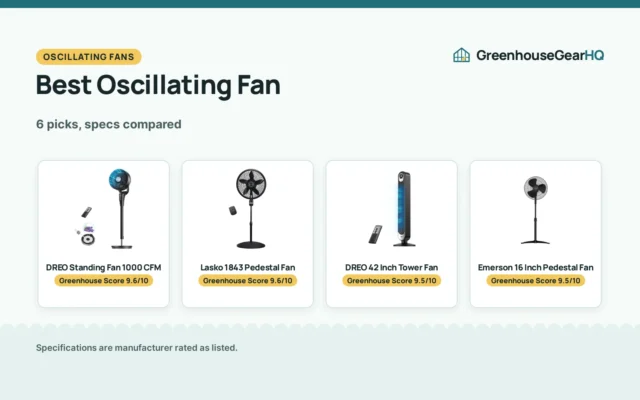
 Lasko 1843 Cyclone Oscillating Pedestal Fan9.6/10View on Amazon
- 2
 Hurricane 6-Inch Inline Fan with Steel Housing9.7/10View on Amazon
- 3
 DREO Tower Fan for BedroomView on Amazon
- 4
 Levoit Tower Fan for BedroomView on Amazon
- 5
 DREO Smart Pedestal Fan for BedroomView on Amazon
- 6
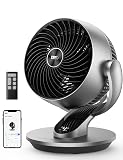 DREO Smart Fan for BedroomView on Amazon
- 7
 DREO Smart Fan for Bedroom with RGB LightView on Amazon
- 8
 DR.PREPARE Tower Fan for BedroomView on Amazon
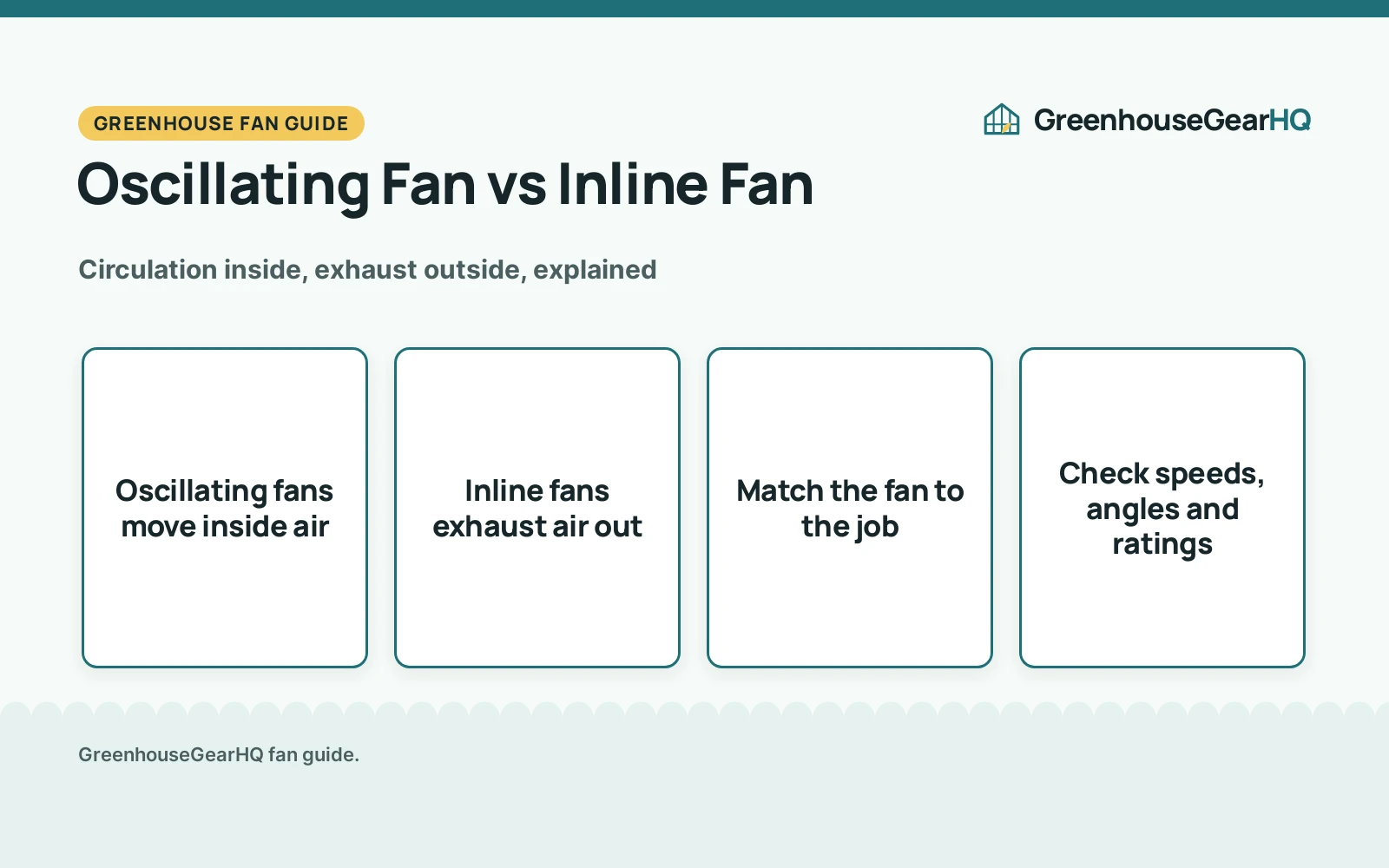
On a still summer afternoon, the air in a greenhouse hangs heavy and the leaves barely move, which is when growers start comparing an oscillating fan vs inline fan. The short answer: an oscillating fan circulates the air already inside, sweeping it back and forth across the plants; an inline fan exhausts inside air out through ducting so fresh air comes in. One stirs the room, the other changes the room’s air.
Other options worth a look
 DREO Tower Fan for BedroomCheck price on Amazon
 Levoit Tower Fan for BedroomCheck price on Amazon
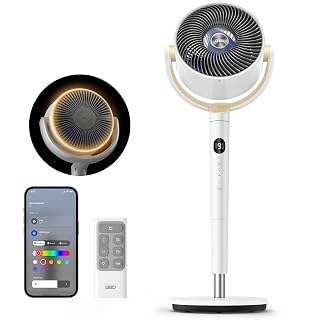 DREO Smart Pedestal Fan for BedroomCheck price on Amazon
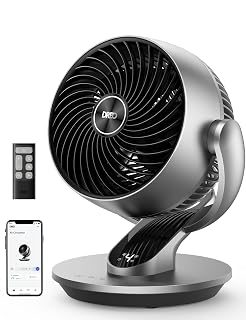 DREO Smart Fan for BedroomCheck price on Amazon
 DREO Smart Fan for Bedroom with RGB LightCheck price on Amazon
 DR.PREPARE Tower Fan for BedroomCheck price on Amazon
GreenhouseGearHQ earns a commission when you buy through links on this page, at no extra cost to you. As an Amazon Associate I earn from qualifying purchases. Affiliate disclosure.
Oscillating fan vs inline fan: what each one does
An oscillating fan sits inside the growing space and moves its head side to side, so the same inside air keeps passing over the plants. An inline fan mounts in a run of ducting and pulls air from the space, pushing it outside; replacement air enters through vents. The listings in this guide are all oscillating fans, so the figures below describe that side; the inline side is explained without figures, since no inline listing is in the data.
Oscillating fans: circulation inside
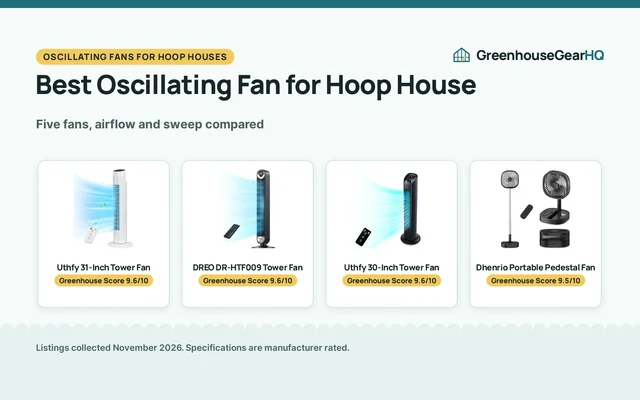
Oscillation angle decides how wide the sweep is. The DREO DR-HTF007 tower and the Levoit tower both list 90 degrees of oscillation; the Levoit mini lets you set 30, 60 or 90 degree angles; and the DREO TurboPoly 512 lists 120 degrees horizontal plus 120 degrees of vertical tilt. The DREO DR-HPF013 pedestal pairs 90 degrees of horizontal oscillation with a 105 degree pivoting head and a 38 to 42 inch adjustable height.
Airflow figures show how far the sweep reaches. The DREO tower lists 28 ft/s with a 34 ft reach, the DREO pedestal lists 90 ft of airflow at 1000 CFM, the DREO 512 lists 100 ft at 1150 CFM, and the Lasko 1843 pedestal lists 1854 CFM from an 18 inch blade on a stand that adjusts up to 54 inches. The Levoit mini, a tabletop unit at 5 by 5 by 13 inches, lists 23 ft/s at a maximum of 7.5 watts. Noise runs from 28 dB on the DREO tower and the Levoit tower to 56.7 dB on the Comfort Zone pedestal, which also lists a metal safety grill and ETL and UL marks.
Use an oscillating fan where the problem is still air: corners where leaves never flutter, or a small house where heat pockets form between waterings. It does not remove heat or humidity; it only moves the air that is already there. Our greenhouse fans with thermostat roundup compares more oscillating and circulation fans.
Inline fans: exhaust outside
An inline fan does the opposite job. Mounted in ducting, it pulls warm, humid inside air out of the greenhouse and exhausts it outside, while fresh air is drawn in through vents to replace it. That makes it the tool for heat and humidity that an oscillating fan cannot fix by stirring alone. Inline setups pair naturally with exhaust strategies, where one end of the house does the pushing and the other does the pulling.
Which one should you buy?
| Fan type | What it moves | Typical setup | Suits |
|---|---|---|---|
| Oscillating fan | Inside air, back and forth | Stands or sits in the room | Still-air pockets, gentle circulation |
| Inline fan | Inside air out through ducting | Mounted in a duct run | Heat and humidity removal |
Match the fan to the complaint. If leaves sit motionless and the air feels stale, an oscillating fan is the usual answer; the listings above give you sweep angles from 30 to 120 degrees and airflow figures to compare. If the house overheats or stays damp no matter how the inside air moves, you need exhaust, which means an inline fan with ducting and vents. Many growers end up with both: the inline fan changes the air, and the oscillating fan keeps it moving once it arrives. See our greenhouse exhaust fans with thermostat picks for the exhaust side.
FAQ for growers
Can an oscillating fan cool a greenhouse?
It moves air but does not remove heat. The DREO pedestal lists 90 ft of airflow at 1000 CFM and the Lasko lists 1854 CFM, which keeps inside air moving; for actual heat removal you need an exhaust fan pulling air out.
What do the oscillation angles mean?
The angle is how far the head sweeps side to side. Listings here state 90 degrees on the DREO tower and the Levoit tower, 30, 60 or 90 degrees on the Levoit mini, and 120 degrees horizontal on the DREO 512, which also lists 120 degrees of vertical tilt.
How loud are these oscillating fans?
The DREO tower and the Levoit tower both list 28 dB, the DREO pedestal lists 28.2 dB, and the Comfort Zone pedestal lists 56.7 dB. Lower figures suit bedrooms and quiet workspaces.
Do I need both an oscillating and an inline fan?
They solve different problems. An oscillating fan circulates inside air across the plants, while an inline fan exhausts stale air out through ducting. A house with both gets circulation and air exchange.
Keep reading
See every greenhouse fans guide and all air and water guides.
More picks: greenhouse exhaust fans with thermostat, small greenhouse exhaust fans, greenhouse thermostats with app.