On this page
Top picks at a glance
As an Amazon Associate I earn from qualifying purchases.
- 1
 3 Pack Halo Grow Light for Indoor PlantsView on Amazon
- 2
 Wiaxulay LED Plant Grow Light StripsView on Amazon
- 3
 Sondiko Full Spectrum Grow Light with TimerView on Amazon
- 4
 Under Shelf Grow LightView on Amazon
- 5
 FECiDA High Output Flat Panel Grow Light for Large ShelfView on Amazon
- 6
 Mars Hydro FC-4800 480W 4x4 LED Grow Light Full Spectrum forView on Amazon
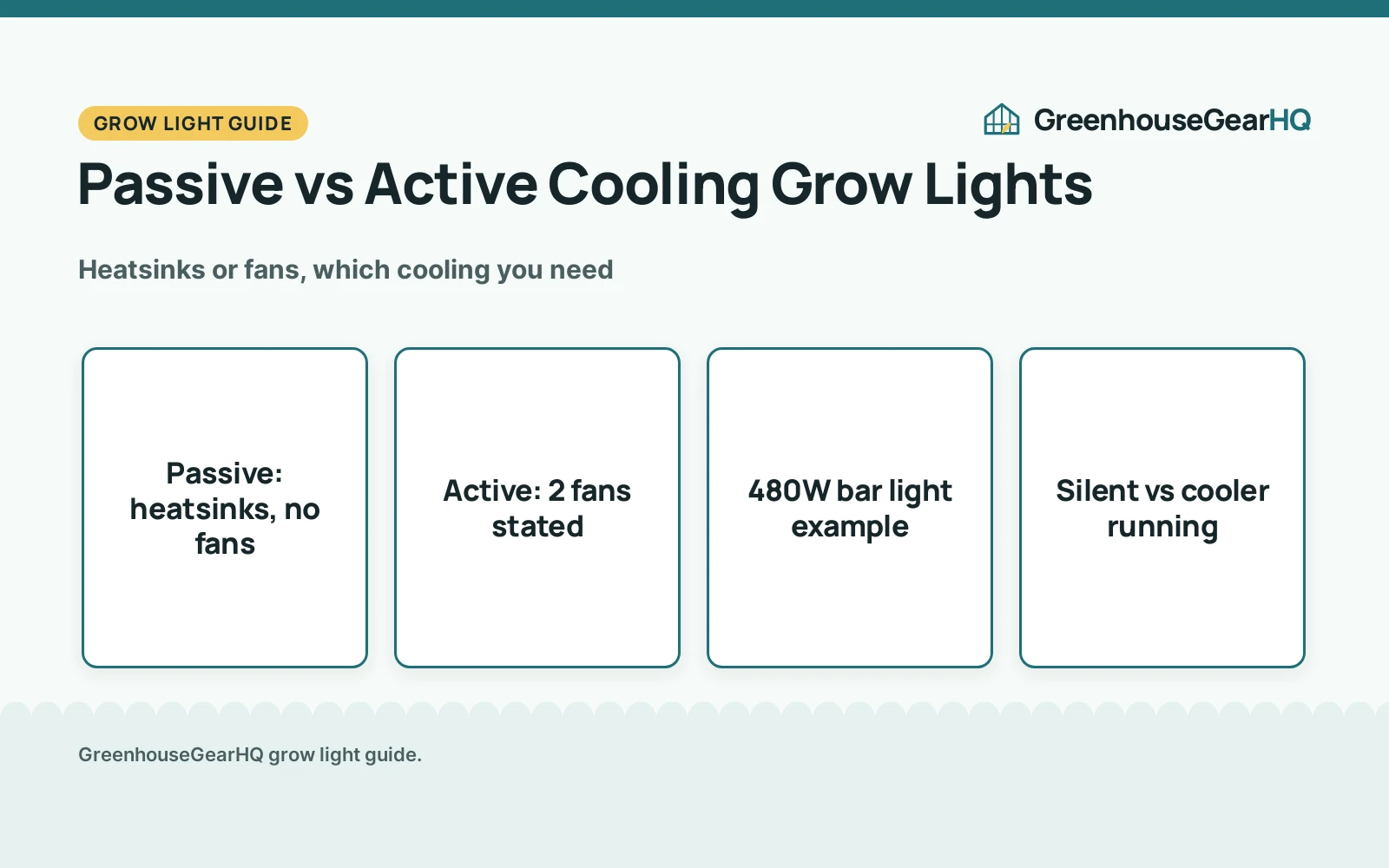
Passive vs active cooling grow lights: the short answer is that passive lights shed heat through heatsinks and bar structures with no moving parts, while active lights add fans to push more heat away. One is silent and simple; the other runs cooler under heavy load but adds noise and a part that can fail.
Other options worth a look
 3 Pack Halo Grow Light for Indoor PlantsCheck price on Amazon
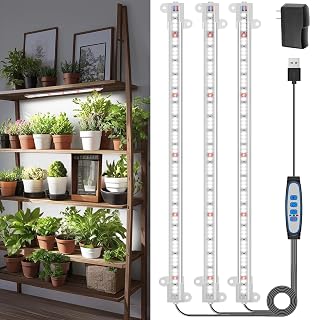 Wiaxulay LED Plant Grow Light StripsCheck price on Amazon
 Sondiko Full Spectrum Grow Light with TimerCheck price on Amazon
 Under Shelf Grow LightCheck price on Amazon
 FECiDA High Output Flat Panel Grow Light for Large ShelfCheck price on Amazon
 Mars Hydro FC-4800 480W 4x4 LED Grow Light Full Spectrum forCheck price on Amazon
GreenhouseGearHQ earns a commission when you buy through links on this page, at no extra cost to you. As an Amazon Associate I earn from qualifying purchases. Affiliate disclosure.
Passive vs active cooling grow lights: how each sheds heat
Every grow light turns some electricity into heat, and that heat has to go somewhere. Passive cooling moves it with metal alone: aluminum heatsinks, fins and bar structures that radiate heat into the air. Active cooling adds fans that blow air across those surfaces, carrying heat away faster. The figures below are stated in each listing; explanations without figures come from how the technology works.
Passive cooling: heatsinks and bar structures
Passive suits the grower who wants silence and simplicity. The Mars Hydro FC-4800 listing states a specialized bar structure that ensures optimal heat dissipation, with no fans stated, on a 480W light covering a 4×4 ft area. With no moving parts there is nothing to wear out, no dust clogging a fan, and no hum in the grow space. The tradeoff is size: passive lights need enough metal surface to shed their heat, so high-wattage passive fixtures tend to be larger.
Reflector shape can help passive designs shed heat too. The GYTF listing states a V-shaped reflector design with better heat dissipation than reflector-less lights, claiming light efficiency up by 20 to 25 percent, on an 80W strip with 204 LED bulbs. A reflector that doubles as a heat path gives passive cooling more surface without adding a fan.
Choose passive when the light hangs in a living space or a small tent where noise matters, and when you prefer fewer parts that can fail.
Active cooling: fans on the job
Active suits the grower pushing high wattage in a compact fixture. The NAILGIRLS listing states a cooling system with 2 high-speed fans and an aluminum heat-sink on its 1000 Watt LED lamp. Fans let a smaller body shed more heat than metal alone could, which is why the highest-wattage fixtures usually have them. The tradeoffs are noise and maintenance: fans move air and dust, and a failed fan leaves the light running hotter than its design allows.
Check the operating range the maker states. The NAILGIRLS listing states its 2-fan system works at 50 to 60 degrees Fahrenheit, a range that suits most grow tents without cooking the canopy. If your tent runs hotter than that, add ventilation rather than expecting the light’s fans to cool the room.
Choose active when you need maximum output from a compact fixture and can tolerate some fan noise, and plan to keep the fans dust-free.
Which one should you buy?
| Cooling type | How it sheds heat | Noise | Suits |
|---|---|---|---|
| Passive | Heatsinks and bar structures | Silent | Quiet spaces, simple setups |
| Active | Fans plus heatsinks | Fan hum | High wattage, compact fixtures |
Match the cooling to the space. A bedroom grow or a small tent leans passive for its silence, like the bar-structure design the Mars Hydro listing states. A high-output setup where every watt counts leans active, like the 2-fan system the NAILGIRLS listing states. Either way, pair the light with a timer; see our grow lights with timer picks.
Match cooling to coverage and controls
Cooling is only part of the buy. Compare coverage first: the Mars Hydro listing states 480W over a 4×4 ft area, while the NAILGIRLS listing states 3.5×3.5 ft for veg and 4.5×4.5 ft for flowering on its 1000-watt lamp. For big spaces, the NAILGIRLS listing states a daisy chain function linking up to 3, max 5, lights in series. And check timers: the GYTF halo listing states 4, 8, 12 and 18 hour options, while the Wiaxulay and DOMMIA listings state 6, 12 and 16 hour timers.
FAQ for growers
Are fanless grow lights reliable?
They have no moving parts to wear out, which removes the most common cooling failure point. The Mars Hydro listing states a bar structure for heat dissipation with no fans stated, which is the passive approach.
Do fans make grow lights noisy?
Fans add a hum that passive lights do not have. No noise figures are stated in the listings, so compare in person or check the listing’s details before buying for a quiet room.
Which is better for a small tent?
Passive usually wins in a small tent: silent, no dust blown around, and small tents rarely need the wattage that demands fans. Active makes sense when the fixture’s output needs more cooling than its body can shed alone.
What happens if a fan fails?
The light runs hotter than its design allows, which can shorten its life or trigger a thermal shutdown if the fixture has one. Keep fans dust-free and replace a failing fan promptly.
Keep reading
See every grow lights guide and all light and heat guides.
More picks: grow lights with timer, grow lights for basil, grow lights for microgreens.