On this page
Top picks at a glance
As an Amazon Associate I earn from qualifying purchases.
- 1
 Automatic Greenhouse Vent Opener9.7/10View on Amazon
- 2
 2 Pack Greenhouse Auto Roof Vent Opener Heat Sensitive Single9.7/10View on Amazon
- 3
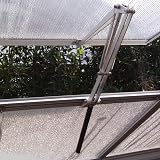 BIBISTORE Solar Heat Sensitive Automatic Greenhouse Window9.6/10View on Amazon
- 4
 BIBISTORE Automatic Greenhouse Vent Opener with Two SpringsView on Amazon
- 5
 10W Solar Roof Vent FanView on Amazon
- 6
 HOWE 10x18x8.4 FT Polycarbonate Greenhouse with 4 VentView on Amazon
- 7
 HOWE 10x12x8.4 FT Polycarbonate Greenhouse with 4 VentView on Amazon
- 8
 8x12 FT Outdoor Greenhouse with Roof VentView on Amazon
- 9
 6x4FT Polycarbonate Greenhouse with Roof VentView on Amazon
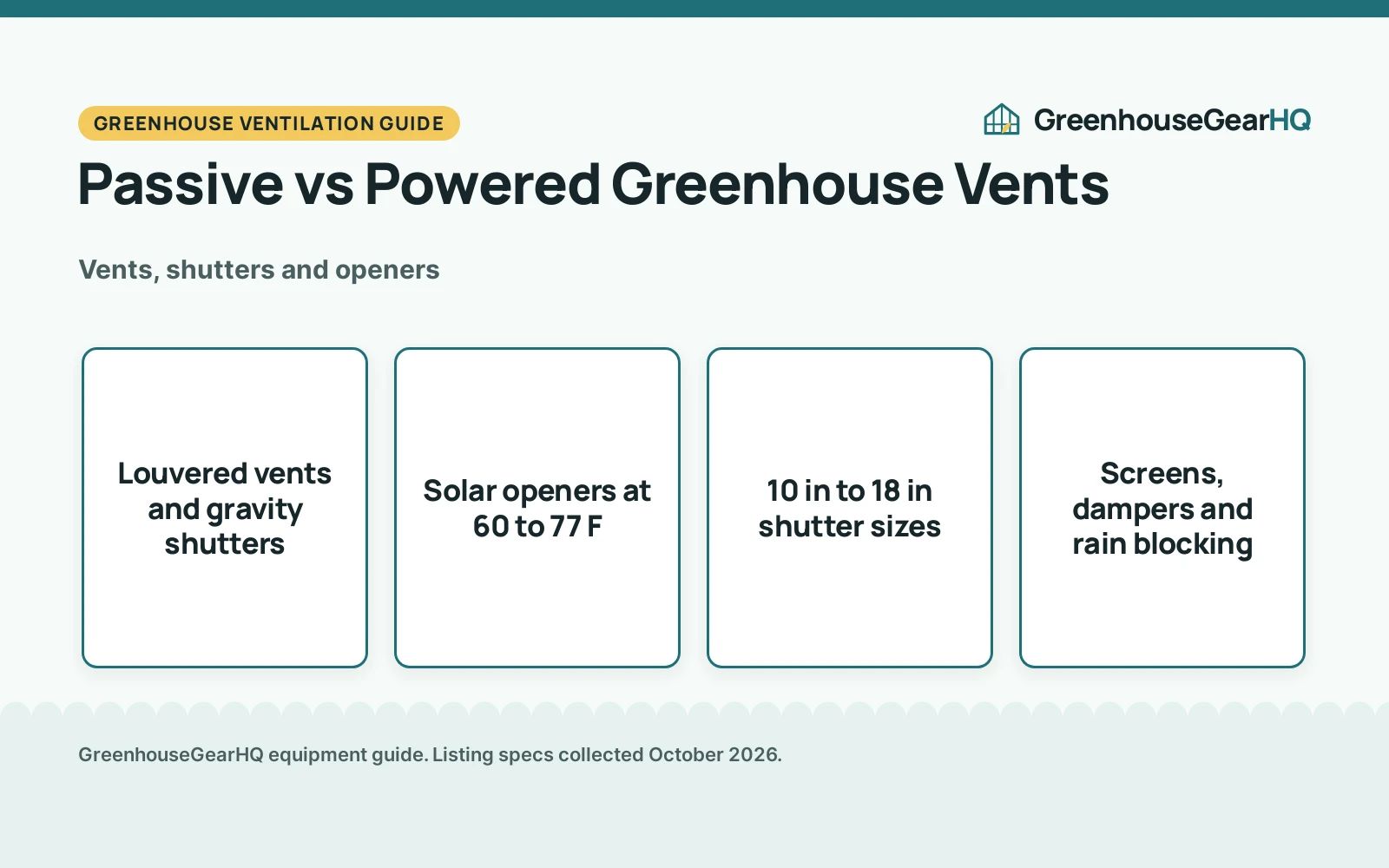
Passive vs powered greenhouse vents is a choice between vents that work with no electricity and vents that need a fan and power. Passive vents, like louvered gable vents and gravity shutters, open with airflow or temperature and move air without a motor. Powered vents pair a shutter with an exhaust fan to move air on demand. For most small greenhouses, passive vents handle everyday heat, while powered ventilation earns its keep in hot climates and large houses. Every number below comes from a reference listing, and we name the brand only where a figure is cited.
Other options worth a look
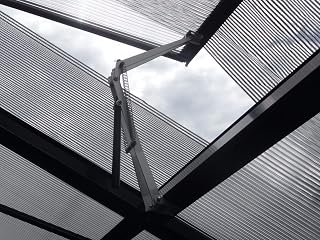 BIBISTORE Automatic Greenhouse Vent Opener with Two SpringsCheck price on Amazon
 10W Solar Roof Vent FanCheck price on Amazon
 HOWE 10x18x8.4 FT Polycarbonate Greenhouse with 4 VentCheck price on Amazon
 HOWE 10x12x8.4 FT Polycarbonate Greenhouse with 4 VentCheck price on Amazon
 8x12 FT Outdoor Greenhouse with Roof VentCheck price on Amazon
 6x4FT Polycarbonate Greenhouse with Roof VentCheck price on Amazon
GreenhouseGearHQ earns a commission when you buy through links on this page, at no extra cost to you. As an Amazon Associate I earn from qualifying purchases. Affiliate disclosure.
Passive vs powered greenhouse vents: the short answer
Pick passive vents when the greenhouse is small, power is not wired in, or you want ventilation that works during an outage. Louvered vents and gravity shutters cost less to run because there is nothing to plug in. Pick powered ventilation when summer heat overwhelms passive airflow: an exhaust fan moves a fixed volume of air on a schedule, which passive vents cannot match. Many growers use both, with passive vents as the baseline and a fan for the hottest afternoons.
What passive vents are
Passive vents move air through convection and wind, with no motor. The Zepoty listing describes a 12 by 12 in aluminum gable vent with a screen that fits a 10 by 10 in opening, with louvers that expel hot air. The RazAir listing describes a 16 by 6.5 in foundation vent with a damper that slides open and closed plus an insect screen. The Yaocom listing is a 2-pack of 10 by 10 in aluminum vents with 16 screws included. Gravity shutters are the larger passive option: the FICBXRA listing offers 10 in and 12 in shutters that open and close with airflow, and the HYITCL listing offers 10, 12 and 18 in shutters. Both state that fan blades and motors are not included, so these shutters are the passive half of a powered setup until a fan is added.
| Listing | Type | Size | Stated feature |
|---|---|---|---|
| Zepoty gable vent | Louvered, screened | 12×12 in, 10×10 opening | Aluminum alloy |
| RazAir foundation vent | Damper, screened | 16×6.5 in | Slides open and closed |
| FICBXRA shutter | Gravity shutter | 10 in, 12 in | No fan or motor included |
| HYITCL shutter | Gravity shutter | 10, 12, 18 in | No fan or motor included |
| PATIOHZ opener | Solar vent opener | 15 to 25 C (60 to 77 F) | Dual spring, up to 30 lb |
Solar vent openers
Solar openers sit between passive and powered: no wiring, but they move a vent automatically. The PATIOHZ listing describes a 2-pack of solar window openers that respond to temperature, operating between 15 C and 25 C (60 F to 77 F), with a dual spring design rated up to 30 lb. As the temperature rises, the gas-filled cylinder expands and pushes the window open; as it cools, the spring closes it. This suits a roof vent you cannot reach to adjust by hand during the day.
Screens, dampers and weather
Every passive vent here pairs airflow with protection. The Zepoty lists an aluminum alloy screen that keeps critters out, the RazAir lists an insect screen, and the FICBXRA shutter states it closes completely to block rain and dust. The RazAir damper closes in severe weather, and the Sel Natural 2-pack of 10 by 10 in vents states a screen that blocks water, leaves and debris. Match the screen to the local pest: a fine screen for insects, a sturdier grille where rodents probe.
What powered vents add
A powered vent is a shutter plus an exhaust fan, and the listings draw that line clearly: the FICBXRA and HYITCL shutters state that fan blades and motors are not included. The shutter gives you the opening and the weather seal; the fan gives you airflow on demand. Size the shutter to the fan you plan to buy, since the listings sell the shutter alone. Compare fan options in our greenhouse fan vs circulation fan guide before pairing one with a shutter.
Sizing and placement
Vent sizes in these listings run from 10 by 10 in gable vents to 18 in shutters. Place intake vents low and exhaust vents high so rising hot air leaves through the top while cooler air enters below. Two small vents on opposite walls beat one large vent on one wall for cross-flow. The Zepoty 12 by 12 in vent suits a shed or small greenhouse wall, while the 18 in HYITCL shutter suits a larger house. See our automatic vent openers guides for opener pairings.
What this guide does not cover
This guide covers vent hardware only. It does not cover fan sizing math, wiring, or thermostats. Ask an electrician about wiring a powered vent, and check local codes before cutting into a structure.
FAQ for growers
What is a gravity shutter?
A vent whose louvers open and close with airflow and no motor. The FICBXRA and HYITCL listings both state that fan blades and motors are not included.
At what temperature does the solar opener work?
The PATIOHZ solar opener operates between 15 C and 25 C (60 F to 77 F), opening as the temperature rises and closing as it cools.
Do these vents keep insects out?
The Zepoty gable vent lists an aluminum alloy screen and the RazAir vent an insect screen, both stated to keep insects out while venting.
What shutter sizes are listed?
The HYITCL listing offers 10, 12 and 18 in shutters; the FICBXRA listing offers 10 in and 12 in shutters.
Can a shutter work as intake and exhaust?
The FICBXRA listing states its shutters work for both intake and exhaust purposes.
Keep reading
See every automatic vent openers guide and all air and water guides. Also see our greenhouse fan vs circulation fan. Also see our hobby greenhouse tips.
More picks: greenhouse fans, misting systems.