On this page
Top picks at a glance
As an Amazon Associate I earn from qualifying purchases.
- 1
 Garvee 6x10FT Polycarbonate Greenhouse9.7/10View on Amazon
- 2
 YITAHOME 6x16FT Polycarbonate Greenhouse Large Heavy DutyView on Amazon
- 3
 8 x 10 FT Outdoor Polycarbonate GreenhouseView on Amazon
- 4
 Outsunny 6 x 8 FT Walk-in Polycarbonate Greenhouse forView on Amazon
- 5
 Outsunny 6 x 4 FT Walk-in Polycarbonate Greenhouse forView on Amazon
- 6
 Outsunny 6 x 10 FT Walk-in Polycarbonate Greenhouse forView on Amazon
- 7
 Outsunny 8' x 6' Greenhouse for OutdoorsView on Amazon
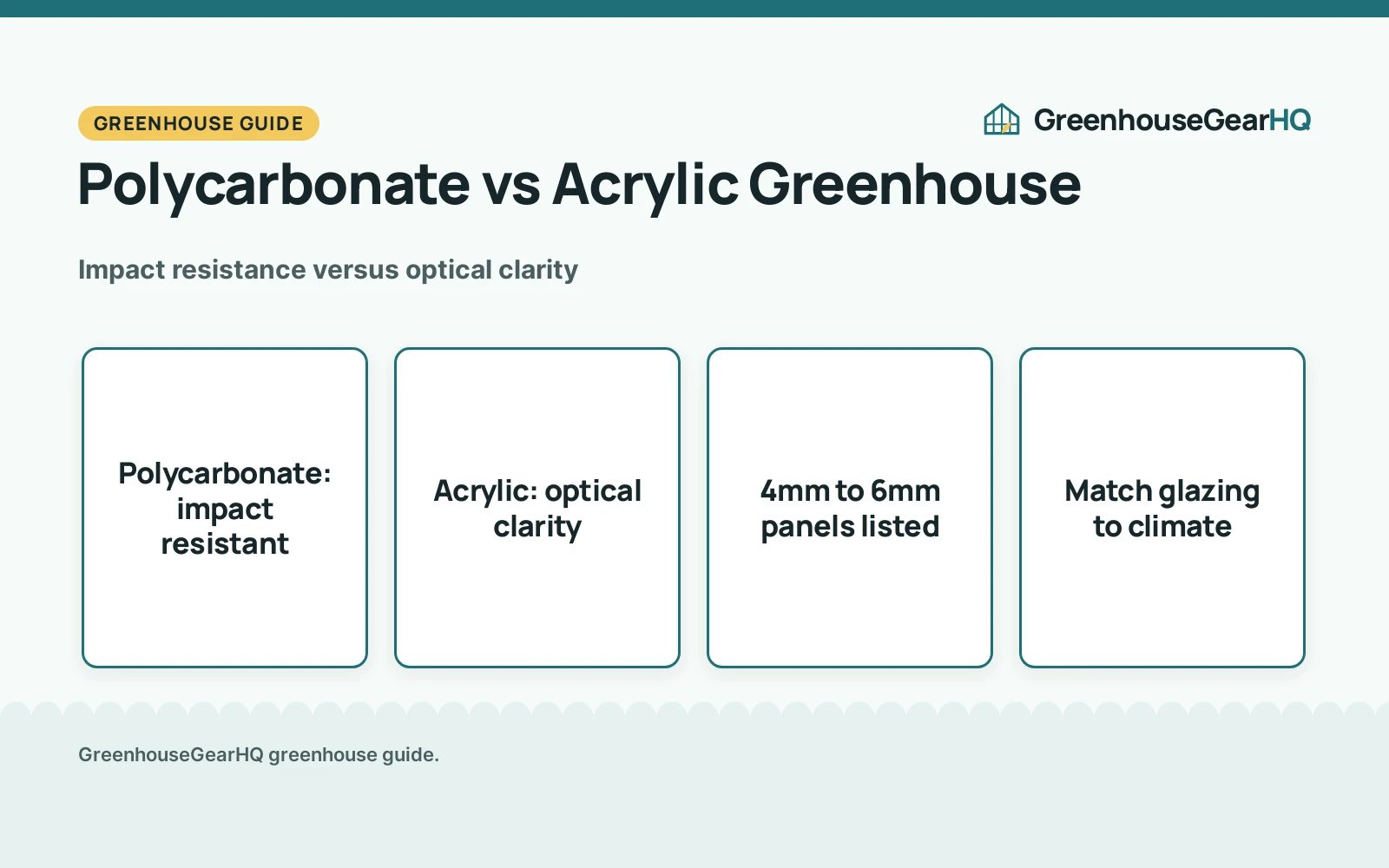
Polycarbonate greenhouses use impact-resistant twin-wall panels that insulate and diffuse light; acrylic greenhouses use clearer, more rigid sheets with better optical clarity. Pick polycarbonate for durability, insulation and hail country; pick acrylic for maximum clarity and a glass-like look. This guide compares the two, with concrete figures from the polycarbonate listings.
Other options worth a look
 YITAHOME 6x16FT Polycarbonate Greenhouse Large Heavy DutyCheck price on Amazon
 8 x 10 FT Outdoor Polycarbonate GreenhouseCheck price on Amazon
 Outsunny 6 x 8 FT Walk-in Polycarbonate Greenhouse forCheck price on Amazon
 Outsunny 6 x 4 FT Walk-in Polycarbonate Greenhouse forCheck price on Amazon
 Outsunny 6 x 10 FT Walk-in Polycarbonate Greenhouse forCheck price on Amazon
 Outsunny 8' x 6' Greenhouse for OutdoorsCheck price on Amazon
GreenhouseGearHQ earns a commission when you buy through links on this site, at no extra cost to you. As an Amazon Associate I earn from qualifying purchases. Affiliate disclosure.
Polycarbonate vs acrylic greenhouse: what each one is
Polycarbonate is the workhorse glazing of modern greenhouse kits: twin-wall or multi-wall sheets with air channels between the faces, which insulate while letting light through. Acrylic, also called plexiglass, is a cast or extruded sheet prized for optical clarity, closer to glass than any other plastic. Both beat glass on weight and shatter resistance; they differ in insulation, clarity and cost.
Polycarbonate: impact resistance and insulation
The listings show polycarbonate in force. The YITAHOME 6x16FT greenhouse uses 4mm panels with 99% UV protection; the 10×12 and 8×14 foot greenhouses list 4mm thick, 580g double-wall panels; a 6-piece panel set lists 0.24-inch sheets with 90% light transmittance and 99% UV block; and the Sinimaka 10-pack of 8 by 4-foot panels lists 0.24-inch twin-wall with 99.9% UV block and 89% light transmission. Twin-wall construction traps air between the faces, which insulates better than a single sheet, and polycarbonate’s impact resistance shrugs off hail that would shatter glass or crack acrylic.
Acrylic: optical clarity
Acrylic’s case is clarity. It transmits light with less haze than twin-wall polycarbonate and holds a glass-like look for years, where polycarbonate can yellow with age unless UV-coated. The trade: acrylic is typically a single sheet, so it insulates less than twin-wall polycarbonate, and it costs more per square foot. No acrylic greenhouse kits appear in these listings, so the comparison rests on the material’s known traits rather than stated figures.
Sizes and builds in the listings
The polycarbonate listings span hobby to serious: a 6×4-foot HOOYEAH walk-in, 6×8 and 8×10-foot kits, 10×12 and 8×14-foot houses, a 6×16-foot YITAHOME, an 8 by 16-foot aluminum-framed house, and a 13 by 11-foot Backyard Discovery cedar and polycarbonate greenhouse rated for 30 inches of snow load with 15 feet of upper shelves. One 8×10-foot listing claims 40% faster assembly and 35% improved stability. Whatever the glazing, match the frame and snow rating to the site.
How to buy: thickness, transmission and snow rating
Start with panel thickness. The listings show 4mm panels on the YITAHOME 6x16FT, the 10×12 and 8×14-foot houses with 580g double-wall panels, and 6mm sheets for hail-prone sites. Thicker panels insulate better and resist hail; 4mm suits mild climates and budget kits, while thicker sheets suit cold and hail country. Match the thickness to the weather the listing’s snow and wind figures describe.
Then compare light transmission against UV protection. The Sinimaka 10-pack of 8 by 4-foot panels lists 0.24-inch twin-wall with 99.9% UV block and 89% light transmission; a 6-piece panel set lists 0.24-inch sheets with 90% light transmittance and 99% UV block. Higher transmission means more light for plants; higher UV block means the panels last longer in the sun. The 89 to 90% range here is typical twin-wall; single-sheet acrylic would transmit more but insulate less.
Finally, size the kit and check the structure. The listings run from a 6×4-foot HOOYEAH walk-in through 6×8, 8×10 and 8×14-foot kits to a 13 by 11-foot Backyard Discovery cedar and polycarbonate house rated for 30 inches of snow load with 15 feet of upper shelves. One 8×10-foot listing claims 40% faster assembly and 35% improved stability. Pick the smallest footprint that fits the plan, then confirm the frame and snow rating suit the site before buying.
Which should you choose?
Choose polycarbonate when durability and insulation matter: the 4mm and 6mm twin-wall panels here, with 89 to 90% light transmission and 99% UV block, suit hail country and cold climates. Choose acrylic when clarity is the priority and the budget allows: a brighter, glass-like interior for display greenhouses and conservatories. For most working greenhouses, polycarbonate’s impact resistance and insulation make it the practical pick.
FAQ for growers
Which transmits more light?
The panel listings here state 89 to 90% light transmission for polycarbonate. Acrylic is generally clearer, though no acrylic figures are listed here.
Which handles hail better?
Polycarbonate: its impact resistance is the material’s signature strength, and the 4mm to 6mm sheets here suit hail-prone sites.
Does polycarbonate insulate?
Twin-wall sheets trap air between faces, which insulates better than single-sheet acrylic. The listings here describe twin-wall and double-wall panels.
What sizes do polycarbonate kits come in?
The listings range from 6×4 feet to 13×11 feet, with 6×16 and 8×16-foot options in between.
Keep reading
See every greenhouses guide and all greenhouse climate guides.
More picks: greenhouse plastic for cold climates, polycarbonate greenhouse.