On this page
Top picks at a glance
As an Amazon Associate I earn from qualifying purchases.
- 1
 VEVOR 24-Pack 2 x 4 ft Polycarbonate Greenhouse Panels9.6/10View on Amazon
- 2
 Farm Plastic Supply 10 Mil Greenhouse Film9.8/10View on Amazon
- 3
 DGSL 14-Pack 4x2 ft 0.32 in Twin-Wall Polycarbonate9.6/10View on Amazon
- 4
 YITAHOME 6x16FT Polycarbonate Greenhouse Large Heavy DutyView on Amazon
- 5
 8 x 10 FT Outdoor Polycarbonate GreenhouseView on Amazon
- 6
 Outsunny 6 x 8 FT Walk-in Polycarbonate Greenhouse forView on Amazon
- 7
 Outsunny 6 x 4 FT Walk-in Polycarbonate Greenhouse forView on Amazon
- 8
 Outsunny 6 x 10 FT Walk-in Polycarbonate Greenhouse forView on Amazon
- 9
 Outsunny 8' x 6' Greenhouse for OutdoorsView on Amazon
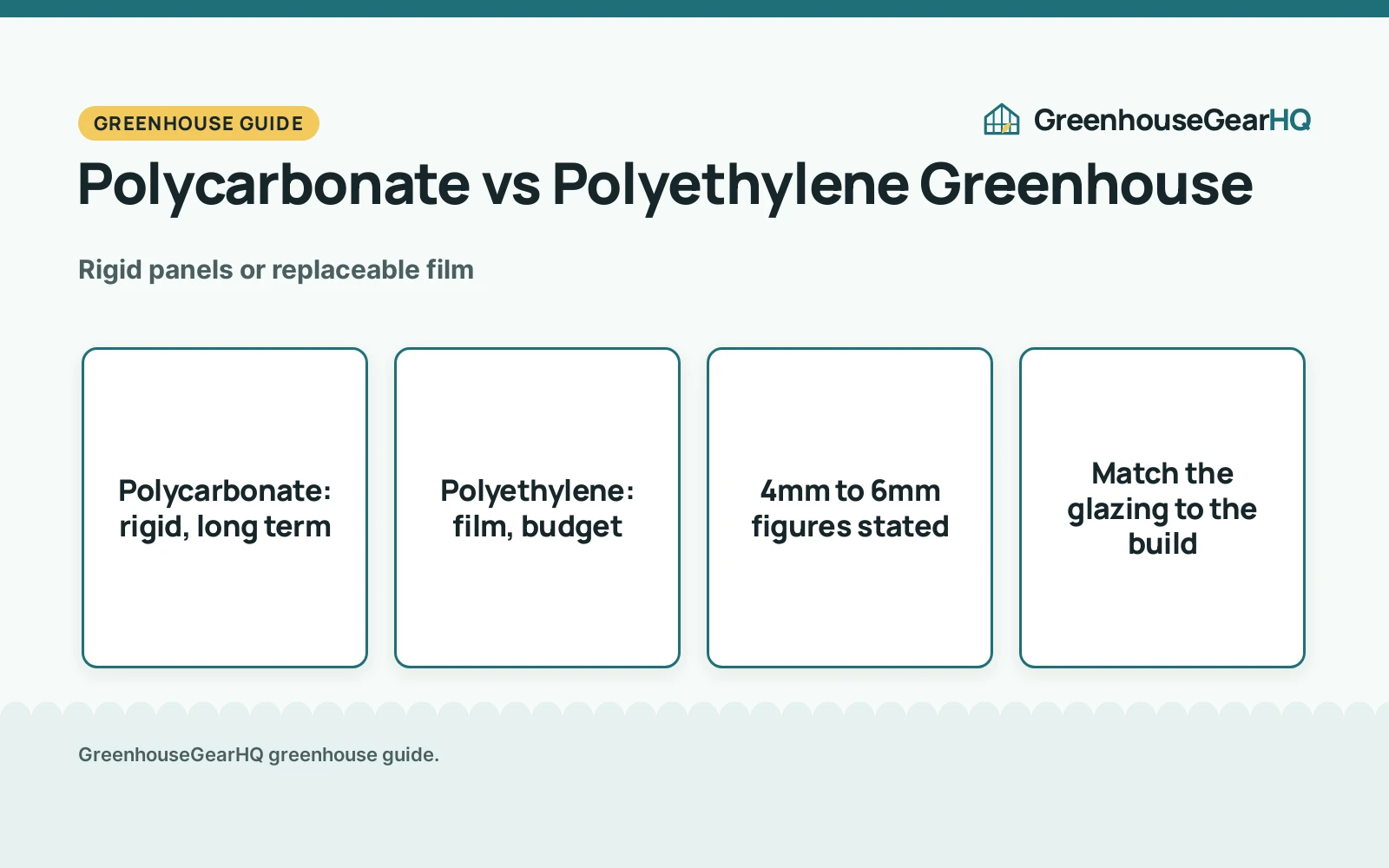
Polycarbonate vs polyethylene greenhouse: the short answer is that polycarbonate uses rigid panels that insulate and resist hail, while polyethylene uses flexible plastic film that is cheaper and easier to replace. One is a long-term build; the other is a budget-friendly cover. The reference listings show polycarbonate kits in detail; the polyethylene side is explained without figures where none are stated.
Other options worth a look
 YITAHOME 6x16FT Polycarbonate Greenhouse Large Heavy DutyCheck price on Amazon
 8 x 10 FT Outdoor Polycarbonate GreenhouseCheck price on Amazon
 Outsunny 6 x 8 FT Walk-in Polycarbonate Greenhouse forCheck price on Amazon
 Outsunny 6 x 4 FT Walk-in Polycarbonate Greenhouse forCheck price on Amazon
 Outsunny 6 x 10 FT Walk-in Polycarbonate Greenhouse forCheck price on Amazon
 Outsunny 8' x 6' Greenhouse for OutdoorsCheck price on Amazon
GreenhouseGearHQ earns a commission when you buy through links on this page, at no extra cost to you. As an Amazon Associate I earn from qualifying purchases. Affiliate disclosure.
Polycarbonate vs polyethylene greenhouse: how they differ
The difference is the skin. Polycarbonate glazing is rigid panels screwed or clipped to the frame, in single or twin-wall sheets. Polyethylene glazing is plastic film stretched over the frame and held with wiggle wire or battens. Panels last for years and insulate; film costs less up front and gets replaced when it wears.
Polycarbonate: rigid panels for the long term
Polycarbonate suits growers who want to build once. The listings show the range: the YITAHOME 6x16FT greenhouse with 4mm panels at 108.6 lbs; the Sylviera 10×12, 6×8 and 8×14-foot houses with 4mm panels and hygrometers; the Sinimaka 10-pack of 8 by 4-foot, 0.24-inch twin-wall panels at 6mm; the EVERECO 6-pack of 6 by 2-foot, 0.24-inch sheets with a 99% UV block; and the Reljofum 8 by 16-foot aluminum-framed house at 52.7 lbs with a 50 mph wind rating. Panels insulate, resist hail and hold a 50 mph rating on the Reljofum listing; the tradeoff is higher cost and heavier framing.
Choose polycarbonate when the house must last years, when hail or wind is a threat, and when insulation matters.
Polyethylene: film for budget and flexibility
Polyethylene suits growers who want the cheapest cover that works. Plastic film stretches over any frame, diffuses light well and costs far less per square foot than panels. The trade is lifespan: film degrades in UV and tears in storms, so it gets replaced every few seasons, and a single layer insulates less than twin-wall panels. No polyethylene listings appear in this data set, so check each listing for the film thickness and UV rating before buying.
Choose polyethylene when the budget is tight, when the frame is a hoop house built for film, and when replacing the cover every few years is acceptable.
How to decide: budget, lifespan and climate
Start with the budget. Film costs less up front; panels cost more but last. Then weigh the lifespan: the polycarbonate listings here are multi-year builds with 99% UV block coatings and 50 mph wind ratings, while film is a consumable. Finally, match the climate: hail and heavy snow favor rigid panels, and mild seasons favor film. For small houses, the HOOYEAH 6×4-foot walk-in and Garvee 6×10-foot listings show polycarbonate at hobby scale; for larger builds, the 8 by 16-foot Reljofum and 6×16-foot YITAHOME listings show the panel side at scale.
Which one should you buy?
| Glazing | Form | Example figure | Suits |
|---|---|---|---|
| Polycarbonate | Rigid panels | 4mm to 6mm, 99% UV block | Long-term builds, hail |
| Polycarbonate | Rigid panels | 50 mph wind rating | Exposed sites |
| Polyethylene | Plastic film | Not stated | Budget, hoop houses |
Match the glazing to the build. A permanent house leans polycarbonate: see our polycarbonate greenhouse guide for kit examples. A budget hoop house leans polyethylene; browse every greenhouse film and tape guide for film options.
FAQ for growers
How long does greenhouse polyethylene last?
Film is a consumable: UV and storms wear it, and growers typically replace it every few seasons. No polyethylene listings appear in this data set, so check the film thickness and UV rating per listing.
What wind can a polycarbonate greenhouse take?
The Reljofum 8 by 16-foot aluminum-framed listing states a 50 mph wind rating at 52.7 lbs. Anchoring matters as much as the panels; the Jiliusure 8×10-foot listing mentions ground-anchoring footings.
Is 4mm polycarbonate enough?
The listings show 4mm panels on the YITAHOME 6x16FT and the Sylviera houses, and 6mm on the Sinimaka twin-wall panels. Thicker panels insulate and resist impact better; 4mm suits mild climates and budget kits.
Which panels suit a small walk-in house?
The HOOYEAH 6×4-foot walk-in and Garvee 6×10-foot listings show polycarbonate at hobby scale, and the EVERECO 6-pack of 6 by 2-foot, 0.24-inch sheets suits small replacement jobs.
Keep reading
See every greenhouse film and tape guide and all greenhouse guides.
More picks: polycarbonate greenhouse, greenhouse plastic for cold climates, greenhouse fans.