On this page
Top picks at a glance
As an Amazon Associate I earn from qualifying purchases.
- 1
 Good Ideas 50 ft Low Pressure Soaker Hose for Rain Barrels9.7/10View on Amazon
- 2
 Vikua 1/4 Inch Drip Irrigation Tubing9.7/10View on Amazon
- 3
 Raindrip PC8010B 2 GPH Pressure Compensating DrippersView on Amazon
- 4
 Raindrip PC2050B Pressure Compensating DripperView on Amazon
- 5Raindrip PC8050B 2 GPH Pressure Compensating DrippersView on Amazon
- 6
 Rain Bird SW20-30PS Drip EmitterView on Amazon
- 7
 Rain Bird SW10-30PS Drip EmitterView on Amazon
- 8
 Raindrip PC4050B 1 GPH Pressure Compensating DrippersView on Amazon
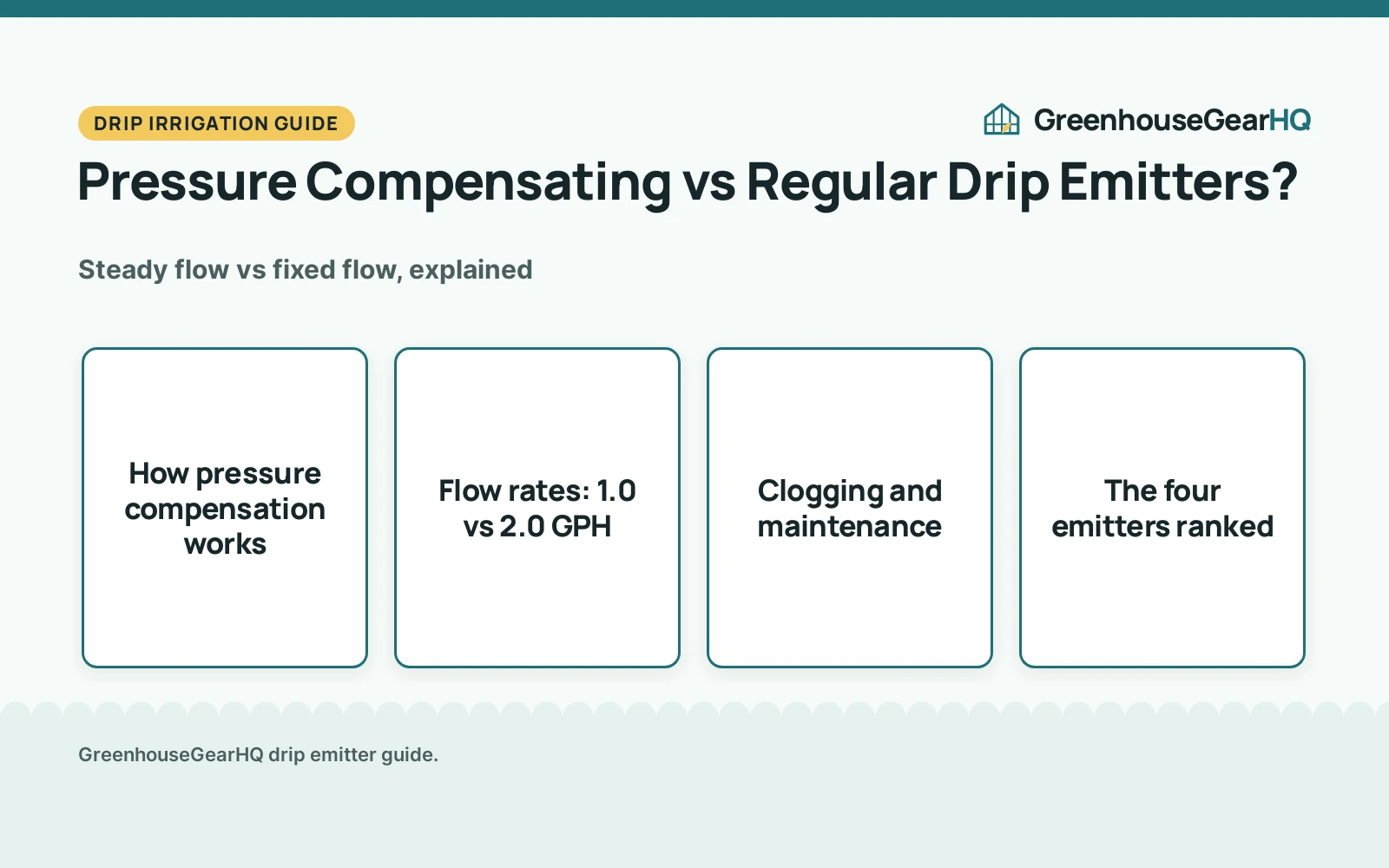
Pressure compensating vs regular drip emitters comes down to one thing: a pressure-compensating emitter keeps the same flow rate whether it sits at the start or the end of the line, while a regular emitter drips faster near the water source and slower farther out. All four emitters in this guide are pressure-compensating: the listings describe uniform flow from beginning to end of tubing runs, even on slopes and long lines. Pick pressure-compensating for uneven terrain or long runs; regular emitters suit short, flat lines where pressure barely changes.
Other options worth a look
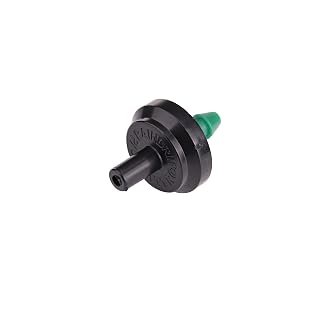 Raindrip PC8010B 2 GPH Pressure Compensating DrippersCheck price on Amazon
 Raindrip PC2050B Pressure Compensating DripperCheck price on Amazon
- Raindrip PC8050B 2 GPH Pressure Compensating DrippersCheck price on Amazon
 Rain Bird SW20-30PS Drip EmitterCheck price on Amazon
 Rain Bird SW10-30PS Drip EmitterCheck price on Amazon
 Raindrip PC4050B 1 GPH Pressure Compensating DrippersCheck price on Amazon
GreenhouseGearHQ earns a commission when you buy through links on this page, at no extra cost to you. As an Amazon Associate I earn from qualifying purchases. Affiliate disclosure.
Pressure compensating vs regular drip emitters: how they differ
A regular drip emitter is a fixed hole: more pressure pushes more water through, so the first emitter on the line drips fastest and the last drips slowest. A pressure-compensating emitter has an internal mechanism that holds the flow steady across a pressure range. The LiquiDrip and Spalolen listings state 10-60 PSI working pressure with a constant 2 GPH flow; the Rain Bird listings describe the same uniform flow from beginning to end of tubing runs. On a slope or a long greenhouse bench, that steadiness is the whole point.
Flow rates in this guide
The Rain Bird SW20-30PS delivers 2.0 gallons per hour and the SW10-30PS delivers 1.0 gallon per hour, both in 30-packs with a self-piercing design for 1/4-inch drip tubing. The LiquiDrip and Spalolen both state 2 GPH, with the Spalolen adding self-cleaning and a 30-piece count. Match the flow rate to the plant: 1 GPH for small pots, 2 GPH for larger containers and thirsty plants. All four state slow watering that lets soil absorb water in the root zone.
Clogging and maintenance
The Rain Bird listings cite large water passages and self-flushing action to help prevent clogging. The Spalolen lists self-cleaning constant flow. Pressure-compensating emitters have more internal parts than a plain hole, so a filter on the line is good practice, though none of the listings states one. Flush the lines at season start and check the farthest emitters first.
The four emitters, ranked
Ranked by stated specs: the Rain Bird SW20-30PS leads with 2.0 GPH, 30-pack and self-piercing design; the SW10-30PS matches it at 1.0 GPH for smaller watering needs. The Spalolen 30-piece set adds self-cleaning at 2 GPH and 10-60 PSI, and the LiquiDrip states the same 2 GPH at 10-60 PSI. All four are pressure-compensating; none of the listings here describes a regular emitter, so the regular side is covered in prose above.
Buying advice: matching emitters to your setup
Start with flow rate. The listings here offer 1.0 and 2.0 GPH, and the Spalolen line also comes in 0.5 GPH for delicate flowers, with the maker pointing medium flow at vegetables and higher flow at trees or shrubs. If you grow a mix, the 2 GPH Rain Bird SW20-30PS and Spalolen suit thirsty plants and larger containers, while the 1.0 GPH Rain Bird SW10-30PS fits small pots. Next, check your pressure: the LiquiDrip and Spalolen state a 10-60 PSI working range, while the Rain Bird spec tables list a 50 psi maximum, so a regulator set inside those windows keeps every emitter in its compensating range. For installation, all four work with 1/4-inch drip tubing; the Rain Birds self-pierce into it or insert into 1/2-inch or larger tubing, the Spalolen outlet also supports a 1/8-inch micro extension tube for reaching individual pots, and the LiquiDrip fits 1/4-inch tube with a 0.17-inch inner diameter. Count your plants against the pack sizes: the Rain Birds and Spalolen come 30 to a pack, the LiquiDrip 50 to a bag. The Spalolen lists 2 ports per emitter for splitting a run, and its UV-resistant plastic is stated for year-round outdoor use.
What this guide does not cover
We do not cover drip tubing, filters, timers or pressure regulators; size those to your water source. We also do not cover soaker hoses or microsprinklers, which water differently. For full kits, see our best drip irrigation kit for greenhouse roundup.
FAQ for growers
Do I need pressure-compensating emitters?
For slopes, long runs or uneven beds, yes: they hold flow steady where regular emitters would vary. For a short flat bed, regular emitters work fine.
What flow rate should I pick?
The listings here offer 1.0 and 2.0 GPH. Use 1 GPH for small pots and 2 GPH for larger containers, per the makers’ sizing.
What pressure do these need?
The LiquiDrip and Spalolen state 10-60 PSI working pressure. The Rain Birds state no PSI range, so check your regulator.
How do I stop emitters clogging?
The listings cite self-flushing and self-cleaning designs. A filter on the line and a season-start flush help; the farthest emitters clog first.
Keep reading
See our best drip irrigation kit for greenhouse and best drip irrigation for square foot garden.
More picks: drip irrigation for beans, drip irrigation for blueberries.