On this page
Top picks at a glance
As an Amazon Associate I earn from qualifying purchases.
- 1
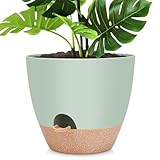 YNNICO 12 Inch Large Self Watering Plant Pot for Indoor9.5/10View on Amazon
- 2
 Giraffe Tools Garden Hose 5/8 Inch9.8/10View on Amazon
- 3
 D'vine Dev Self Watering Terracotta Planter PotView on Amazon
- 4
 6 inch self watering pot with clear nursery pot insideView on Amazon
- 5
 AC Infinity Self-Watering Fabric Pot BaseView on Amazon
- 6
 AC Infinity Self-Watering Fabric Pot Base XLView on Amazon
- 7
 D'vine Dev Self-Watering White Terracotta Planter PotView on Amazon
- 8
 Back to the Roots Self-Watering Terracotta Olla PotView on Amazon
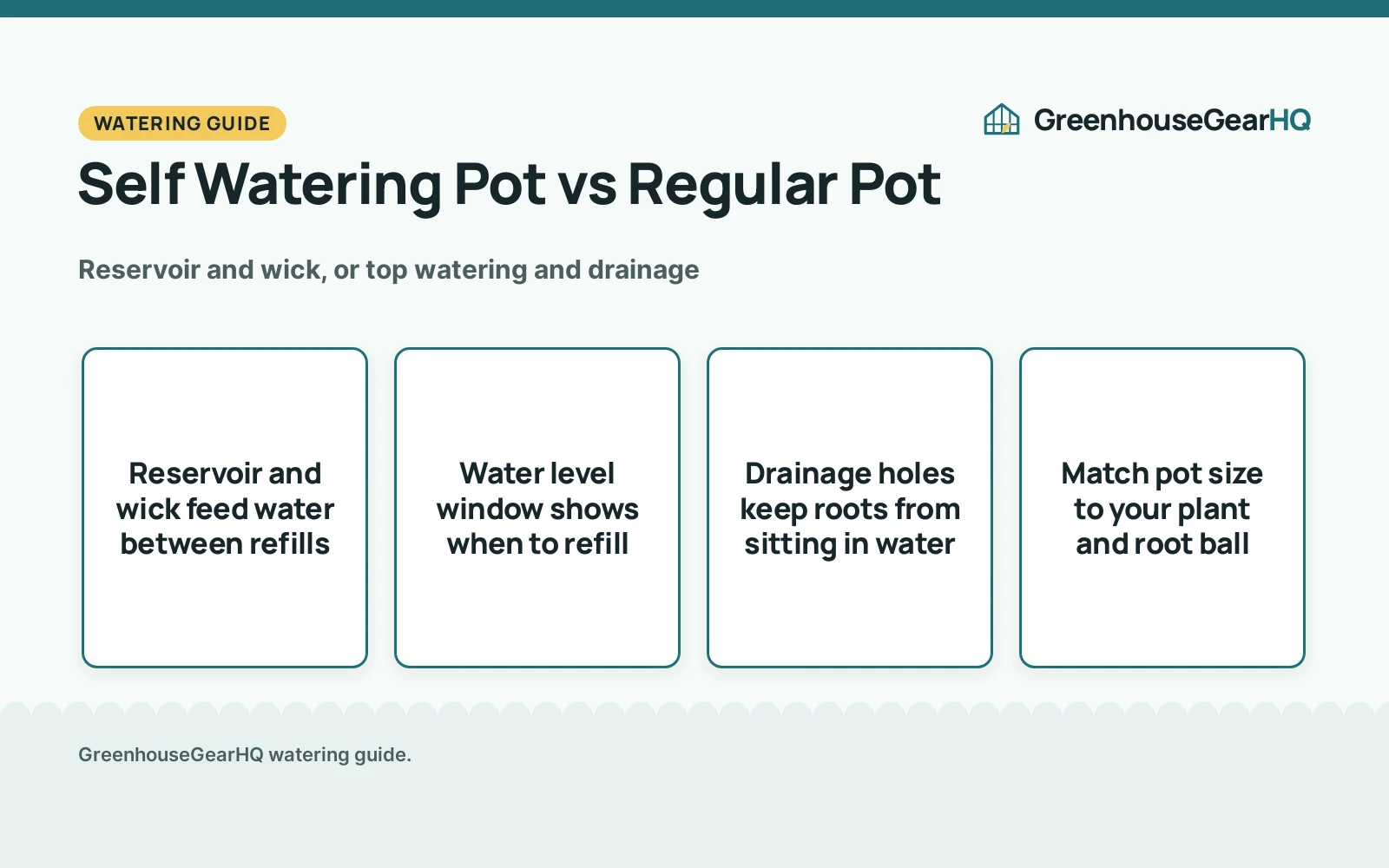
A plant that dries out between waterings wilts, and a plant that sits in water rots, so the self watering pot vs regular pot choice decides how much margin you have between waterings. The difference is where the water lives: a self watering pot holds water in a reservoir under the soil and feeds it up through a wick, while a regular pot takes water from the top. Pick a self watering pot for steady moisture with fewer trips to the can, and a regular pot for full drainage you can flush through.
Other options worth a look
 D'vine Dev Self Watering Terracotta Planter PotCheck price on Amazon
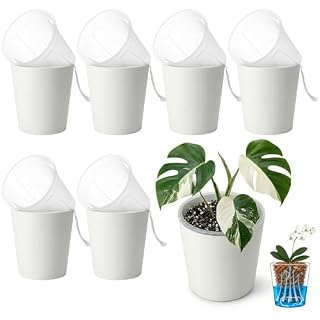 6 inch self watering pot with clear nursery pot insideCheck price on Amazon
 AC Infinity Self-Watering Fabric Pot BaseCheck price on Amazon
 AC Infinity Self-Watering Fabric Pot Base XLCheck price on Amazon
 D'vine Dev Self-Watering White Terracotta Planter PotCheck price on Amazon
 Back to the Roots Self-Watering Terracotta Olla PotCheck price on Amazon
GreenhouseGearHQ earns a commission when you buy through links on this page, at no extra cost to you. As an Amazon Associate I earn from qualifying purchases. Affiliate disclosure.
Self watering pot vs regular pot: how each one waters
A self watering pot waters from below. Each pot in this guide pairs a reservoir with a wick: the Fielda set uses cotton wicks to draw water from the bottom tray into the planter, the Vandorelle pots use a cotton wick that pulls moisture from the bottom reservoir as needed, the KUGAZ pots use an absorbent wick system to deliver water directly to roots, and the QRRICA pots use a removable wick-based feeder that hydrates plants for up to 2 weeks. The wick keeps the soil moist without daily watering.
A regular pot waters from above. You pour water on the soil surface, and the extra runs out through drainage holes in the base. There is no reservoir to refill and no wick to keep wet, so the soil dries between waterings and you decide each time how much to add. That makes a regular pot easy to flush through, and easy to empty for a plant that needs a dry rest.
The self watering pots in this guide
The pots below all work the same way, a reservoir plus a wick, and they differ in size, window and extras.
| Pot | Stated sizes | Wick and reservoir | Drainage |
|---|---|---|---|
| Fielda set | 8, 10 and 12 inch | Cotton wicks from bottom tray | Drainage holes link pot and tray |
| Vandorelle 10 pack | 3 inch | Cotton wick from bottom reservoir | Ventilation holes support airflow |
| KUGAZ 3 pack | 12, 10 and 8 inch | Absorbent wick system to roots | Drainage holes and breathable structure |
| QRRICA 5 pack | 7/7.5/8/9/10 inch | Removable wick feeder, up to 2 weeks | Mesh drainage holes and saucers |
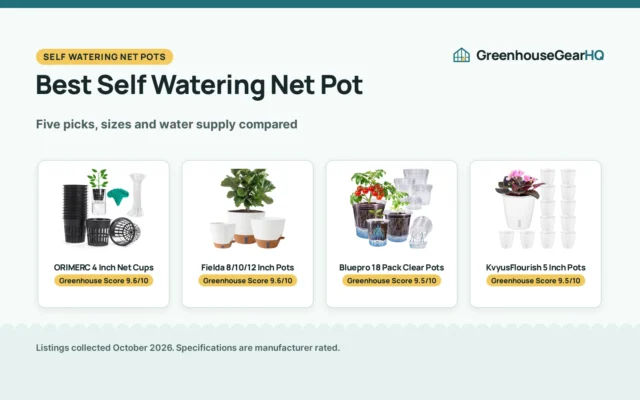
The Fielda set includes 8, 10 and 12 inch planters, measured by top diameter, with a deep reservoir and a transparent window with clear measurement markings. The usable planting depth is smaller than the overall planter height at 5.8, 6.1 and 7.6 inch, and the set suits 4 to 6, 6 to 8 and 8 to 10 inch nursery pots. Each pot has a detachable saucer tray, and the holes linking pot and tray allow watering, drainage and airflow.
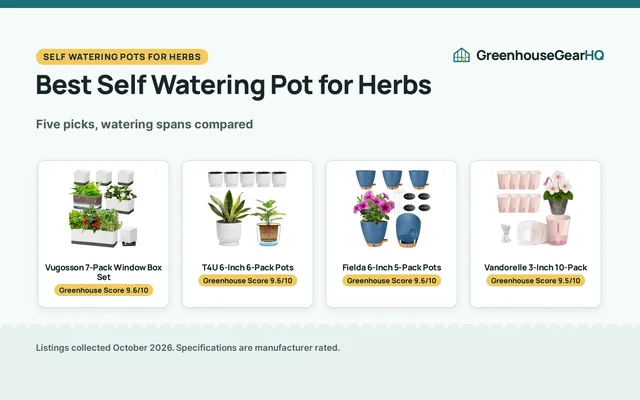
The Vandorelle 10 pack is a 3 inch pot, 3.3 inch tall, made for cuttings, seedlings and small plants such as African violets and herbs like basil, mint, cilantro and thyme. Each pot has a clear inner cup for watching root growth, a side window for the reservoir level, and one extra 3ft wick cord. Top ventilation holes double as watering ports, so you can refill without removing the pot.
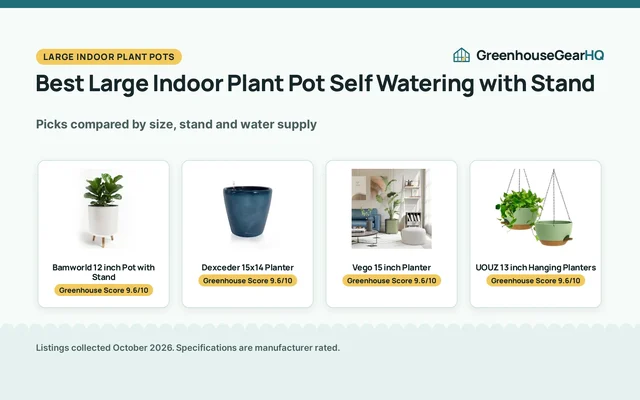
The KUGAZ 3 pack includes 12, 10 and 8 inch plant pots with a deep reservoir and a visible water level indicator. The wick system delivers water directly to roots, and the pots have drainage holes and a breathable structure to promote airflow and prevent root rot. The set suits large indoor plants such as monstera, fiddle leaf fig and ZZ plant.
The QRRICA 5 pack spans 7/7.5/8/9/10 inch pots in green, with a cotton wick and removable saucers. The wick-based feeder hydrates plants for up to 2 weeks, and mesh drainage holes with saucers prevent flooding and protect surfaces from excess moisture. The pots are lightweight and shatterproof, per the listing.
When a regular pot is the better pick
Choose a regular pot when you want the soil to dry fully between waterings, or when the plant needs a dry rest that a reservoir would prevent. A regular pot also suits plants that dislike wet soil, since no water is stored under the roots. A self watering pot suits the opposite case: a plant that likes steady moisture, a shelf you cannot reach every day, and a trip away from home.
How to use a self watering pot
Fill the reservoir, not the soil surface, and let the wick carry water up as the soil dries. Watch the water level window on the Fielda tray, the Vandorelle side window, or the KUGAZ transparent window. Refill through the top on the Vandorelle pots, where the ventilation holes double as watering ports. Check the level before a trip away, since the QRRICA feeder hydrates plants for up to 2 weeks.
What to check before you buy
Measure first. The Fielda set warns that the usable planting depth is smaller than the overall planter height, at 5.8, 6.1 and 7.6 inch against 8, 10 and 12 inch top diameters, and it recommends 4 to 6, 6 to 8 and 8 to 10 inch nursery pots. The Vandorelle pots are 3 inch wide and 3.3 inch tall, made for small or shallow root systems. Match the pot to the plant: a pot that is too large holds wet soil around small roots, and a pot that is too small dries fast.
Also check where the pot will live. The Fielda, KUGAZ and QRRICA sets suit indoor and outdoor plants, while the Vandorelle pots suit indoor setups at home or in office environments. The Fielda plastic is resistant to cracking, fading and high temperatures, per the listing.
What this guide does not cover
This guide does not give watering schedules, because they depend on the plant, the pot size and the room. Your plant label and the pot maker give those figures. Fertilizer and pest products are outside this guide; follow the product label.
FAQ for growers
Can a self watering pot overwater plants?
A reservoir keeps water under the soil, so a plant that needs a dry rest can stay too wet in a self watering pot. The listings in this guide pair the reservoir with drainage: the Fielda holes link pot and tray, the KUGAZ pots have drainage holes and a breathable structure, and the QRRICA pots have mesh drainage holes with saucers. Match the pot to plants that like steady moisture, and use a regular pot for plants that need a dry rest.
How long can a self watering pot go without refilling?
It depends on the reservoir and the plant. The QRRICA wick-based feeder hydrates plants for up to 2 weeks, per the listing. For the other pots, watch the water level window and refill when it drops.
Do self watering pots work for seedlings and cuttings?
Yes, at the small end. The Vandorelle 3 inch pots suit cuttings, seedlings and small plants, with a clear inner cup for watching root growth, and the set includes one extra 3ft wick cord. The Fielda set recommends 4 to 6 inch nursery pots for its 8 inch planter.
What size self watering pot do I need?
Match the pot to the plant and the root ball. The Vandorelle pots are 3 inch wide and suit small or shallow root systems, the Fielda set spans 8, 10 and 12 inch planters for 4 to 6, 6 to 8 and 8 to 10 inch nursery pots, and the KUGAZ set spans 12, 10 and 8 inch pots for large indoor plants. Measure your current pot or root ball before ordering, as the Fielda listing directs.
Keep reading
See every greenhouse ventilation and watering guide and all planters and pots guides. Also see best water timer for vacation. Also see best self watering net pot. Also see best self watering seedling trays. Also see best watering can for pots.
More picks: water timer for vacation, self watering net pot and watering can for pots.