On this page
Top picks at a glance
As an Amazon Associate I earn from qualifying purchases.
- 1
 EAGLE PEAK 8x8 Pop Up Greenhouse9.8/10View on Amazon
- 2
 Grezone Walk-in Greenhouse Upgraded Green House with DualView on Amazon
- 3
 8X14FT Green House with ThermometersView on Amazon
- 4Grezone Walk-in Greenhouse Upgraded Green House with ZipperedView on Amazon
- 5
 Mini Greenhouse Tunnel Greenhouses for OutdoorsView on Amazon
- 6
 Mini Greenhouse for IndoorView on Amazon
- 7
 TempPro TempAir Bluetooth Hygrometer Thermometer for HouseView on Amazon
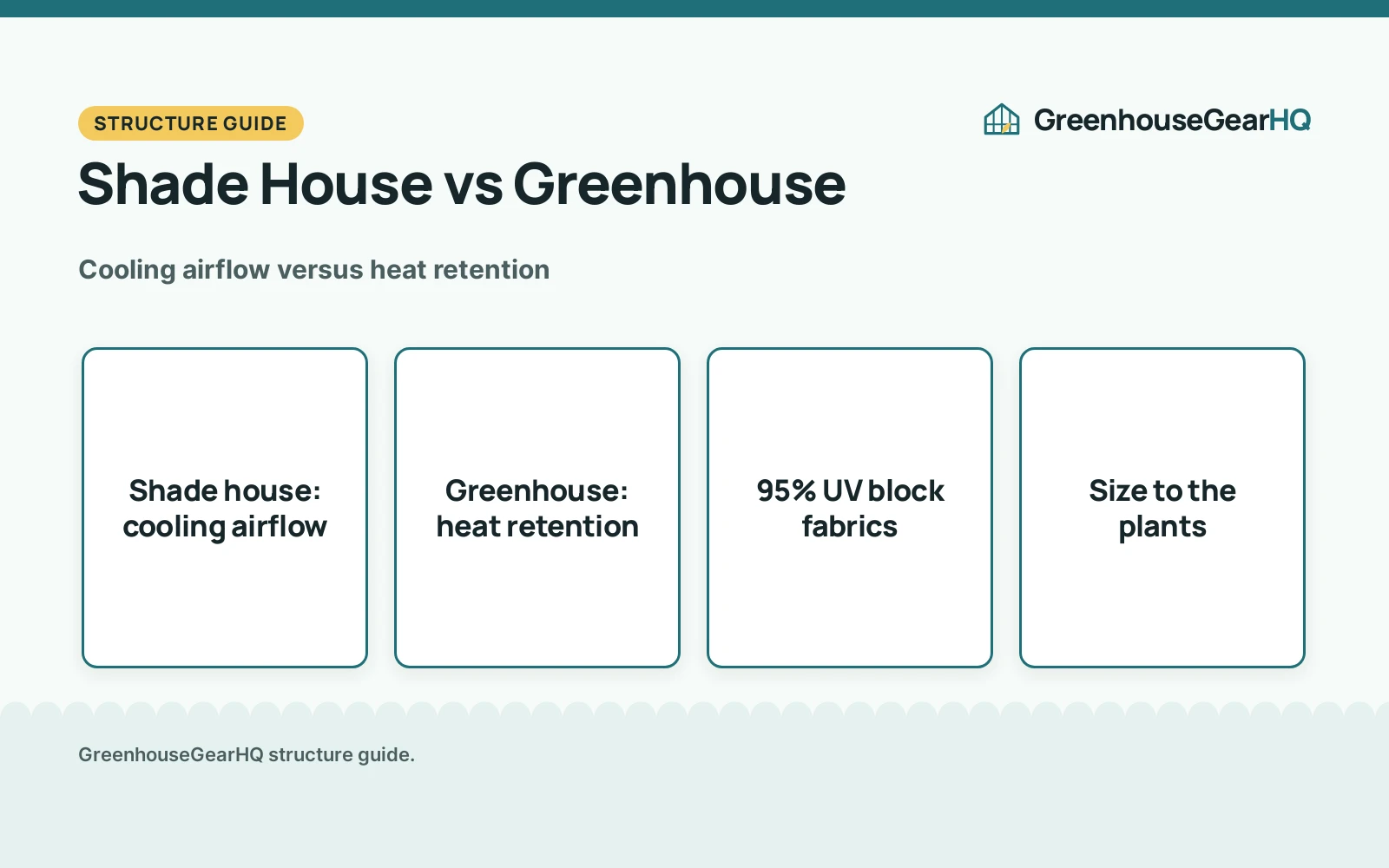
A shade house is an open structure covered with shade cloth that cuts sunlight and heat while letting air flow through; a greenhouse is an enclosed structure that traps heat and extends the growing season. Pick a shade house for cooling airflow in hot climates; pick a greenhouse for heat retention and year-round growing. This guide explains each structure, with concrete figures from the listings.
Other options worth a look
 Grezone Walk-in Greenhouse Upgraded Green House with DualCheck price on Amazon
 8X14FT Green House with ThermometersCheck price on Amazon
- Grezone Walk-in Greenhouse Upgraded Green House with ZipperedCheck price on Amazon
 Mini Greenhouse Tunnel Greenhouses for OutdoorsCheck price on Amazon
 Mini Greenhouse for IndoorCheck price on Amazon
 TempPro TempAir Bluetooth Hygrometer Thermometer for HouseCheck price on Amazon
GreenhouseGearHQ earns a commission when you buy through links on this site, at no extra cost to you. As an Amazon Associate I earn from qualifying purchases. Affiliate disclosure.
Shade house vs greenhouse: how they differ
The difference is the envelope. A shade house wears a porous skin: shade cloth or sails that block a stated percentage of UV while air moves freely. A greenhouse wears a solid skin: panels or film that hold warmth in and weather out. The listings here show the shade side in detail: the AsterOutdoor sail is 10 by 13 feet, 100% high-density 185GSM fabric with a 95% UV block; the SUNNY GUARD sail matches at 10 by 13 feet and 95% UV block; the SUNLAX sail is 8 by 10 feet with a 90 to 95% shading rate.
The shade house: cooling airflow
Shade houses suit hot climates where the problem is too much sun, not too little warmth. The fabric does the work: 95% UV block on the AsterOutdoor and SUNNY GUARD sails, 90 to 95% shading rate on the SUNLAX sail, and 99% of harmful UV rays blocked on the COOS BAY 11 by 11 pop-up gazebo with netting. Because the cover breathes, heat escapes instead of building up, and plants get airflow that an enclosed house cannot offer. Screen-house tents like the Alvantor pop-up models add insect netting to the shade equation.
The greenhouse: heat retention
Greenhouses suit cool climates and shoulder seasons, where the problem is keeping warmth in. A solid cover traps solar heat, raising the inside temperature above ambient and extending the season on both ends. No greenhouse kits appear in these listings, so the comparison rests on the principle: where a shade house cools, a greenhouse warms. Growers in mild climates sometimes use both, hardening plants off in the shade house before moving them under cover.
Sizing and setup
Size the structure to the plants, not the yard. The listings show the range: an 8 by 10-foot SUNLAX sail for a small bed, 10 by 13-foot sails from AsterOutdoor and SUNNY GUARD for larger areas, an 11 by 11-foot COOS BAY gazebo, and 12 by 12-foot VEVOR pop-up screen tents, one listed as fitting 8 to 10 people. Leave the 1 to 2 feet of fixing space the sail listings recommend between the sail and its anchor points, and face the long side toward the harshest sun.
How to buy: fabric, size and fixing
Start with the fabric. The AsterOutdoor listing states 100% high-density 185GSM fabric with a 95% UV block, the heaviest cover here; the SUNNY GUARD sail matches the 10 by 13-foot size and 95% UV block; the SUNLAX sail states 8 by 10 feet with a 90 to 95% shading rate. Heavier GSM means a tougher sail; a higher UV block means more cooling. Pick 95% where the sun is harshest.
Then size and fix. The listings range from an 8 by 10-foot SUNLAX sail to 10 by 13-foot AsterOutdoor and SUNNY GUARD sails, an 11 by 11-foot COOS BAY gazebo with 99% UV blocking netting, and 12 by 12-foot VEVOR pop-up screen tents, one fitting 8 to 10 people. Sails need fixing space: the AsterOutdoor listing recommends 2 feet between the sail and fixing points, and the SUNNY GUARD and SUNLAX listings recommend 1 foot. Measure the bed, add the fixing space, and face the long side toward the harshest sun.
Which should you choose?
Choose a shade house when heat is the enemy: the 95% UV block fabrics here cut light and temperature while airflow keeps plants comfortable. Choose a greenhouse when cold is the enemy: an enclosed house holds warmth and stretches the season. In hot climates, a shade house with 90 to 95% shading is the simpler, cheaper build; in cool climates, only a greenhouse earns its keep. Match the structure to the climate problem you actually have.
FAQ for growers
What UV block should shade cloth have?
The listings here state 95% UV block on the AsterOutdoor and SUNNY GUARD sails, 90 to 95% shading on the SUNLAX sail, and 99% on the COOS BAY gazebo.
Can a shade house extend the season?
Barely; it cools rather than warms. Season extension is the greenhouse’s job.
Do shade sails need fixing space?
Yes. The AsterOutdoor listing recommends 2 feet between the sail and fixing points; the SUNNY GUARD and SUNLAX listings recommend 1 foot.
What size shade sail do I need?
The listings range from 8 by 10 feet to 10 by 13 feet; measure the bed and add the fixing space.
Keep reading
See every greenhouses guide and all greenhouse climate guides.
More picks: shade cloth for greenhouse roof, black vs aluminet shade cloth.