On this page
Top picks at a glance
As an Amazon Associate I earn from qualifying purchases.
- 1
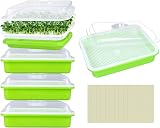 Legigo 5 Pack Seed Sprouter Trays with Lids9.6/10View on Amazon
- 2
 RooTrimmer 10 Pack Large Stainless Steel Seedling TraysView on Amazon
- 3
 10-Pack 16 Inch Stainless Steel Growing TraysView on Amazon
- 4
 2 SetView on Amazon
- 5
 RooTrimmer 5 Pack Large Stainless Steel Seedling TraysView on Amazon
- 6
 RooTrimmer Stainless Steel Plant TraysView on Amazon
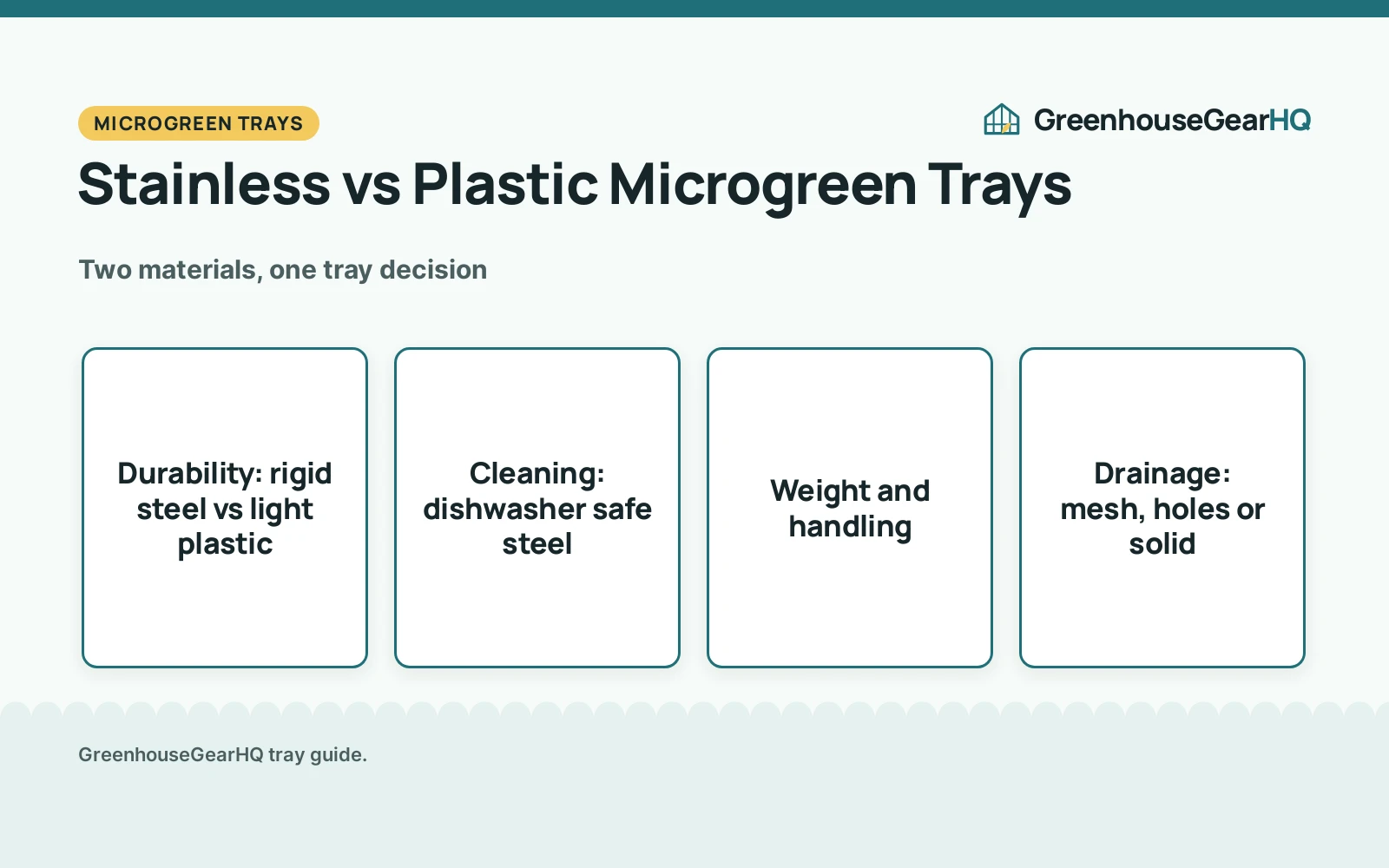
Stainless vs plastic microgreen trays comes down to how long you want the tray to last and how you clean it: stainless steel trays are rigid, rust-resistant and dishwasher safe, while plastic trays are lighter and easier to replace. Both grow the same greens. This guide compares the two materials on durability, cleaning, weight and drainage, using tray sizes and features from current listings, so you can pick the material that fits how you grow.
Other options worth a look
 RooTrimmer 10 Pack Large Stainless Steel Seedling TraysCheck price on Amazon
 10-Pack 16 Inch Stainless Steel Growing TraysCheck price on Amazon
 2 SetCheck price on Amazon
 RooTrimmer 5 Pack Large Stainless Steel Seedling TraysCheck price on Amazon
 RooTrimmer Stainless Steel Plant TraysCheck price on Amazon
GreenhouseGearHQ earns a commission when you buy through links on this page, at no extra cost to you. As an Amazon Associate I earn from qualifying purchases. Affiliate disclosure.
Stainless vs plastic microgreen trays: the short answer
Choose stainless steel if you want trays that survive season after season and go in the dishwasher. Choose plastic if you want the lighter trays to carry and stack, and you are happy to replace them when they crack. The table sums up the tradeoff.
| Material | Durability | Cleaning | Weight | Drainage options |
|---|---|---|---|---|
| Stainless steel | Rigid, will not crack; rust-resistant | Dishwasher safe on most listings | Heavier; e.g. 1.26 kg for a 6-pack of WBCBEC trays | Mesh trays, holed or solid |
| Plastic | Light but can crack with age and sun | Hand wash; check the listing | Lighter to carry and stack | Holed, solid or mesh inserts |
Where stainless wins
Stainless trays are built to be bought once. The RooTrimmer listing contrasts its metal trays with flimsy plastic ones that crack, and the WBCBEC listing says its trays will not crack in the sun like plastic. The SOLIGT kit lists 304 stainless steel, and the TCYPUHL and Amarys Hearth listings state their trays are dishwasher safe, which makes cleanup between plantings simple. Sizes run from the 6-inch round YARRD kit to 13.78 by 10.24 inch WBCBEC trays and 17.5 by 13.56 inch RooTrimmer trays, so the material does not limit your footprint.
Stainless also suits growers who reuse trays hard. The RooTrimmer 10-pack is aimed at large gardens and farms, and several listings describe season-after-season reuse with a simple wipe between plantings. If you run trays continuously, that reusability is the whole argument.
Where plastic still makes sense
Plastic wins on handling. A tray you lift, stack and slide under lights every day is nicer when it weighs less, and a cracked plastic tray is cheap to swap for a fresh one. Plastic also dominates the standard nursery sizes, so domes, heat mats and racks sized for plastic trays fit without measuring. If you are still deciding on trays generally, our best microgreen growing trays guide compares kits and trays of both materials.
What to check before you buy
Material is only the first decision. Check the tray size against your shelf: the TCYPUHL kits use 10.4 by 7.67 inch trays, the WBCBEC 6-pack measures 13.78 by 10.24 inches, and the RooTrimmer trays are 17.5 by 13.56 inches. Then check drainage: the SOLIGT kit uses fine mesh trays that drain freely, while the RooTrimmer trays have no holes and hold water, which suits bottom-watering setups. For seed-starting workflows beyond microgreens, see seed starting trays for microgreens.
What this guide does not cover
This guide compares tray materials. It does not give sowing rates, watering schedules or harvest timing: take those from the seed packet and your own notes, and adjust for your light and temperature. Every seed starting guide on the site is collected in our seed starting section.
FAQ for growers
Do microgreen trays need drainage holes?
It depends on the method. The SOLIGT kit uses mesh trays that drain freely, while the RooTrimmer trays have no holes and are made to hold water.
Are stainless steel trays dishwasher safe?
The TCYPUHL and Amarys Hearth listings state their stainless trays are dishwasher safe. Check the listing for any tray you buy, since not every maker states it.
What size are microgreen trays?
The listings here range from a 6-inch round YARRD kit to 13.78 by 10.24 inch WBCBEC trays and 17.5 by 13.56 inch RooTrimmer trays. Measure your shelf before ordering.
Can I grow microgreens without soil?
Yes. The Amarys Hearth kits are soil-free sprouting sets that use mesh pads, and the SOLIGT kit sprouts on mesh trays with a cover for warmth and moisture.
Keep reading
See every seed starting trays guide and all seed starting guides.
More picks: microgreen growing trays, trays for microgreens and seed sprouter review.