On this page
Top picks at a glance
As an Amazon Associate I earn from qualifying purchases.
- 1
 SereneLife Portable Swamp Cooler9.6/10View on Amazon
- 2
 Swamp Cooler TabletsView on Amazon
- 3
 Uthfy 3000CFM Swamp Cooler Air ConditionerView on Amazon
- 4
 BRODYS Swamp Cooler Tablets for Evaporative CoolersView on Amazon
- 5
 4-in-1 Evaporative Air CoolerView on Amazon
- 6
 SereneLife Portable Air Cooler with 3200 CFM PowerView on Amazon
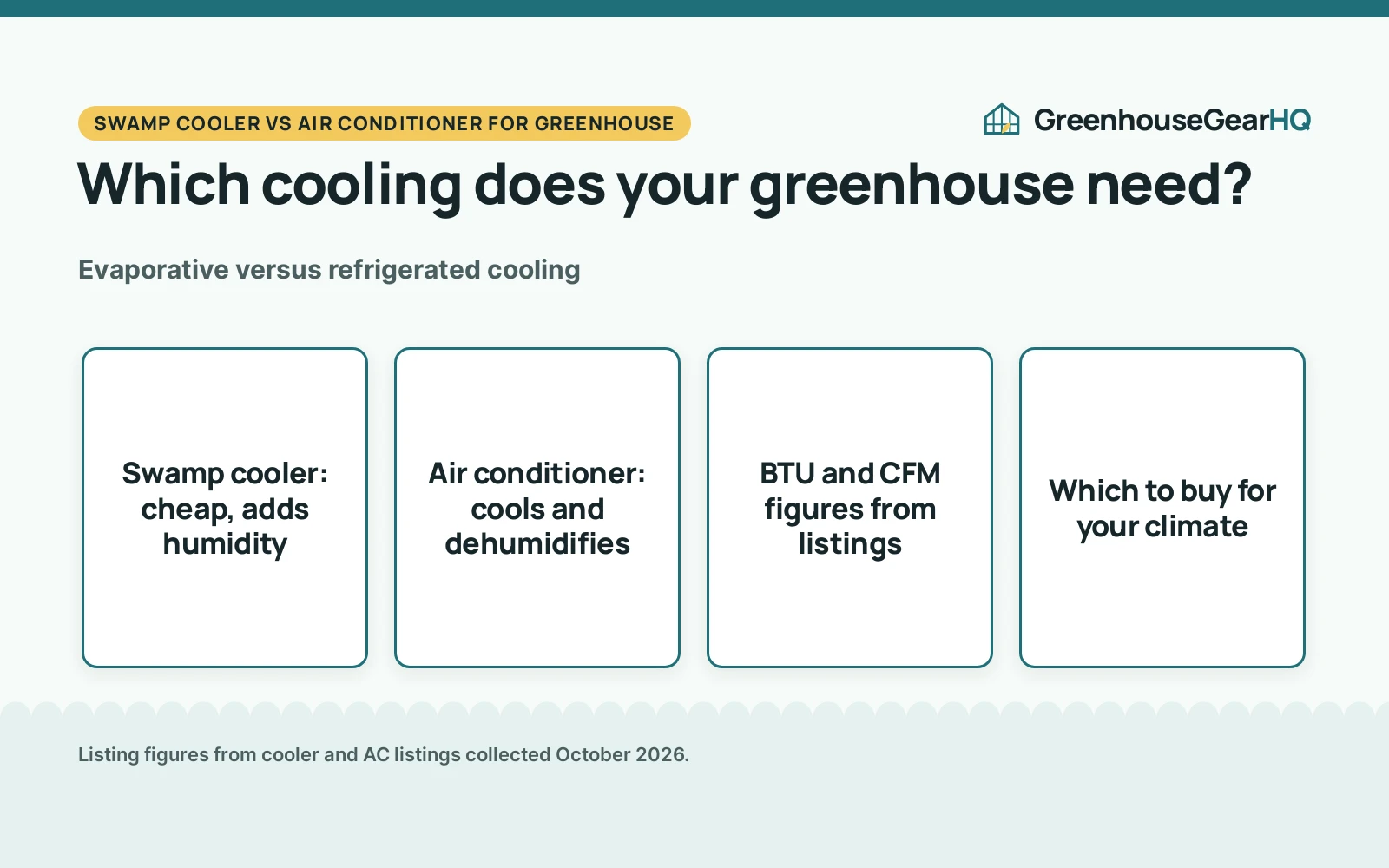
Swamp cooler vs air conditioner for greenhouse is the humidity question first, the power bill second. A swamp cooler cools by evaporating water: cheap to run, but it adds humidity. An air conditioner cools by refrigeration: it dehumidifies while it cools, but it costs more to buy and run. In a dry climate, a swamp cooler is the obvious pick. In a humid climate, it is an air conditioner or nothing.
Other options worth a look
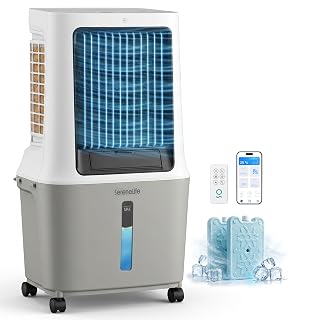 SereneLife Portable Swamp Cooler Air ConditionerCheck price on Amazon
 Swamp Cooler TabletsCheck price on Amazon
 Uthfy 3000CFM Swamp Cooler Air ConditionerCheck price on Amazon
 BRODYS Swamp Cooler Tablets for Evaporative CoolersCheck price on Amazon
 4-in-1 Evaporative Air CoolerCheck price on Amazon
 SereneLife Portable Air Cooler with 3200 CFM PowerCheck price on Amazon
GreenhouseGearHQ earns a commission when you buy through links on this page, at no extra cost to you. As an Amazon Associate I earn from qualifying purchases. Affiliate disclosure.
What a swamp cooler does
A swamp cooler, or evaporative cooler, pulls hot air through wet pads and blows out cooler, moister air. The listings we compared show the range: the Hessaire MC37M moves 3100 CFM; the SereneLife portable moves 2500 CFM with an 8-gallon water tank; the Uthfy moves 3000 CFM with a 7.0-gallon detachable tank, 120-degree oscillation and a 12-hour timer, with dual tanks for 30 hours of cooling.
Cheap to run, adds humidity
Evaporative cooling uses a fan and a pump, so the power draw is small. But every gallon evaporated goes into the greenhouse air. In a dry climate that is a bonus; in a humid one it invites mildew.
Needs dry air and water
Swamp coolers work when the air is dry enough to absorb water. The 7 to 8 gallon tanks in these listings show the water appetite: plan on refilling, or plumb a line.
What an air conditioner does
An air conditioner refrigerates: it cools and dehumidifies at the same time. The listings show the BLACK+DECKER portable at 10,000 BTU for rooms up to 450 square feet, a 3-in-1 AC, fan and dehumidifier; the VIVOSUN AeroLush C08 at 8000 BTU built for grow tents with temperature and humidity sensing; and the Comfort Temps mini split at 9000 BTU and 19 SEER.
Cools and dries
Refrigerated cooling pulls moisture out of the air as it cools. For a greenhouse fighting summer humidity, that dehumidifying side is half the value.
Costs more to run
Compressors draw real power. The 19 SEER mini split is the efficient end of the range; portable units cost more per BTU. Size the unit to the space: the BLACK+DECKER covers up to 450 square feet.
Swamp cooler vs air conditioner for greenhouse: the differences
Humidity
The swamp cooler adds humidity; the air conditioner removes it. This is the deciding factor for most greenhouses, which are already humid.
Running cost
Evaporative cooling costs less per hour: fan and pump versus compressor. But in a humid climate the swamp cooler barely cools, so the cheap option is no option.
Climate fit
Dry climate: swamp cooler, no contest. Humid climate: air conditioner. In-between climates: the swamp cooler handles spring and the AC handles the worst weeks. See our air and water guides for ventilation pairings.
Installation
Portable swamp coolers roll into place. Portable ACs need a window or vent for the exhaust hose. Mini splits need a real install but cool the most efficiently.
Which one should you buy?
Buy a swamp cooler if your climate is dry: the 2500 to 3100 CFM portables in these listings move serious air for little power, and the 7 to 8 gallon tanks run for hours.
Buy an air conditioner if your climate is humid or your greenhouse fights mildew: the 8000 to 10000 BTU portables cover tents and rooms up to 450 square feet, and the 9000 BTU mini split at 19 SEER is the efficient long-term pick.
Many growers ventilate first and cool second: shade cloth and exhaust fans handle most days, and the cooler handles the extremes.
In the Greenhouse
- Ventilate before you cool; hot still air defeats both.
- Refill swamp cooler tanks daily in hot weather.
- Clean evaporative pads each season.
- Size the AC to the space; undersized units run forever.
FAQ for growers
Will a swamp cooler work in a humid greenhouse?
Poorly. Evaporative cooling needs dry air; in humidity, use an air conditioner.
How much air does a swamp cooler move?
The listings show 2500 to 3100 CFM for the portable models.
What size AC for a greenhouse?
The listings show 8000 to 10000 BTU portables, with the BLACK+DECKER rated for rooms up to 450 square feet.
Which costs less to run?
The swamp cooler: fan and pump versus a compressor. The 19 SEER mini split is the efficient AC pick.
Do I need both?
Some growers run a swamp cooler in dry spring and an AC in humid summer. Ventilation comes first either way.
Keep reading
See every air and water guide, including automatic vent openers.
More picks: automatic vent openers and air and water.