On this page
Top picks at a glance
As an Amazon Associate I earn from qualifying purchases.
- 1
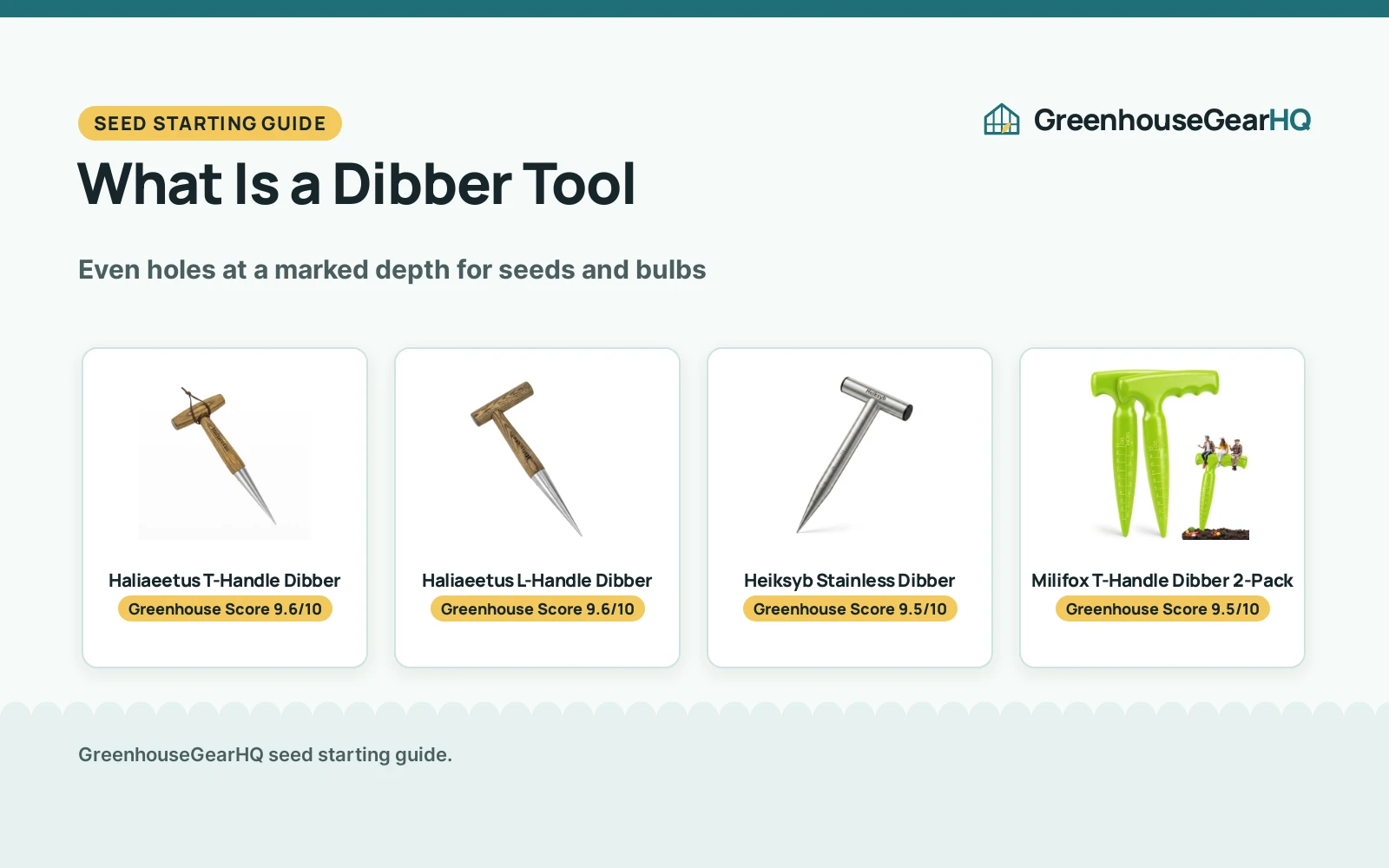
 Haliaeetus T-Handle Dibber9.6/10View on Amazon
- 2
 Haliaeetus L-Handle Dibber9.6/10View on Amazon
- 3
 Heiksyb Stainless Dibber9.5/10View on Amazon
- 4
 Milifox T-Handle Dibber 2-Pack9.5/10View on Amazon
When the first seed trays go out in late winter, the question what is a dibber tool comes up at the bench: it is the pointed hand tool that presses each planting hole to a set depth, so seeds, bulbs and seedlings all start even. This guide answers that question, shows how to use one, and compares the dibber tools in the gear section below, each scored on performance, build, value, safety and warranty.
GreenhouseGearHQ earns a commission when you buy through links on this page, at no extra cost to you. As an Amazon Associate I earn from qualifying purchases. Affiliate disclosure.
| # | Product | Greenhouse Score | Buy |
|---|---|---|---|
| 1 | Haliaeetus T-Handle Dibber | 9.6/10 | Buy on Amazon |
| 2 | Haliaeetus L-Handle Dibber | 9.6/10 | Buy on Amazon |
| 3 | Heiksyb Stainless Dibber | 9.5/10 | Buy on Amazon |
| 4 | Milifox T-Handle Dibber 2-Pack | 9.5/10 | Buy on Amazon |
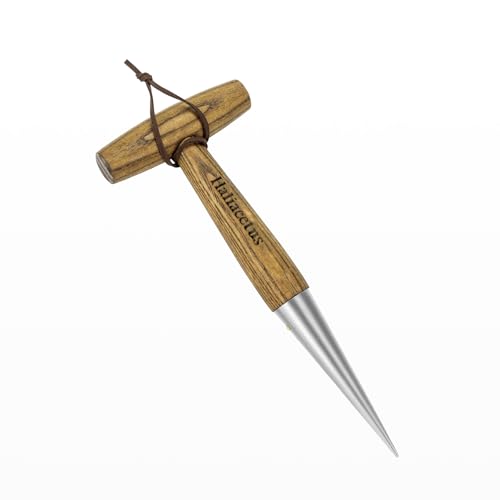
Haliaeetus T-Handle Dibber
A wood T-handle dibber with a stainless steel tip that presses planting holes for seeds, bulbs and transplanting seedlings.
Pros
- Stainless steel tip slides past stones and roots to press a hole in compact soil
- T-shaped wood handle shaped to the palm for steady pressure
- Sanded finish with a hanging strip for storage on a wall
Cons
- No depth scale is stated, so depth must be judged by eye
- No weight is stated in the listing
- The listing claims 10 x efficiency without a stated measurement behind the figure
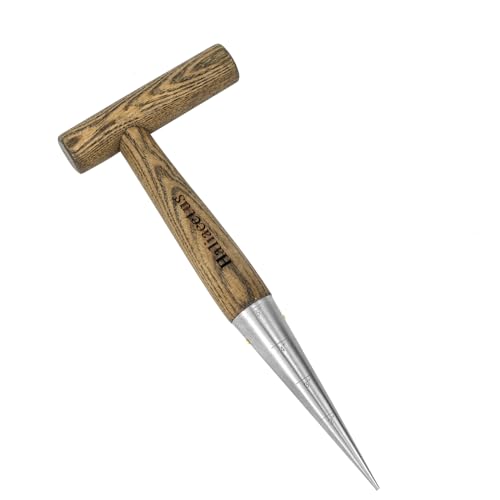
Haliaeetus L-Handle Dibber
An L-handle dibber with a stainless steel tip and a 2 to 5 inch depth scale that presses holes for seeds, small bulbs and transplanting seedlings.
Pros
- Depth markings from 2 to 5 inches guide hole depth and spacing for small bulbs
- Stainless steel tip presses holes in compact soil and slides past hidden stones
- L-shaped wood handle fits the palm for steady pressure
Cons
- No depth marking below 2 inches is stated, so shallow sowing has no mark
- The listing claims 10 x efficiency without a stated measurement behind the figure

Heiksyb Stainless Dibber
A stainless steel dibber with engraved 1 to 5 inch depth markings that presses even holes for bulbs, seeds, seedlings and young plants.
Pros
- Engraved depth markings from 1 to 5 inches for even planting depth
- Stainless steel build resists rust and corrosion and rinses clean
- T-shaped handle gives a steady grip for twisting and pressing into soil
Cons
- No warranty term is stated
- Depth markings stop at 5 inches, so deeper bulb holes have no mark

Milifox T-Handle Dibber 2-Pack
A light plastic 2-pack dibber with a 0 to 4 inch depth scale that presses shallow holes for seeds, bulbs and young transplants.
Pros
- Clear 0 to 4 inch depth scale with 10 cm marks for even planting depth
- Two dibbers in the pack, so a second tool is ready for family planting sessions
- Light plastic at 3.3 oz that resists rust and rot and rinses clean
Cons
- Listing warns to avoid hard compacted soil to prevent breakage
- No warranty term is stated
As an Amazon Associate I earn from qualifying purchases.
Other options worth a look
 17 Pack Seed Planter ToolCheck price on Amazon
 6Pcs Mini Sowing Seed DispenserCheck price on Amazon
 Seed DispenserCheck price on Amazon
 Seed Planter ToolCheck price on Amazon
 QWORK 8 Pcs Seed Dispenser Planter Tool SetCheck price on Amazon
 Dibby Seed Sowing Garden Tool Dibber Planter TransplanterCheck price on Amazon
What is a dibber tool?
A dibber tool, also called a dibbler, is a pointed hand tool that presses a hole in soil or potting mix for a seed, bulb or seedling. A handle at the top takes the pressure of your palm, and depth marks along the shaft show how far the point has gone in, so each hole reaches the same depth. The Milifox dibber (on Amazon) lists a 0 to 4 inch depth scale, the Heiksyb dibber (on Amazon) lists engraved marks from 1 to 5 inches, and the Haliaeetus L-handle dibber lists marks from 2 to 5 inches.
- Handle: T-shaped or L-shaped, shaped to the palm for steady pressure.
- Point: a steel or plastic tip that opens the hole.
- Depth scale: marks in inches along the shaft.
How to use a dibber tool
Use a dibber tool where the seed packet or bulb guidance gives a planting depth, and let the marks on the tool set that depth.
Press the hole
Hold the handle in your palm, set the point where the seed or bulb will go, and press straight down to the mark that matches the planting depth. The Milifox listing gives 1/8 inch for lettuce and 1.5 inches for beans as examples of depths the scale covers. Twist the tool a little as you press if the soil resists, as the Heiksyb listing directs, then lift it straight out so the hole keeps its shape.
Set the seed and cover
Drop the seed, bulb or seedling into the hole, then push soil back over it with a finger or the side of the tool. A dibber also loosens soil and aerates potting mix, as the Milifox listing notes, so the same tool can open the mix around a transplant. Water gently after sowing so the soil settles around the seed without washing it out of place.
Move to the next hole
Press the next hole at the same depth, using the same mark each time so the row stays even. The Haliaeetus L-handle dibber lists marks that help with depth and space between small bulbs, so one tool can set both. Rinse the tool clean after use, as the steel and plastic listings direct, and hang it by its handle or store it with the seed trays.
Dibber tools for the job
Pressing the hole to a marked depth is the step that needs a dibber, and the tools below cover that step for seeds, bulbs and seedlings in trays, beds and containers.
How to choose the best dibber tool
Match the depth scale to your sowing
The scale decides which tool fits your sowing. Shallow sowing suits the Milifox dibber, with a 0 to 4 inch scale that covers 1/8 inch for lettuce, while bulbs and deeper sowing suit the Heiksyb dibber, with engraved marks from 1 to 5 inches, or the Haliaeetus L-handle dibber, with marks from 2 to 5 inches. Pick the scale that covers the depths you sow most.
Pick the handle and tip for your soil
Wood and steel suit firm soil, while light plastic suits loose mix and trays. The Haliaeetus dibbers pair a wood handle with a steel tip that presses through compact soil, and the Heiksyb dibber is steel throughout, which resists rust. The Milifox dibber is light plastic that the listing warns against using in hard compacted soil, so keep it to trays and soft beds. See the seed sowers guide for more sowing tools.
Weigh the extras
A second tool in the pack helps when two people sow together, and a lifetime warranty covers the tool for years of seasons. The Milifox pack holds two dibbers for family planting sessions, and both Haliaeetus dibbers list a lifetime warranty. For sowing basics, see the seed starting tips for beginners.
FAQ for growers
What is a dibber tool used for?
A dibber tool presses planting holes to a set depth for seeds, bulbs and seedlings in trays, beds and containers. It also loosens soil and aerates potting mix, as the Milifox listing notes.
How deep should a dibber hole be?
Follow the depth on your seed packet or bulb guidance, and use the marks on the tool to hit it. The Milifox listing gives 1/8 inch for lettuce and 1.5 inches for beans, while the Heiksyb marks run from 1 to 5 inches.
Can a dibber tool plant bulbs?
Yes, bulbs are one of the main uses. The Heiksyb dibber lists planting for tulip bulbs, and the Haliaeetus dibbers list small bulbs and transplanting seedlings. Use the deepest mark your bulb needs.
What is the difference between a dibber and a trowel?
A dibber presses a narrow hole to a marked depth, while a trowel digs and moves soil. The Haliaeetus listings note a dibber is quicker than a trowel for repeated holes, since you press, lift and move on.
Keep reading
See every seed sowers guide and all seed starting guides.
More picks: seed starting trays for hot climate, seed starter kit for gifts, pot maker for paper pots and seed starting mix for microgreens.