On this page
Top picks at a glance
As an Amazon Associate I earn from qualifying purchases.
- 1
 Back to the Roots Organic Seed Starting Mix9.5/10View on Amazon
- 2
 Burpee Organic Coconut Coir Seed Starting Mix9.6/10View on Amazon
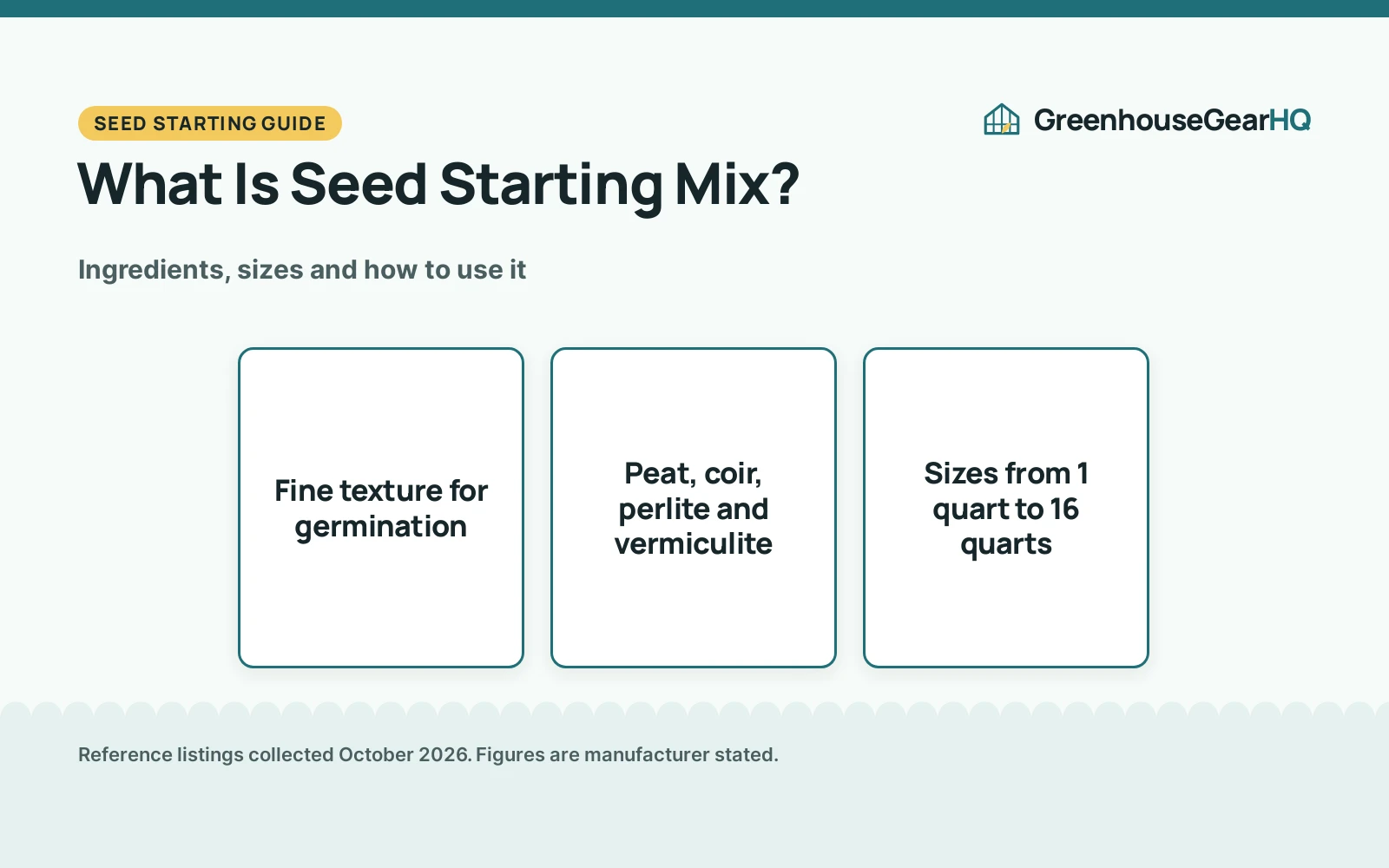
What is seed starting mix? It is a fine-textured, low-nutrient growing medium made for one job: getting seeds to germinate and grow into sturdy seedlings. It is lighter and cleaner than garden soil, holds moisture without staying soggy, and gives tiny roots an easy path. This guide explains what is inside the bag, how it differs from potting soil, and how to use it.
Other options worth a look
 Miracle-Gro Seed Starting Potting MixCheck price on Amazon
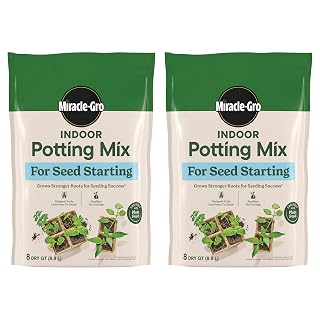 Miracle-Gro Indoor Potting Mix for Seed StartingCheck price on Amazon
 SunGro Horticulture Seedling MixCheck price on Amazon
 bio365 BIOSTART Organic Seed Starting Mix with BiocharCheck price on Amazon
 Jiffy Natural & Organic Seed Starting Soil MixCheck price on Amazon
 Vermont Compost Company Fort Vee Organic Potting MixCheck price on Amazon
GreenhouseGearHQ earns a commission when you buy through links on this page, at no extra cost to you. As an Amazon Associate I earn from qualifying purchases. Affiliate disclosure.
What is seed starting mix
A seed carries its own lunch: the energy stored inside it powers germination and the first leaves. What it needs from you is moisture, air and something to hold onto, not fertilizer. Seed starting mix provides exactly that: a soilless or low-soil blend engineered for drainage and aeration around delicate new roots. Because it is fine and consistent, seeds make good contact with moisture on all sides, which is what even germination depends on.
What is inside the bag
Most mixes combine a moisture-holding base with chunky aerators. The Midwest Hearth listing describes its mix as peat moss, perlite and vermiculite, pH-balanced, and the Doter listing names the same trio of peat moss, perlite and vermiculite. The Espoma listing describes sphagnum peat moss and perlite with yucca extract and lime to set the pH, plus mycorrhizae. Coconut coir is the renewable alternative to peat: the Burpee listing describes an organic coconut coir brick that expands with water to 16 quarts, OMRI listed, and the Legigo listing describes 30mm coir pellets, 1.22 inches in diameter and 0.5 inches tall. Richer blends add nutrition: the Coast of Maine listing names sphagnum peat moss, compost, aged bark, perlite, kelp meal, lobster and crab shell meal, worm castings and mycorrhizae in an 8 quart bag.
Seed starting mix vs potting soil
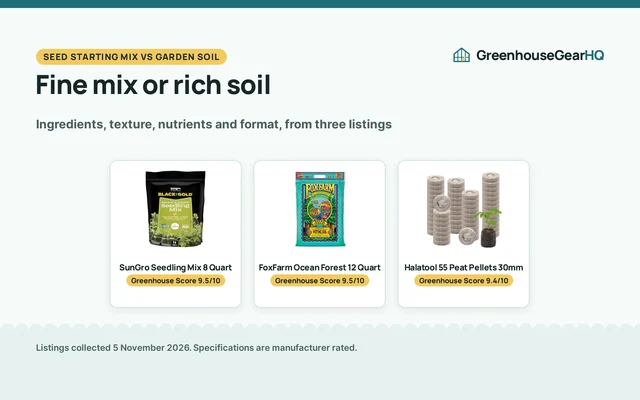
Potting soil is built for established plants: coarser texture, more nutrients, sometimes bark chunks that dwarf a seedling cell. Seed starting mix is milled finer so it fills small cells evenly and does not bury tiny seeds under lumps. It also carries little or no fertilizer, because excess nutrients can burn new roots; seedlings get fed later, after transplant or once true leaves appear. If you only buy one bag for a seed starting tray with a dome, make it the seed starting mix.
Sizes and formats
Mixes come ready to use or compressed. Ready-to-use bags in the listings run from 1 quart (Doter) through 4 and 8 dry quarts (Midwest Hearth) to 8 quarts (Espoma, Coast of Maine) and 16 quarts (Espoma). Compressed formats save shelf space: the Back to the Roots block expands (on Amazon) to 12 quarts, the Burpee coir (on Amazon) bricks expand to 16 quarts total, and the Mosser Lee listing states 244 cubic inches (4L). Pellets are the most compact option: the Legigo listing includes 50 coir pellets at 30mm, each taking about 0.04 quarts of water to expand. Match the format to your tray count; a single 8 quart bag fills a lot of cells.
How to use seed starting mix
Moisten the mix before it goes into trays, not after. Dry mix repels water and wet mix poured into cells compacts; damp it in a bucket until it holds together when squeezed but no water drips out. Fill cells loosely, tap the tray to settle, and sow at the depth the seed packet directs. Pellets are simpler: set them in the tray, add water, and let each 30mm pellet swell before sowing into the top. Bottom-water afterward so the surface stays undisturbed, and add gentle warmth with a seedling heat mat with thermostat for heat-loving seeds.
FAQ for growers
Can I use garden soil instead of seed starting mix?
Garden soil is heavy, may carry weed seeds and pathogens, and compacts in small cells. Seed starting mix is fine, consistent and built for drainage around new roots. For a tray of seedlings, the mix is the safer choice.
Do seedlings need fertilizer in seed starting mix?
Not at first. Seeds germinate on stored energy, and most mixes are deliberately low in nutrients. Begin feeding at half strength once seedlings show true leaves or at transplant time, following the fertilizer label.
Can I reuse seed starting mix?
Reuse risks carrying disease from one sowing to the next. Fresh mix each season is the standard practice, and compressed bricks like the 12 quart Back to the Roots block or 16 quart Burpee coir make storing a season’s supply easy.
Peat moss or coconut coir?
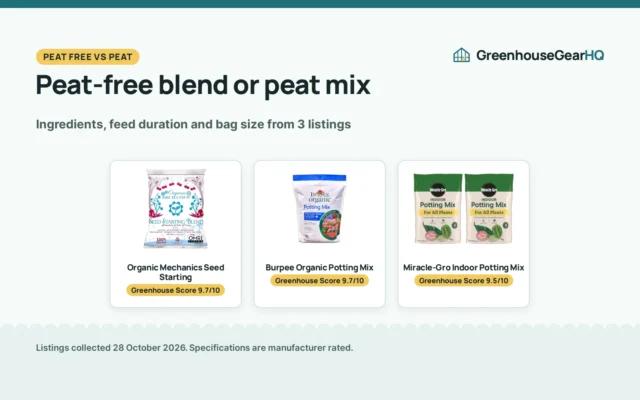
Both hold moisture well. Coir is the renewable option: the Burpee listing notes it is made from recycled coconut husks and expands from compact bricks, while peat-based mixes like Espoma and Midwest Hearth are the traditional choice. Either works for germination; pick coir if renewability matters to you.
Keep reading
See every seed starting guide. Also see our best seed starting trays with dome and humidity domes guides.
More picks: seed starting trays with lights, seedling heat mats with thermostat and small greenhouses for seed starting.